

Coating Service Overview
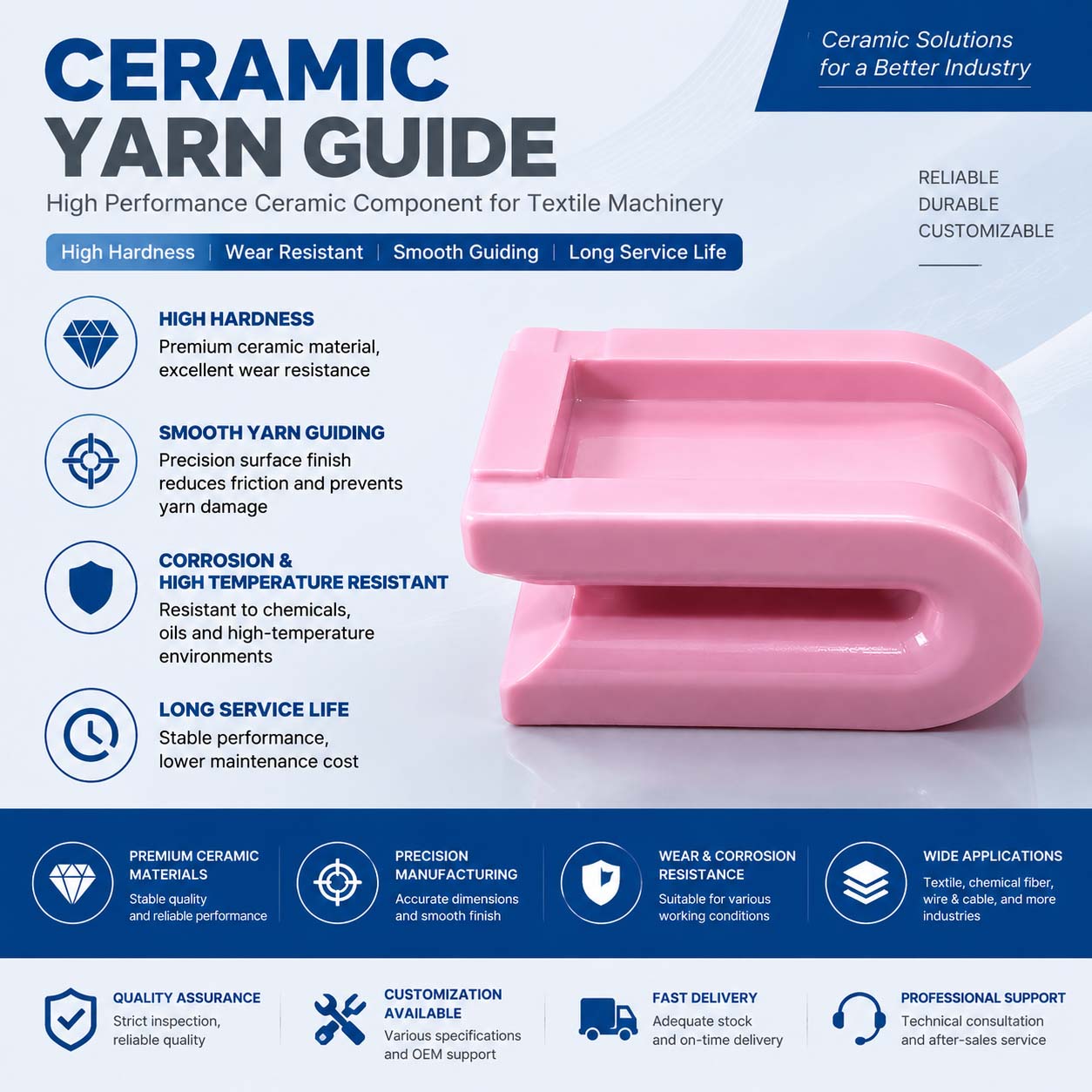
In textile, mechanical manufacturing, chemical, and other industries, many components require both the toughness of metal and the wear/corrosion resistance of ceramics.
Through advanced thermal spray ceramic coating technology, high-performance ceramic layers can be applied to metal substrates such as hardware parts, mechanical components, and equipment accessories. This significantly improves service life, reliability, and surface performance.
This article introduces ceramic yarn guides and ceramic coating processing solutions, including applications, selection guidelines, and maintenance recommendations.
What Is Ceramic Spray Coating?
Ceramic spray coating is a surface engineering technology that uses heat sources such as plasma spraying or HVOF (High Velocity Oxygen Fuel) spraying to heat ceramic powders into molten or semi-molten particles and accelerate them onto pre-treated metal surfaces.
The coating forms a strong mechanical bond with the substrate, providing ceramic properties while maintaining the toughness of the metal core.
Common ceramic coating materials include:
- Aluminum oxide (Al₂O₃)
- Chromium oxide (Cr₂O₃)
- Zirconium oxide (ZrO₂)
These coatings are widely used in applications requiring:
- Wear resistance
- High-temperature resistance
- Corrosion protection
- Electrical insulation
Features and Applications of Ceramic Yarn Guides
Ceramic yarn guides are critical wire and yarn guiding components in textile machinery. Their surface quality directly affects yarn performance.
Traditional metal yarn guides may wear quickly, develop grooves, and increase yarn damage or breakage.
Ceramic or ceramic-coated yarn guides provide:
- Smooth surface: Low friction reduces yarn damage.
- High hardness: Excellent wear resistance maintains long-term surface quality.
- Chemical stability: Resistant to textile oils and chemical agents.
In addition to textile applications, ceramic coated guide rollers and rollers are also widely used for wire, strip, and material guiding processes in mechanical and chemical industries.
Ceramic Coating for Hardware and Mechanical Components
Many mechanical parts, including bushings, sealing rings, plungers, and valve components, suffer from wear and corrosion under harsh operating conditions.
Ceramic coating can provide a durable protective layer and significantly extend component life.
Typical applications include:
Pump Shafts and Bushings
Chromium oxide coatings improve wear resistance and resistance to chemical media.
Valve Sealing Surfaces
Aluminum oxide or zirconia coatings enhance scratch resistance and high-temperature performance.
Plungers
Ceramic coatings reduce friction and wear, improving sealing performance and service life.
Ceramic spraying can be applied to various metal substrates, including:
- Stainless steel
- Carbon steel
- Aluminum alloys
- Titanium alloys
For aluminum components, proper surface preparation and coating adhesion control are essential.
How to Select the Right Ceramic Coating
The coating system should be selected according to actual operating conditions.
Wear Type
Different wear mechanisms require different coating properties:
- Aluminum oxide coatings: suitable for abrasive wear due to high hardness.
- Chromium oxide coatings: suitable for erosion and sliding wear environments.
Operating Temperature
Zirconia coatings provide excellent thermal stability and are suitable for high-temperature applications.
Corrosion Environment
Chromium oxide coatings provide good acid and alkali resistance, while aluminum oxide coatings offer excellent resistance to many inorganic chemicals.
Coating Thickness and Finishing
Typical ceramic coating thickness ranges from:
- 0.1–0.5 mm
After spraying, grinding or polishing can be performed to achieve required dimensions and surface finish.
Providing detailed operating conditions helps engineers recommend the most suitable coating solution.
Ceramic Spray Coating Process and Quality Control
The standard coating process includes:
1. Surface Preparation
Components are cleaned, degreased, and sandblasted to improve coating adhesion.
2. Thermal Spraying
Ceramic powder is deposited onto the surface using plasma spraying, HVOF spraying, or other suitable methods.
3. Post Processing
Grinding, polishing, or sealing treatment is performed according to application requirements.
4. Quality Inspection
Coating quality is verified through:
- Thickness measurement
- Bond strength testing
- Hardness testing
- Surface inspection
We provide thermal spray solutions for components with different sizes and shapes. Worn parts can also be refurbished through coating repair, restoring dimensions and improving performance.
Frequently Asked Questions
Will ceramic coatings peel off?
With proper surface preparation and spraying parameters, ceramic coatings have strong adhesion and will remain stable under normal operating conditions. Excessive impact or substrate deformation may cause local peeling.
Which metals can be ceramic coated?
Most metals can be coated, including carbon steel, stainless steel, aluminum alloys, and titanium alloys. Each substrate requires suitable preparation and process parameters.
What is the difference between ceramic coated yarn guides and full ceramic yarn guides?
Full ceramic yarn guides are made entirely from ceramic materials, offering excellent wear resistance but higher brittleness and cost. Ceramic coated yarn guides use a metal substrate with a ceramic surface layer, combining metal toughness with ceramic wear resistance.
What is the maximum component size for ceramic spraying?
Processing capability depends on equipment and component geometry. Large components several meters in length or diameter can be handled after technical evaluation.
Can damaged coatings be repaired?
Yes. Local damage can be repaired by localized spraying. For extensive damage, the old coating can be removed and reapplied.
What is the typical delivery time?
Processing time depends on component quantity, size, and coating requirements. Standard orders usually require approximately 3–10 working days, with urgent services available upon request.
