

Coating Service Overview
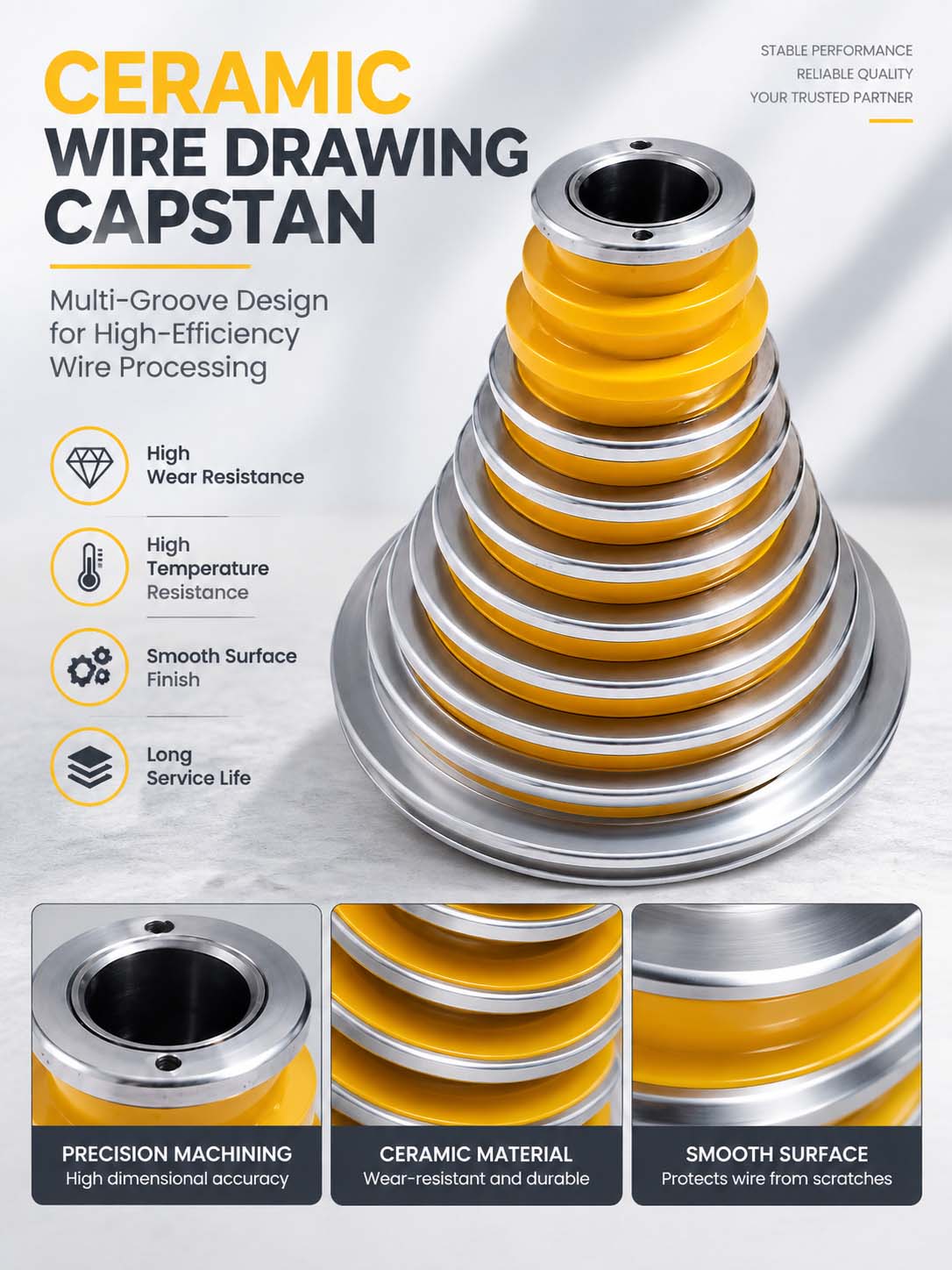
In metal wire processing, annealing operations require guide rolls and capstans with excellent wear resistance, high temperature stability, and superior surface finish. Ceramic fine wire drawing capstans and annealing guide rolls have become essential components in many production lines due to their outstanding material properties. This article introduces their features, applications, selection considerations, and maintenance methods.
Product Features and Material Properties
Ceramic fine wire drawing capstans and annealing guide rolls are commonly manufactured from advanced ceramic materials such as alumina (Al₂O₃), zirconia (ZrO₂), and silicon nitride (Si₃N₄). These materials provide excellent performance:
- High Hardness and Wear Resistance: Ceramic materials are much harder than conventional metals, effectively reducing wear caused by continuous wire friction and extending service life.
- High Temperature Resistance: Ceramic components maintain dimensional stability under high-temperature conditions, making them suitable for annealing furnaces and heating zones.
- Smooth Surface Finish: Ceramic surfaces can be polished to a mirror finish, minimizing wire scratches and improving product quality.
- Excellent Chemical Stability: Ceramic materials offer strong resistance to corrosion from chemicals and harsh working environments.
The suitable ceramic material should be selected according to operating temperature, wire material, production speed, and working conditions.
Applications
Ceramic capstans and guide rolls are widely used in wire drawing, annealing, tinning, and other metal wire processing equipment, including:
- Annealing machines
- Annealing furnaces
- Wire drawing machines
- Tinning lines
During the annealing process, guide rolls and capstans guide the wire through heating zones while maintaining stable tension and smooth movement. Ceramic fine wire drawing capstans with multi-groove designs can handle multiple wires simultaneously, improving production efficiency and reducing wire damage.
Selection Guide
When selecting ceramic guide rolls or capstans, consider the following factors:
- Size and Groove Design: Choose the appropriate diameter, groove number, and groove shape according to wire specifications. Common groove designs include V-groove and U-groove.
- Material Selection: Alumina ceramic provides a cost-effective solution for general applications. Zirconia ceramic offers higher toughness for impact conditions, while silicon nitride provides excellent thermal shock resistance for rapid heating and cooling environments.
- Installation Requirements: Confirm shaft dimensions, bearing structure, and mounting method to ensure compatibility with existing equipment.
- Surface Finish: For high-precision applications, polished ceramic surfaces can reduce friction and improve wire quality.
Customized solutions are available according to customer drawings, samples, and specific production requirements.
Maintenance and Care
Proper maintenance can significantly extend the service life of ceramic guide rolls and capstans:
- Regular Cleaning: Remove metal dust and contaminants with a soft cloth or brush to protect the ceramic surface.
- Wear Inspection: Check groove wear regularly. Replace the component if deep grooves, cracks, or edge damage appear.
- Bearing Maintenance: For rolls equipped with bearings, apply suitable high-temperature grease according to maintenance requirements.
- Safe Storage: Avoid impact with hard objects and store ceramic components separately to prevent damage.
Frequently Asked Questions
Are ceramic guide rolls easy to break?
Ceramic materials have high hardness but are relatively brittle. Under proper installation and normal operation, they provide reliable performance. Avoid impact and excessive mechanical force.
When should a guide roll be replaced?
Replacement is recommended when groove wear becomes obvious, surface roughness increases, wire scratches appear, or rotation becomes unstable.
What types of wire can ceramic guide rolls be used for?
They are suitable for copper wire, aluminum wire, alloy wire, stainless steel wire, and other metal wires. Material selection depends on wire type and processing temperature.
Can non-standard sizes be customized?
Yes. Manufacturers can provide customized ceramic rolls based on drawings or samples, including special dimensions, groove designs, and materials.
What are the advantages compared with metal guide rolls?
Ceramic guide rolls offer higher wear resistance, better temperature resistance, and smoother surfaces, helping reduce wire damage and improve production stability. Although the initial cost may be higher, they provide longer service life and better performance in demanding applications.
Safety Considerations:
Avoid impact during installation, prevent foreign objects from entering during operation, and use proper protection in high-temperature environments.
