

Coating Service Overview
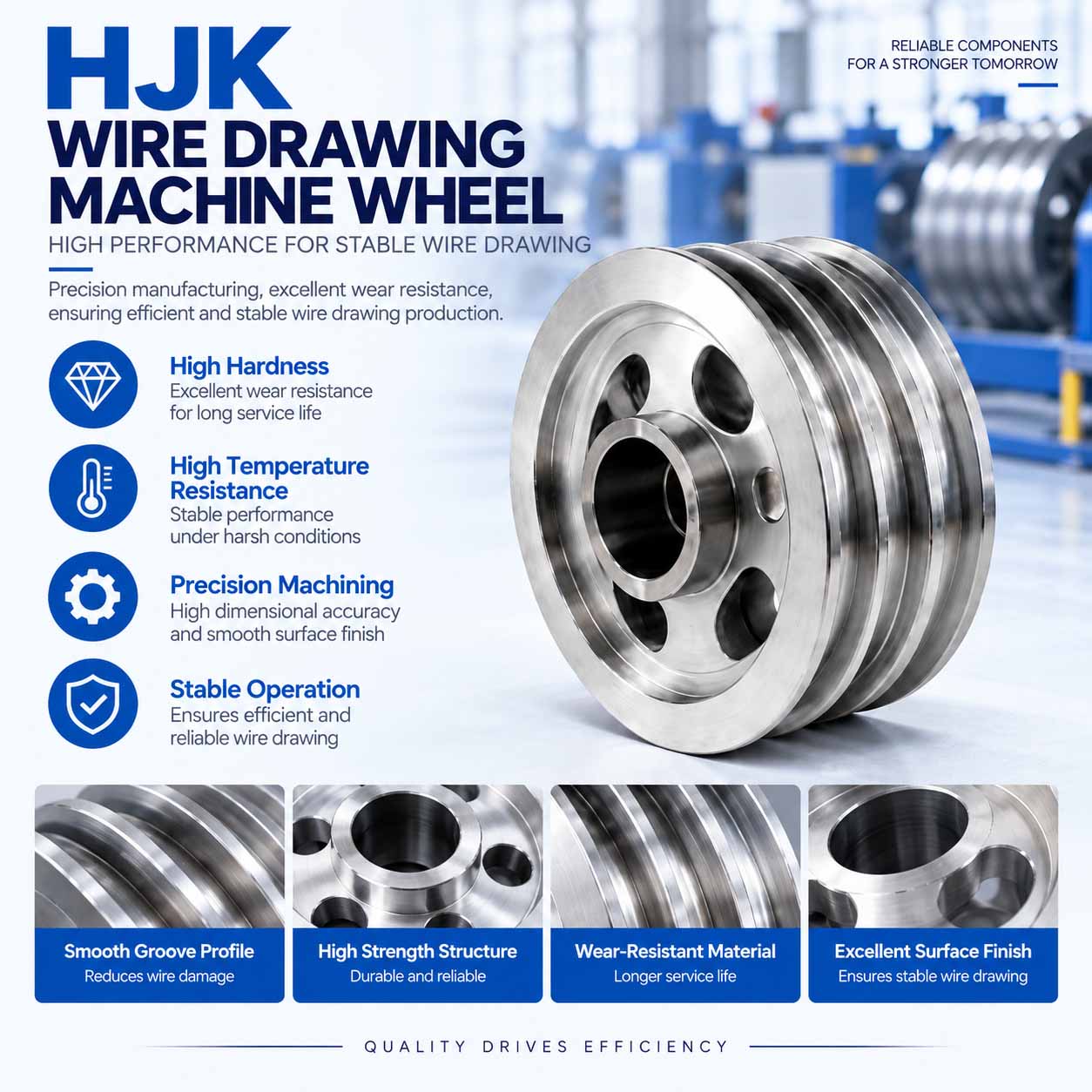
In metal wire processing, steel wire drawing machine wheels are key components responsible for guiding, tension control, and wire reduction during the drawing process. Their wear resistance, surface finish, and dimensional accuracy directly affect final wire quality and production stability.
Because different wire materials, diameters, and drawing speeds require different performance characteristics, selecting the right drawing wheel is essential. This article introduces common wheel types, material advantages, applications, and maintenance methods to help users make better selection decisions.
Common Types of Steel Wire Drawing Machine Wheels
According to structure and function, wire drawing machine wheels mainly include capstans, guide wheels, and take-up pulleys.
- Zirconia Ceramic Capstan:
Uses zirconia ceramic as the working surface, offering excellent hardness and wear resistance. It is suitable for high-speed drawing of stainless steel wire, alloy steel wire, and other applications requiring high surface quality. The smooth surface and low friction coefficient help reduce wire scratches. - Silicon Carbide Capstan:
Silicon carbide has extremely high hardness, excellent heat resistance, and strong corrosion resistance. It is suitable for high-carbon steel wire, flux-cored welding wire, and other applications requiring superior wear resistance. - Tungsten Carbide Coated Guide Wheel:
A tungsten carbide coating is applied to a metal substrate to combine the toughness of the base material with the high hardness of the surface layer. It provides a cost-effective solution for wire guiding and tension control applications. - Fine Wire Drawing Capstan:
Designed for small-diameter wire drawing processes, these capstans require higher precision and surface quality to ensure stable fine wire production. - Take-up Pulley:
Used for pulling and transferring finished wire before winding. The surface must provide sufficient friction to prevent slipping during operation.
Material Characteristics and Applications
Material selection depends on wire type, drawing speed, lubrication conditions, and expected service life.
Zirconia Ceramic
Zirconia provides excellent fracture toughness, wear resistance, and a smooth surface finish. It is suitable for high-speed, dry, and semi-dry drawing processes.
Typical applications include:
- Stainless steel wire
- Spring wire
- Copper-clad steel wire
- High-quality precision wire products
Its mirror-like surface finish helps reduce surface defects and improve wire quality.
Silicon Carbide Ceramic
Silicon carbide offers extremely high hardness, excellent thermal conductivity, and outstanding high-temperature performance. It maintains strength under severe working conditions.
It is suitable for:
- High-carbon steel wire
- Alloy tool steel wire
- High-wear drawing applications
Compared with zirconia, silicon carbide has lower toughness, so impact loads should be avoided.
Hard Alloy Coated Wheels
Through thermal spraying or hardfacing technology, tungsten carbide or ceramic coatings can be applied to metal wheels.
Advantages include:
- High surface hardness
- Good wear resistance
- Strong mechanical support from the metal base
- Lower cost compared with full ceramic wheels
They are suitable for medium-load applications and cost-sensitive production environments.
Selection Guide
To achieve stable drawing performance, consider the following factors:
Wire Material and Diameter
Soft metals such as copper and aluminum can use zirconia ceramic or coated wheels. Hard materials such as high-carbon steel wire are better suited to silicon carbide wheels.
Fine wire drawing requires high-precision small-diameter capstans.
Drawing Speed
For high-speed drawing applications, especially above 15 m/s, precision ceramic wheels are recommended to reduce centrifugal effects and thermal wear.
Lubrication Conditions
Wet drawing provides better lubrication and cooling, while dry drawing requires materials with higher wear resistance, such as advanced ceramic wheels.
Equipment Compatibility
Before selection, confirm:
- Bore size
- Keyway dimensions
- Outer diameter
- Wheel width
- Mounting structure
The wheel must match the existing equipment to ensure stable operation.
Maintenance and Service Life Extension
Proper maintenance can significantly improve wheel service life and reduce operating costs.
- Regular Surface Inspection:
Check working surfaces for scratches, pits, cracks, or coating damage. Minor wear may be repaired by polishing, while severe damage requires replacement. - Cleaning and Corrosion Protection:
Remove metal particles and lubricant residue after shutdown to prevent corrosion and deposits. Coated wheels should be protected from substrate corrosion. - Correct Installation and Alignment:
Ensure the wheel is perpendicular to the shaft and properly aligned. Use suitable tightening torque to prevent excessive stress on ceramic components. - Lubrication Management:
Keep drawing lubricant clean and regularly filter or replace it to prevent abrasive particles from damaging the wheel surface. - Professional Grinding Repair:
Ceramic wheels with acceptable wear can be professionally reground to restore surface finish and dimensional accuracy.
Frequently Asked Questions
Zirconia or Silicon Carbide Capstan: Which Should I Choose?
Zirconia offers better toughness and impact resistance, making it suitable for high-speed applications and conditions with vibration or impact. Silicon carbide provides higher hardness and wear resistance, making it ideal for hard wire drawing applications.
Why Do Grooves Appear on the Wheel Surface?
Common causes include hard particles on the wire surface, insufficient lubrication, or insufficient wheel hardness. Check lubricant cleanliness, wire pretreatment quality, and wheel material selection.
What Should Be Done If the Coating Peels Off?
Coating failure may result from substrate corrosion, poor bonding, or overload impact. Minor damage may be repaired, but severe coating failure usually requires replacement.
How Does Fine Wire Drawing Capstan Accuracy Affect Wire Quality?
Radial runout and groove errors can cause tension fluctuations, uneven wire diameter, and surface scratches. High-precision capstans help maintain wire roundness and surface quality.
When Should a Drawing Wheel Be Replaced?
Replacement is recommended when:
- Wire scratches become visible
- Dimensional accuracy exceeds tolerance
- Cracks or surface peeling appear
- Groove depth exceeds allowable limits
Regular measurement of wheel diameter and groove depth helps determine replacement timing.
What Should I Do If the Take-up Pulley Slips?
Check whether the surface is worn smooth, increase surface friction if necessary, or replace the pulley with a higher-friction material. Also verify that wire tension settings are appropriate.
