

Coating Service Overview
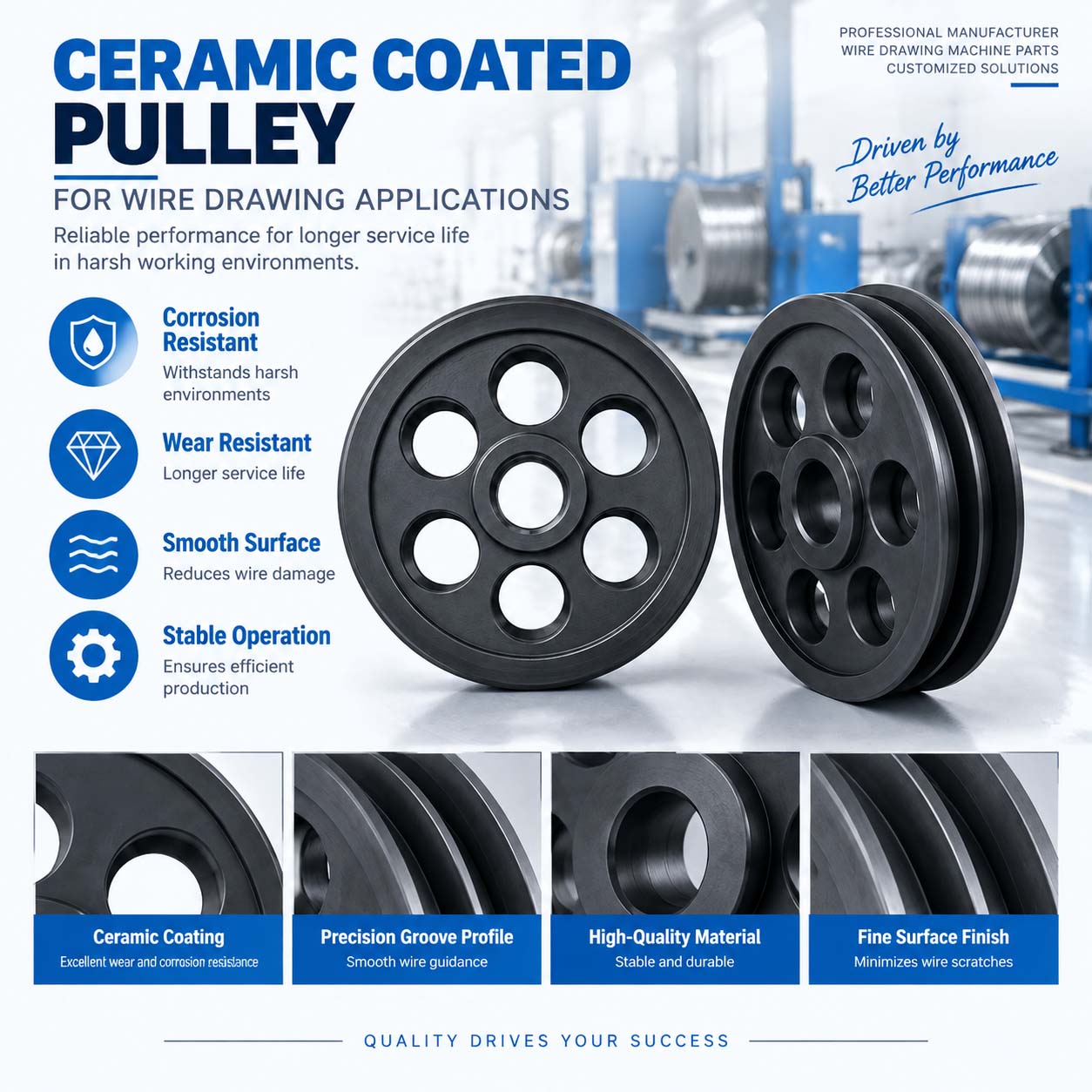
During metal wire drawing processes, guide pulleys are continuously exposed to friction, wear, and corrosive environments. Traditional metal pulleys may require frequent replacement due to rapid surface wear, reducing production efficiency.
The Wear-Resistant Ceramic Coated Pulley uses advanced thermal spray technology to apply high-performance ceramic materials onto a metal substrate, forming a dense protective layer. This coating provides excellent wear resistance and corrosion protection, helping extend pulley service life and reduce maintenance costs in wire drawing applications.
Ceramic Coating Technology and Material Selection
The key technology of ceramic coated pulleys is the use of thermal spraying processes, where ceramic powders are deposited onto metal surfaces in a molten or semi-molten state. This creates a high-hardness surface layer with low friction characteristics.
Common ceramic coating materials include:
Zirconia (ZrO₂) Coating
Zirconia provides excellent toughness, thermal shock resistance, and corrosion resistance. It is suitable for high-speed wire drawing and applications involving moisture or cooling fluids.
Silicon Carbide (SiC) Coating
Silicon carbide offers extremely high hardness and outstanding wear resistance. It is suitable for dry drawing processes and severe wear conditions.
Typical coating thickness ranges from 0.2–0.5 mm, providing a balance between wear life and coating adhesion. The substrate is usually made from aluminum alloy or steel to achieve both lightweight design and structural strength.
Typical Applications
Wear-resistant ceramic coated pulleys are widely used in various wire processing equipment, including:
- Medium, fine, and micro wire drawing machines
- Steel wire, copper wire, aluminum wire, and alloy wire production lines
- Wire guiding and tension control systems
- Take-up pulleys and drawing capstans as replacements for traditional chrome-plated or hardened steel wheels
Under high-speed drawing conditions, ceramic coatings help reduce wire scratches and improve finished product quality. Their corrosion resistance also makes them suitable for environments containing cooling liquids and lubricants.
Selection and Installation Guide
How to Select the Right Ceramic Coated Pulley
Selection should consider:
Wire Material and Diameter
Hard materials such as steel wire usually require silicon carbide coatings for higher wear resistance. Softer materials such as copper wire are often suitable for zirconia coatings to reduce friction and surface damage.
Drawing Speed
For high-speed operation, zirconia coatings provide better toughness and resistance to impact and thermal stress.
Working Environment
In acidic, alkaline, or corrosive environments, zirconia offers excellent chemical stability.
Installation Dimensions
Confirm pulley outer diameter, bore size, groove profile, and mounting structure to ensure compatibility with existing equipment.
Installation Requirements
Before installation:
- Check the coating surface for cracks, peeling, or damage.
- Handle the pulley carefully and avoid impact.
- Ensure the bearing position is clean and properly lubricated.
- Tighten bolts evenly in a cross pattern to prevent excessive local stress on the coating.
Maintenance Recommendations
Proper maintenance can significantly extend the service life of ceramic coated pulleys:
- Regularly inspect coating wear. Replace the pulley when the substrate becomes exposed.
- Keep cooling fluids clean to prevent hard particles from causing abrasive wear.
- Remove metal particles and oil residue after shutdown to prevent corrosion.
- Store pulleys properly using dedicated racks or soft protective materials to avoid impact damage.
Under normal operating conditions, ceramic coated pulleys can achieve 3–5 times longer service life than conventional chrome-plated wheels, depending on working conditions and maintenance quality.
Frequently Asked Questions
Can Ceramic Coatings Peel Off?
With proper coating technology and surface preparation, ceramic coatings have strong bonding strength and normally remain stable during operation. Severe impact or overload conditions may cause local coating damage.
Can Worn Ceramic Coatings Be Repaired?
Yes. Damaged coatings can be removed and reapplied through surface preparation and thermal spraying. However, the substrate condition should be evaluated before repair.
Are Ceramic Coated Pulleys Suitable for All Wire Drawing Machines?
Most wire drawing machines can use ceramic coated pulleys, but dimensions and groove designs must match the specific equipment. Providing drawings or samples is recommended for accurate customization.
How Is Coating Quality Verified?
Quality can be evaluated through:
- Surface inspection for cracks, bubbles, and uneven coating
- Coating thickness measurement
- Bond strength testing
- Hardness testing
Are Ceramic Coated Pulleys More Expensive Than Standard Pulleys?
The initial cost is usually higher, but longer service life, reduced downtime, and lower replacement frequency often provide better long-term economic benefits.
What Safety Precautions Are Required?
During installation and removal:
- Wear protective gloves to prevent injury from coating edges.
- Avoid touching rotating components during operation.
- Regularly check fasteners and mounting conditions to ensure safe operation.
