

Coating Service Overview
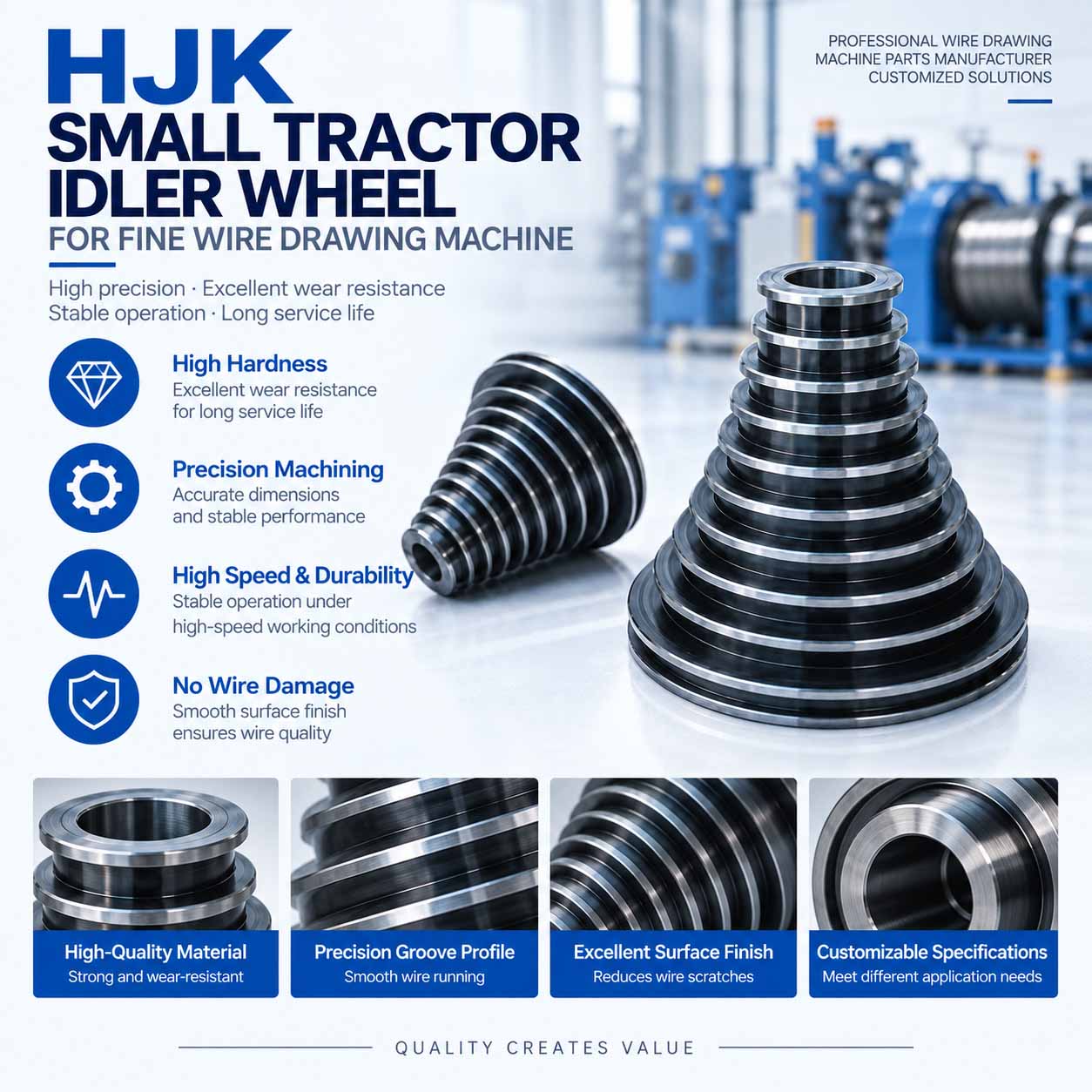
In fine wire drawing processes, the capstan is a key component that directly affects wire quality and production efficiency. The HJK Fine Wire Drawing Capstan is specially designed for fine wire drawing machines. Through optimized step diameter design and advanced surface treatment, it provides stable tension control and excellent wear resistance for copper wire, copper alloy wire, stainless steel wire, and other precision wire applications.
This article introduces its structure, materials, applications, selection methods, and maintenance recommendations.
Product Structure and Features
HJK Fine Wire Drawing Capstans usually adopt a multi-step structure. Each step diameter is precisely calculated according to the drawing reduction ratio to ensure uniform wire elongation during each drawing pass.
The capstan body is commonly manufactured from high-quality steel or aluminum alloy. The working surface is treated with hardening processes or wear-resistant coatings to withstand continuous friction from high-speed wire movement.
Available surface treatments include:
- Zirconia ceramic coating
- Silicon carbide coating
- Tungsten carbide spray coating
The suitable coating can be selected according to wire material and production requirements.
Main Advantages
- Precise step diameter design matches fine wire drawing processes and reduces wire slipping and breakage.
- High surface hardness and low friction coefficient extend capstan service life.
- Dynamic balancing ensures smooth operation at high speed and reduces vibration.
- Customized groove profiles and dimensions are available for different wire diameters and materials.
Materials and Surface Treatments
Different surface treatments provide different performance characteristics:
Zirconia Ceramic Coating
Zirconia offers excellent wear resistance, toughness, and impact resistance. Its smooth surface reduces wire damage and is suitable for copper wire, copper alloy wire, and other medium-hard materials.
Silicon Carbide Coating
Silicon carbide provides extremely high hardness and outstanding wear resistance. It is suitable for stainless steel wire, nickel alloy wire, and other hard materials requiring maximum abrasion resistance.
Tungsten Carbide Coating
Tungsten carbide coatings are applied through thermal spraying technology to create a highly wear-resistant surface layer. They provide strong bonding, good load capacity, and are suitable for aluminum alloy wire and other lightweight materials.
Hardened Steel Capstan
Heat-treated steel provides an economical solution for low-speed or low-wear applications.
Material selection should consider wire type, drawing speed, lubrication conditions, and operating cost. For example, zirconia-coated capstans are often preferred for high-speed copper wire drawing, while silicon carbide coatings are more suitable for hard stainless steel wire.
Applications
HJK Fine Wire Drawing Capstans are widely used in:
- Wire and Cable Industry: Fine drawing of copper wire, tinned copper wire, and copper alloy wire.
- Electronic Components: Production of ultra-fine copper wire, bonding wire, and precision alloy wire.
- Stainless Steel Wire Production: Drawing of stainless steel micro wires.
- Welding Materials: Reduction drawing of welding wire and flux-cored wire.
- Precision Metal Wire Processing: Drawing of nickel wire, aluminum wire, silver wire, and other specialty wires.
Selection and Installation Guide
Proper selection and installation are essential for stable performance.
Selection Considerations
- Confirm step diameters, groove dimensions, bore size, and keyway according to the drawing machine model.
- Select suitable surface treatment based on wire hardness, production speed, and lubrication conditions.
- Ensure the capstan design matches the original machine specifications.
Installation Requirements
- Check shaft and bore tolerances before installation.
- Ensure accurate alignment between the capstan and machine shaft.
- Use a dial indicator to check runout. For precision applications, runout should generally be controlled within 0.02 mm.
- High-speed capstans should undergo dynamic balancing to prevent vibration and bearing damage.
Maintenance Recommendations
Proper maintenance can significantly extend capstan service life:
- Regularly inspect groove wear and repair or replace the capstan if deep grooves or surface damage appear.
- Keep drawing lubricant clean and ensure sufficient lubrication to reduce dry friction.
- Remove wire particles and oil residue after shutdown.
- Check mounting fasteners regularly to prevent instability caused by loosening.
- Store spare capstans in dry conditions and protect coated surfaces from impact.
Frequently Asked Questions
How Long Is the Service Life of a Fine Wire Drawing Capstan?
Service life depends on wire material, drawing speed, lubrication, and surface treatment. Under normal copper wire drawing conditions, zirconia-coated capstans may operate for several months to more than one year depending on actual wear.
How Can I Know When the Capstan Needs Replacement?
Replacement or repair should be considered when:
- Deep groove marks appear
- Wire surface scratches increase
- Drawing tension becomes unstable
- Groove dimensions exceed tolerance limits
Can Capstans Be Repaired?
Some capstans can be restored by groove grinding and recoating. However, the base condition and repair cost should be evaluated before processing.
Can Different Capstan Materials Be Mixed?
For the same drawing machine, capstan materials should generally be consistent to avoid uneven wear caused by hardness differences. Special combinations require technical evaluation.
What Happens If Dynamic Balance Is Poor?
Poor balance can cause machine vibration, accelerated bearing wear, unstable wire tension, and reduced product quality, especially during high-speed drawing.
How Should the Surface Coating Be Selected?
General guidelines:
- Soft wire: Zirconia coating
- Hard wire: Silicon carbide coating
- Lightweight wire materials: Tungsten carbide coating
The final selection should be based on actual operating conditions.
