

Coating Service Overview
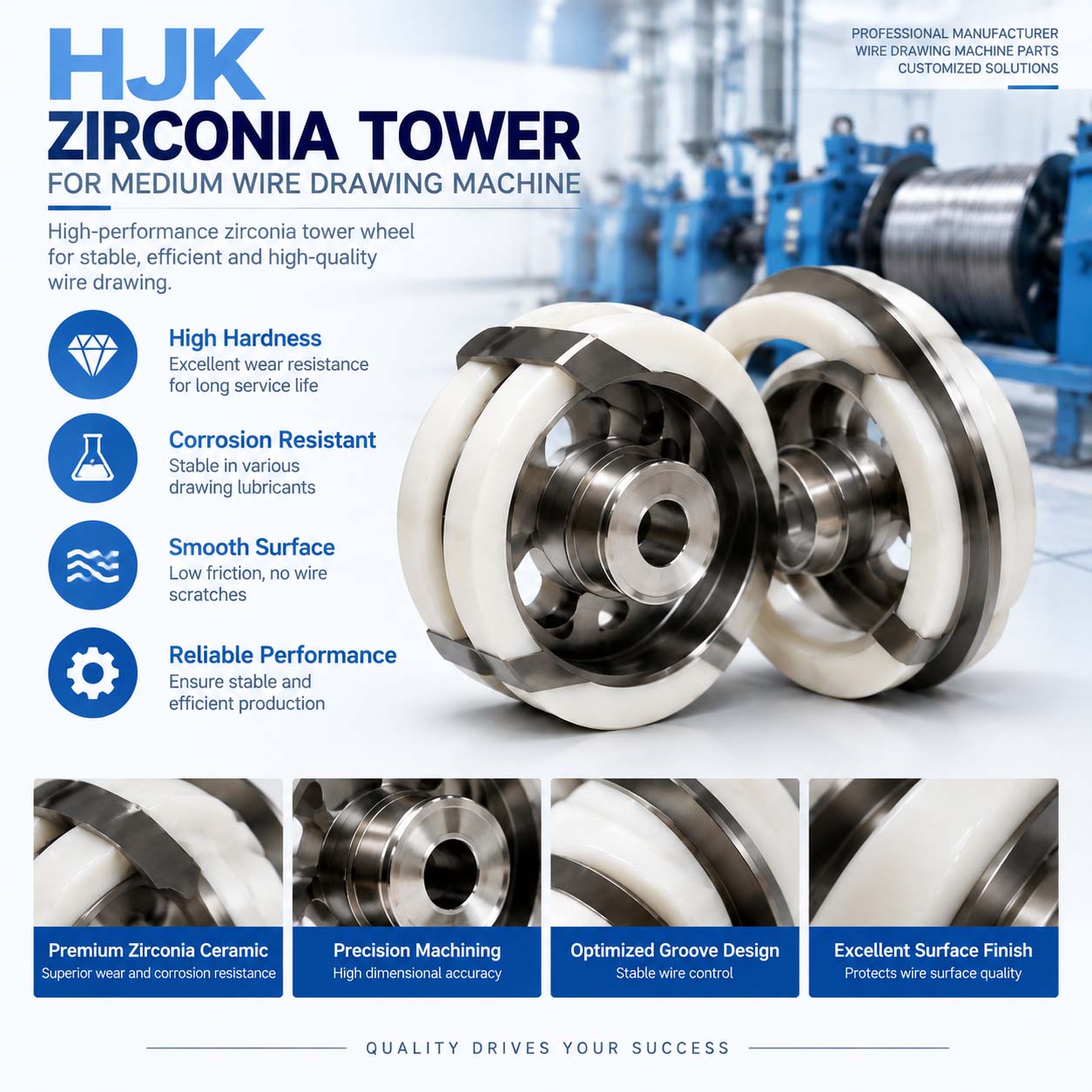
In metal wire drawing, the medium drawing machine connects the rough drawing and fine drawing stages. The capstan is one of its key components, directly affecting wire surface quality, drawing stability, and production efficiency. Zirconia ceramic capstans provide excellent wear resistance, corrosion resistance, and a smooth working surface, making them suitable for demanding wire and cable production lines.
Material Features and Advantages
Zirconia (ZrO₂) is a high-performance engineering ceramic with several advantages:
- Excellent Wear Resistance: High hardness helps resist continuous friction during high-speed wire drawing and extends service life.
- Corrosion Resistance: Stable against common drawing lubricants, coolants, and many industrial media.
- Smooth Surface: Precision grinding provides a low-friction working surface, helping reduce scratches and improve finished wire quality.
- Good Toughness: Compared with many other technical ceramics, zirconia offers better fracture toughness and resistance to thermal shock.
- Dimensional Stability: Maintains accurate groove geometry during continuous operation, supporting consistent wire drawing performance.
Structure and Specifications
Zirconia capstans can be manufactured in integrated or composite structures according to machine requirements. Composite designs typically use a steel or aluminum alloy core combined with zirconia ceramic working surfaces.
Typical specifications include:
- Outer diameter: approximately 200–600 mm
- Groove quantity: 4–12 grooves
- Groove profiles: V-groove, U-groove, or customized
- Bore, keyway, width, and other dimensions: customizable
Products can be manufactured according to customer drawings, samples, or equipment specifications.
Applications
Zirconia capstans are widely used for medium drawing of:
- Copper and copper alloy wire
- Aluminum and aluminum alloy wire
- Stainless steel wire
- Welding wire
- Spring wire
- Nickel and special alloy wire
- Other non-ferrous metal wires
They are suitable for wire and cable plants, welding wire manufacturers, metal wire processors, and other continuous wire drawing applications.
Selection Guide
When selecting a zirconia capstan, consider the following:
- Machine model and installation dimensions
- Wire material and diameter
- Number and profile of grooves
- Drawing speed and working tension
- Bore and keyway dimensions
- Lubrication and cooling conditions
- Required surface finish and dimensional accuracy
Providing a technical drawing or original sample is recommended for replacement or customized parts.
Installation and Maintenance
Before installation, inspect the ceramic surface for cracks, chips, or other damage. Use suitable installation tools and avoid directly striking the ceramic section. Make sure the capstan is correctly aligned with the drawing dies and other guide components.
During operation, regularly inspect the groove surfaces for wear. Keep drawing lubricant clean to prevent metal particles or contaminants from scratching the ceramic surface. If excessive vibration, abnormal wire scratches, or increased runout occurs, stop the machine and inspect the capstan, shaft, bearings, and mounting components.
FAQ
What is the difference between zirconia and silicon carbide capstans?
Zirconia generally provides better toughness and impact resistance, while silicon carbide offers higher hardness and excellent wear resistance. The appropriate material depends on wire type, drawing speed, load, and operating conditions.
Can zirconia capstans be used for wet drawing?
Yes. Zirconia has good corrosion resistance and can work with many water-based and oil-based drawing lubricants.
Can worn zirconia capstans be repaired?
Minor surface wear may be restored by professional precision grinding. Capstans with serious wear, cracks, or chipping should normally be replaced.
Are customized sizes available?
Yes. Outer diameter, bore, keyway, groove profile, groove quantity, and other dimensions can be customized according to drawings or samples.
When should the capstan be replaced?
Replacement is recommended when excessive groove wear, surface damage, abnormal runout, or recurring wire scratches begin to affect production quality.
