

Coating Service Overview
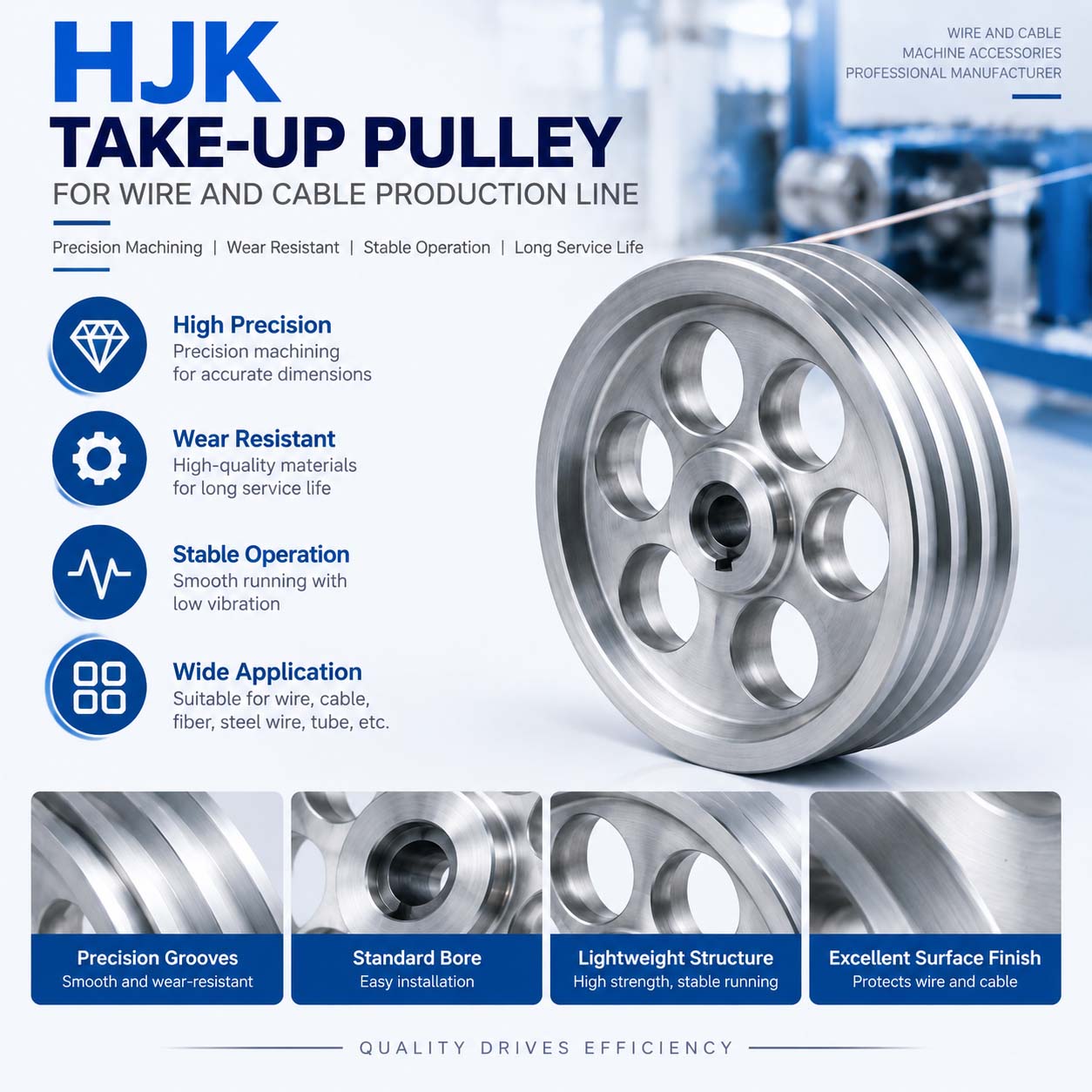
The take-up pulley is an essential traction component in cable and wire production equipment. Its performance directly affects production stability, conveying accuracy, and final product quality. With optimized structural design and reliable material selection, the HJK Wire Take-up Pulley is widely used in various wire and cable processing systems.
This article introduces its features, applications, selection methods, maintenance requirements, and common issues to help users better understand and use this component.
Product Overview
The HJK Wire Take-up Pulley is mainly used in the traction section of wire and cable production equipment. It uses friction between the pulley surface and the cable or wire to achieve stable transportation.
The basic structure usually includes:
- Pulley body
- Shaft bore
- Surface treatment layer
Some models adopt replaceable designs for easier maintenance. The pulley diameter, width, and surface characteristics should be selected according to equipment requirements and cable specifications.
Main Features
- Reliable Materials:
Manufactured from high-strength materials to withstand continuous mechanical loads during operation. - Optimized Surface Treatment:
Different surface finishes are available to balance friction performance and wear resistance according to application requirements. - Various Specifications:
Available in different diameters, widths, and mounting sizes to meet different wire sizes and traction requirements. - Easy Replacement:
The structure is designed for convenient installation and removal, reducing machine downtime.
Applications
HJK Wire Take-up Pulleys are widely used in various wire and cable production equipment, including:
- Wire and cable extrusion lines
- Fiber optic cable manufacturing equipment
- Steel wire and copper wire drawing machines
- Pipe and profile pulling systems
The exact application depends on equipment model, wire material, and production parameters.
Selection Guide
When selecting a suitable take-up pulley, consider the following factors:
Size Requirements
The pulley diameter, width, and shaft bore must match the equipment specifications. It is recommended to check original components or equipment manuals before ordering.
Surface Requirements
Choose the appropriate surface treatment according to wire material and traction requirements.
- Smooth surfaces are suitable for soft cables and applications requiring surface protection.
- Rough or coated surfaces provide higher friction for materials that are difficult to pull.
Load Capacity
Confirm the maximum operating speed and traction force to ensure safe and stable operation under actual working conditions.
Material Compatibility
Different wire materials require different surface hardness and friction characteristics. Soft cables, steel wires, and special alloys may require different pulley materials or coatings.
Maintenance and Care
Proper maintenance can significantly extend the service life of the take-up pulley.
- Regular Inspection:
Check the pulley surface for uneven wear, cracks, or abnormal grooves. Replace the pulley if serious damage occurs. - Surface Cleaning:
Remove dust, metal particles, oil, and other contaminants to maintain stable friction and protect the wire surface. - Bearing Lubrication:
For pulley designs equipped with bearings, apply suitable grease according to equipment requirements. - Proper Storage:
Store spare pulleys in a dry environment away from corrosive substances.
Frequently Asked Questions
What Should I Do If the Take-up Pulley Slips?
First check whether the pulley surface is worn or contaminated with oil. Clean the surface and adjust the traction pressure. If wear is severe, replace the pulley.
How Can I Determine Whether the Pulley Needs Replacement?
Replacement is recommended when:
- Deep wear grooves appear on the surface
- The pulley diameter decreases beyond the allowable tolerance
- Abnormal vibration occurs during operation
- Wire quality is affected
Can a Take-up Pulley Be Repaired?
Some pulleys can be restored by machining the surface or replacing wear-resistant sleeves. However, repair feasibility depends on damage level, cost, and performance requirements.
Do Different Cable Materials Require Different Pulleys?
Yes. For example:
- Soft PVC cables usually require smooth-surface pulleys.
- Steel wire and other hard materials may require higher hardness surfaces or special coatings.
What Should Be Considered During Installation?
Ensure the shaft bore fits correctly, tighten fasteners according to specifications, and manually rotate the pulley after installation to confirm smooth operation without resistance.
What Is the Service Life of a Take-up Pulley?
Service life depends on operating speed, traction load, material type, surface condition, and maintenance practices. Regular inspection and wear records help determine the optimal replacement cycle.
