

Coating Service Overview
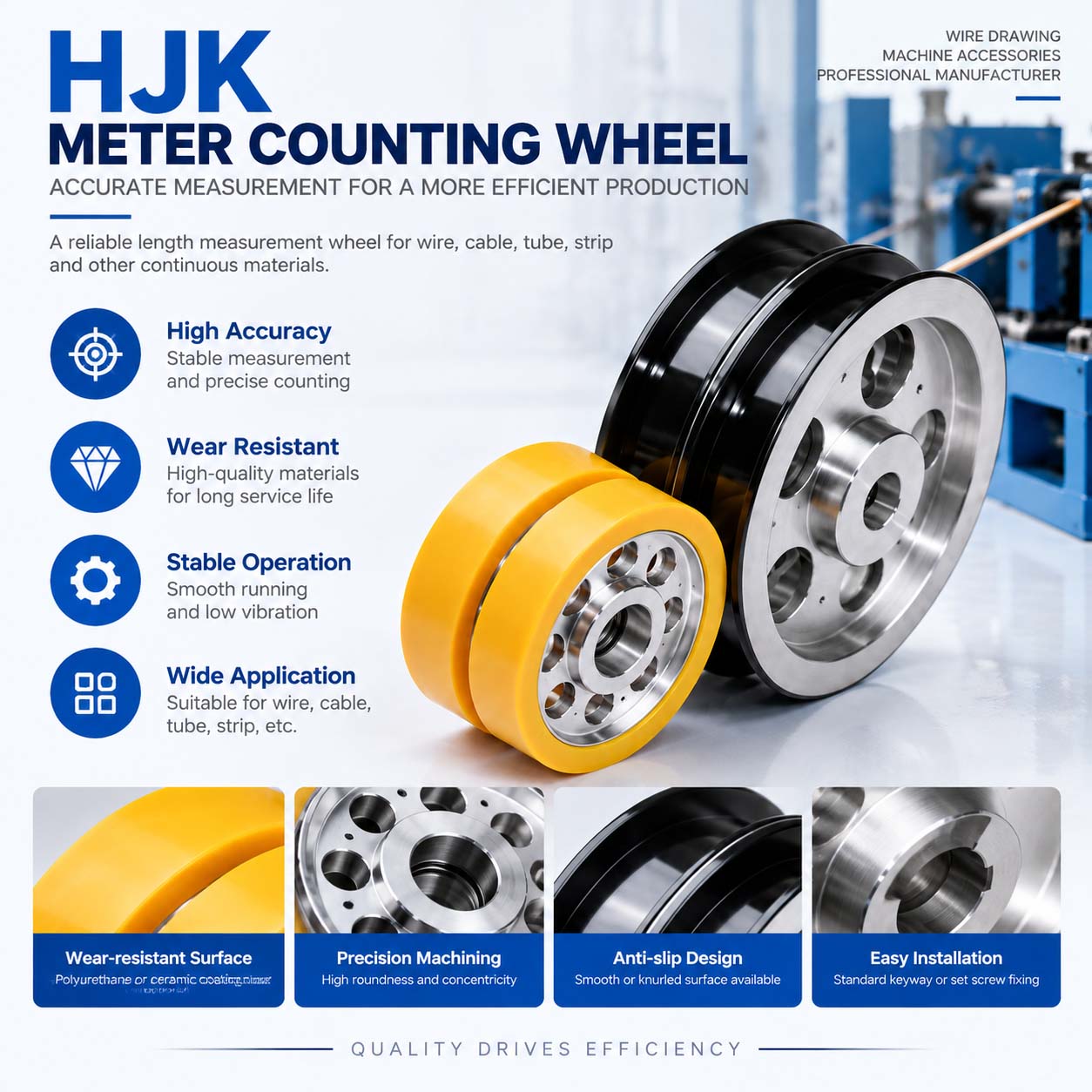
In continuous production processes such as wire and cable manufacturing, tubing, strips, paper, and film processing, accurate length measurement is essential for cost control, quality management, and trade settlement. The HJK Wire Measuring Wheel is a key contact component in length measurement systems. By maintaining stable contact with the material surface, it converts linear movement into rotational signals and works with an encoder to achieve accurate length measurement.
The wear resistance, dimensional accuracy, and surface condition of the measuring wheel directly affect measurement precision, making material selection and machining quality especially important.
Product Features
The HJK Wire Measuring Wheel is designed for long-term industrial operation and offers the following advantages:
- Wear-Resistant Materials: Made from high-quality alloy steel or equipped with ceramic coatings for improved hardness and longer service life.
- Precision Machining: The outer diameter is finely ground, with strict control of roundness and concentricity to ensure smooth contact and reduce slipping.
- Multiple Sizes: Available in different diameters, widths, and bore sizes to match various wire diameters and mounting shafts.
- Anti-Slip Surface Options: Knurled or polyurethane-coated surfaces are available for high-speed or smooth materials.
- Easy Installation: Standard keyways or set-screw mounting structures allow fast replacement and reduced downtime.
Applications
HJK measuring wheels are widely used for online and offline length measurement in:
- Wire and cable extrusion lines
- Cabling and stranding machines
- Pipe and profile traction systems
- Steel wire and welding wire equipment
- Paper, film, tape, and strip slitting or rewinding lines
- Fixed-length cutting and measuring systems
- Other continuous material processing equipment
Selection Guide
When selecting a measuring wheel, consider the following factors:
Material Type
For soft cables, a smooth measuring wheel is usually suitable. For hard, polished, or slippery materials, a knurled or polyurethane-coated surface can provide better traction.
Material Diameter
The wheel diameter should match the wire or cable diameter to ensure stable contact and avoid excessive bending.
Operating Speed
High-speed applications require good dynamic balance and wear-resistant materials to maintain long-term accuracy.
Installation Dimensions
Confirm shaft diameter, bore size, keyway, and available mounting space before ordering.
Working Environment
For high-temperature, humid, or corrosive environments, select suitable materials and surface treatments.
Installation Guidelines
- Clean the mounting shaft and wheel bore before installation.
- Check the keyway and mounting surfaces for burrs or damage.
- Install the wheel onto the shaft and align the keyway.
- Secure it using the key, set screw, or retaining structure.
- Rotate the wheel manually and check radial runout. For precision applications, runout should generally be controlled within 0.05 mm.
- Connect the encoder and verify that the output signal is stable.
Maintenance Recommendations
Proper maintenance helps maintain measurement accuracy and extend service life.
- Clean dust, oil, and material residue from the wheel surface regularly.
- Inspect the surface for grooves, wear, or loss of roundness.
- Lubricate bearings where required.
- Monitor abnormal vibration or noise during operation.
- Recalibrate the measuring system periodically, especially after wheel replacement.
Frequently Asked Questions
What Should I Do If the Measuring Wheel Slips?
Check whether the wheel surface has become worn or too smooth. A knurled or polyurethane-coated wheel may provide better grip. Also check contact pressure and material tension.
How Can Measurement Accuracy Be Calibrated?
Run a known standard length through the system and compare it with the displayed value. Adjust the encoder pulse factor or wheel diameter compensation parameter as required.
How Long Does a Measuring Wheel Last?
Service life depends on material type, production speed, contact pressure, and environment. Alloy steel wheels can provide thousands of operating hours under normal conditions, while ceramic-coated versions may offer even longer service life.
Can It Be Used in High-Temperature Applications?
Standard models are designed mainly for normal-temperature operation. For high-temperature environments, heat-resistant materials, coatings, and suitable lubrication should be selected.
How Should the Wheel Diameter Be Selected?
The diameter should balance measurement resolution and bending requirements. Larger wheels reduce bending stress, while smaller wheels provide higher pulse resolution. The final size should match the material and encoder configuration.
Can HJK Measuring Wheels Be Customized?
Yes. Outer diameter, width, bore size, surface finish, coating, and mounting structure can be customized according to drawings or application requirements.
