

Coating Service Overview
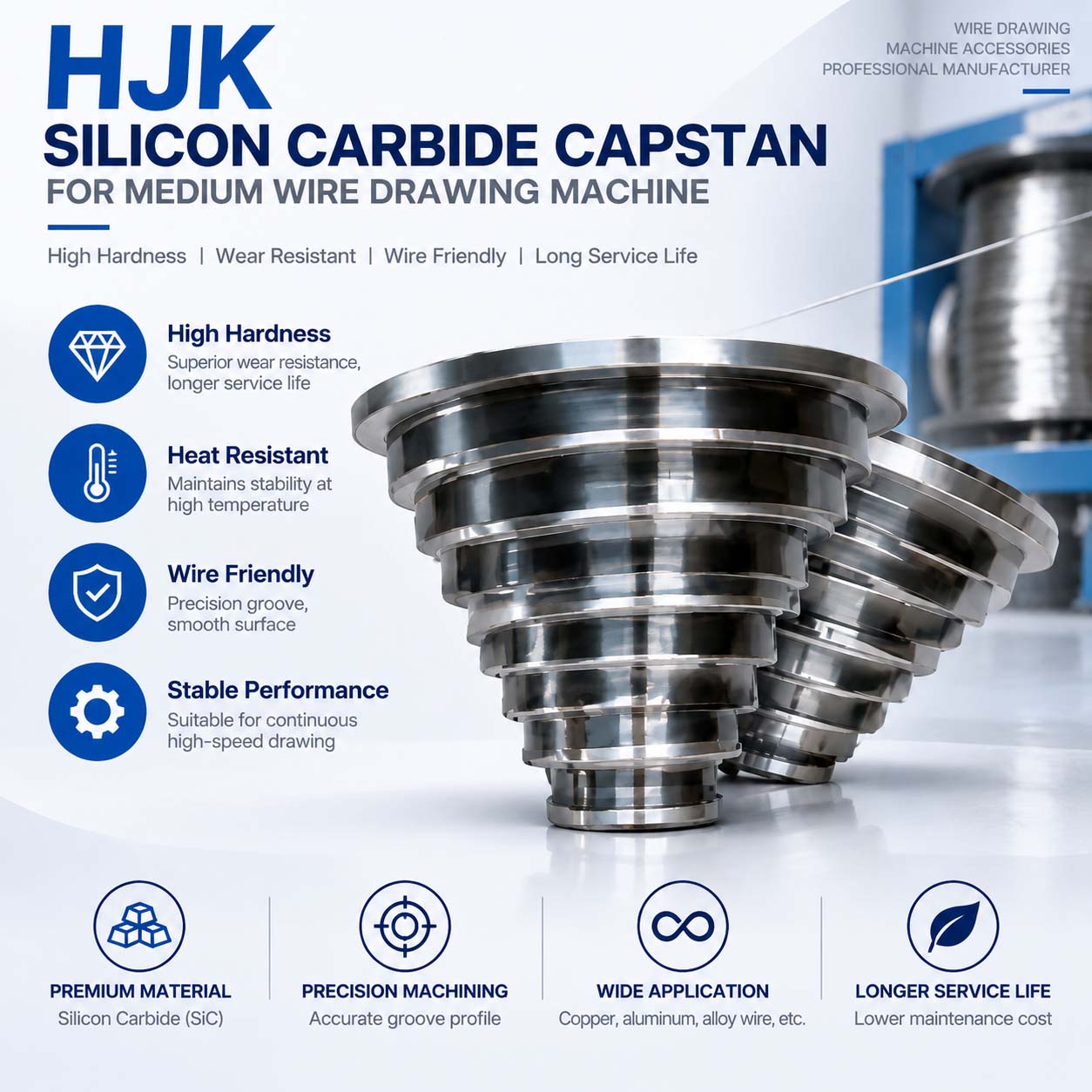
In metal wire drawing processes, the capstan is a critical component for power transmission and wire diameter control. The Silicon Carbide Capstan for Medium Wire Drawing Machine has become widely used in medium wire drawing applications due to its excellent wear resistance, thermal stability, and dimensional accuracy.
This article introduces the material properties, structural design, selection considerations, and maintenance methods to help users improve production efficiency and extend capstan service life.
Material Properties and Advantages
Silicon carbide (SiC) is a high-performance ceramic material with hardness second only to diamond and cubic boron nitride. It also features low density, high thermal conductivity, and excellent high-temperature strength.
Main advantages include:
- Excellent Wear Resistance: Silicon carbide is much harder than hardened steel and conventional alloys, effectively resisting wire friction and maintaining accurate groove geometry for long-term operation.
- High Temperature Resistance: During wire drawing, friction generates heat. Silicon carbide maintains strength at elevated temperatures and prevents deformation that may affect wire diameter accuracy.
- Chemical Stability: SiC is resistant to most acids, alkalis, and drawing lubricants, making it suitable for various wire drawing environments.
- Lightweight Design: Compared with metal capstans, silicon carbide has lower density, reducing rotational inertia and energy consumption during operation.
Structure and Applications
Silicon carbide capstans for medium wire drawing machines are usually designed with a multi-step structure. Each step has a different diameter to achieve progressive wire reduction through multiple drawing passes. Precision grooves are machined on the surface to guide the wire smoothly.
Common designs include:
- Integrated Silicon Carbide Capstan: Provides excellent rigidity and is suitable for high-speed precision drawing.
- Composite Capstan: Uses a silicon carbide ring mounted on a metal core, allowing easier replacement and lower maintenance costs.
These capstans are widely used for copper wire, aluminum wire, alloy wire, and some steel wire drawing applications. They are especially suitable for products requiring high surface quality, such as magnet wire, welding wire, and tire cord wire.
In continuous drawing lines, the silicon carbide capstan works together with drawing dies to achieve efficient multi-pass diameter reduction.
Selection and Installation Guidelines
Proper selection is essential for stable drawing performance and long service life.
Key factors include:
- Diameter and Drawing Pass Matching: Select the correct capstan diameter, groove size, and number of steps according to machine specifications and drawing process requirements.
- Mounting Interface: Confirm shaft hole size, keyway dimensions, and positioning method to ensure accurate installation.
- Dynamic Balance: High-speed drawing machines require precision-balanced capstans to reduce vibration and improve wire quality.
- Surface Quality: Check that grooves are smooth and free from cracks, chips, or defects. Surface finish should meet process requirements.
During installation, use proper tools and apply uniform pressure. Avoid impact or hammering, as silicon carbide ceramics are brittle. After installation, check radial runout with a dial indicator. For precision applications, runout is generally controlled within 0.02 mm.
Maintenance and Troubleshooting
Proper maintenance helps extend capstan life and maintain stable wire quality.
Routine Inspection
- Check groove wear regularly. If deep grooves or abnormal wear marks appear, repair or replace the capstan.
- Monitor vibration and unusual noise during operation. Inspect bearings, balance condition, and mounting stability if problems occur.
- Keep cooling and lubrication systems clean to prevent particles from entering grooves and damaging the wire surface.
Common Problems and Solutions
Rapid Groove Wear
Possible causes include insufficient lubrication, hard particles on the wire surface, excessive tension, or unsuitable capstan material. Check the lubrication system, wire quality, and process parameters.
Wire Surface Scratches
Usually caused by increased groove roughness or foreign particles. Polish the groove surface and improve lubricant filtration.
Capstan Cracking or Damage
Although uncommon, damage may result from impact, installation stress, or material defects. Avoid mechanical shock during installation and perform quality inspection before use.
Frequently Asked Questions
What Wires Are Suitable for Silicon Carbide Capstans?
They are suitable for copper wire, aluminum wire, alloy wire, and some steel wire applications, especially where high surface finish and wear resistance are required.
What Is the Difference Between Silicon Carbide and Zirconia Capstans?
Silicon carbide provides higher hardness, better thermal conductivity, and stronger wear resistance, making it suitable for high-speed and high-temperature applications. Zirconia offers better toughness and impact resistance. Selection depends on wire material, speed, and working conditions.
When Should a Capstan Be Replaced?
Replacement is recommended when groove wear exceeds the allowable limit (usually around 0.5 mm), or when surface peeling, cracks, or dimensional changes occur.
Can Silicon Carbide Capstans Be Repaired?
Minor wear can be corrected by precision grinding to restore groove accuracy. However, severely damaged or cracked capstans should be replaced.
What Is the Service Life of a Silicon Carbide Capstan?
Service life depends on wire material, drawing speed, lubrication conditions, and maintenance. Under normal operating conditions, silicon carbide capstans can provide several times longer service life than conventional metal capstans.
What Should Be Considered During Installation?
Avoid impact during installation, use uniform pressing methods, check radial runout after mounting, and ensure all fasteners are properly secured.
