

Coating Service Overview
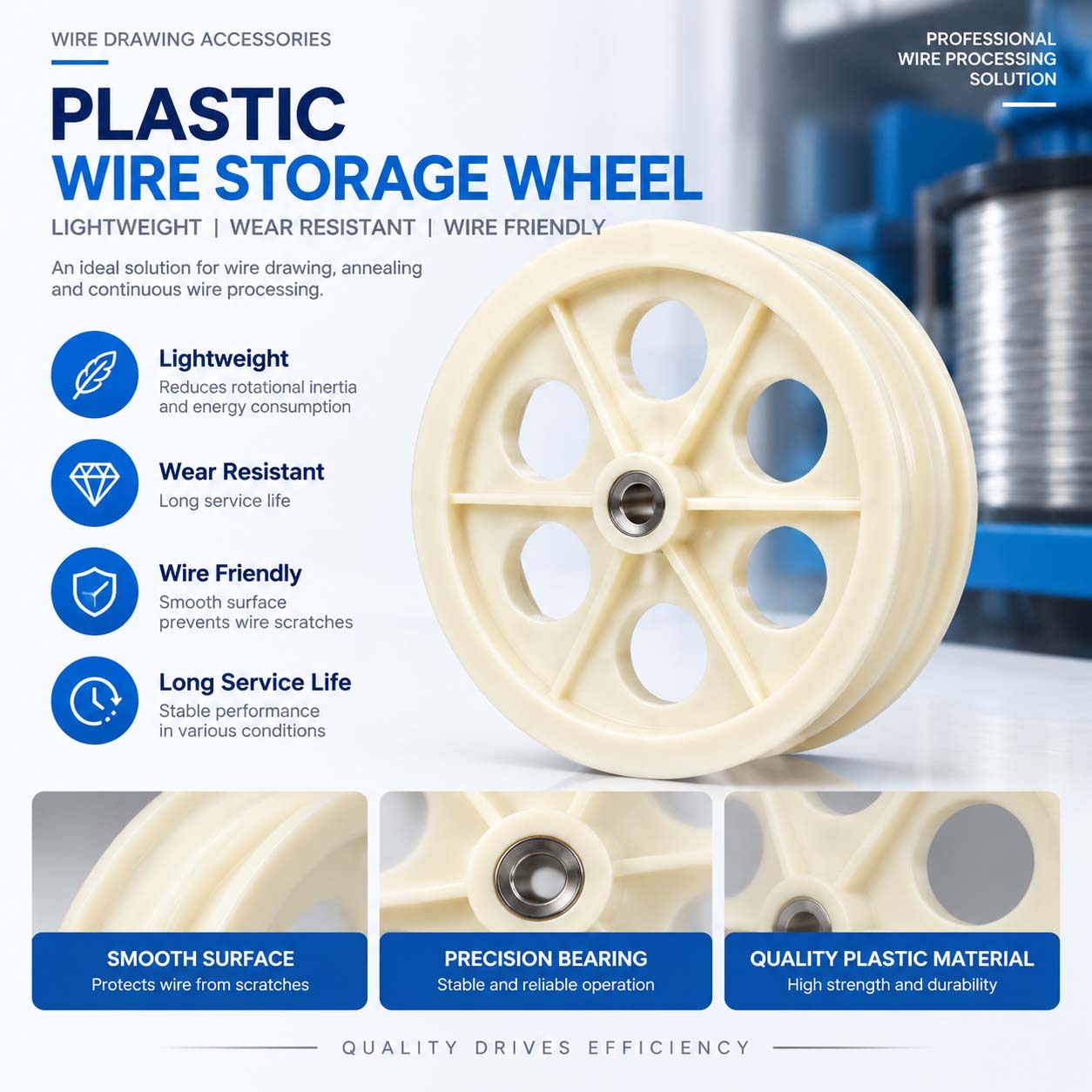
During metal wire drawing processes, the plastic wire storage pulley plays an important role in wire tension buffering, speed synchronization, and temporary wire storage. Compared with traditional metal pulleys, plastic storage pulleys offer advantages such as lightweight design, wear resistance, and excellent wire surface protection. They are widely used in precision wire processing applications including copper wire, tin-plated wire, and fine steel wire production.
This article introduces the materials, applications, selection methods, installation requirements, and maintenance of plastic wire storage pulleys.
Materials and Features of Plastic Wire Storage Pulleys
Plastic wire storage pulleys are generally manufactured from high-performance engineering plastics, including:
- UHMWPE (Ultra-High Molecular Weight Polyethylene)
- Polyurethane (PU)
- Nylon (PA)
These materials provide several advantages:
- Lightweight Design: The density is only about 1/7 to 1/8 of metal materials, reducing rotational inertia, energy consumption, and equipment load.
- Smooth and Wear-Resistant Surface: Low friction characteristics help prevent wire scratches while maintaining long service life.
- Excellent Corrosion Resistance: Plastic materials resist lubricants, cleaning agents, and other chemical media without rusting.
- Vibration and Noise Reduction: The elastic properties of plastics help absorb vibration and reduce operating noise.
Different materials are suitable for different working conditions:
- UHMWPE: Balanced performance, suitable for general wire storage applications.
- PU: Good elasticity, suitable for high-speed operation and frequent start-stop conditions.
- Nylon: Higher strength, suitable for heavier loads and higher tension applications.
Material selection should consider wire type, wire diameter, production speed, tension requirements, and operating environment.
Typical Applications
Plastic wire storage pulleys are widely used in various wire drawing machines, including:
- Medium Wire Drawing Lines: Used for copper and aluminum wire drawing processes, providing tension buffering during annealing and winding.
- Fine Wire and Micro Wire Drawing Machines: Protect delicate wire surfaces from scratches and improve finished product quality.
- Tin-Plated Wire and Alloy Wire Production: Prevent metal contamination and protect coating integrity for high-quality wire products.
- Steel Wire Drawing Auxiliary Systems: Used for tension adjustment and temporary wire storage in specific drawing processes.
Selection and Installation Guidelines
Proper selection ensures stable operation and longer service life. The following factors should be considered:
- Pulley Diameter and Groove Design: The pulley diameter should match the wire bending radius to avoid excessive bending stress. Groove shape should correspond to wire diameter, with common designs including V-groove, U-groove, and flat groove.
- Bore Size and Keyway: The mounting hole must accurately match the equipment shaft. Customized dimensions are available for special requirements.
- Dynamic Balance: High-speed applications require dynamically balanced pulleys to reduce vibration.
- Operating Temperature: The selected plastic material must maintain stable performance at the actual working temperature to prevent softening or brittleness.
During installation, ensure the pulley is properly aligned with the shaft, tighten fasteners evenly, and check alignment with adjacent guide pulleys.
Maintenance and Troubleshooting
Maintenance Recommendations
- Clean copper powder, lubricant residue, and contaminants from the groove regularly. Use a soft cloth or suitable cleaner and avoid metal tools that may damage the surface.
- Inspect surface wear regularly. Replace the pulley if deep grooves, deformation, or uneven wear appear.
- For pulley designs with bearings, use compatible lubricants and check bearing conditions to prevent abnormal wear.
Common Problems and Solutions
Wire Surface Scratches
Possible causes include foreign particles, groove damage, or worn surfaces. Clean the pulley or replace it if necessary.
Noise or Vibration During Operation
Check dynamic balance, bearing condition, and installation alignment. Recalibration may be required.
Insufficient Wire Storage Capacity
Check whether the pulley diameter and number of grooves meet production requirements. Adjust the pulley configuration if needed.
Frequently Asked Questions
What Types of Wire Are Suitable for Plastic Storage Pulleys?
They are commonly used for copper wire, aluminum wire, tin-plated wire, alloy wire, and some fine steel wire applications. They are especially suitable for wires requiring high surface quality.
When Should a Plastic Storage Pulley Be Replaced?
Replacement is recommended when groove wear exceeds approximately 10–15% of the wire diameter, or when obvious deformation, cracks, or loss of roundness appear.
Can Plastic Storage Pulleys Replace Metal Pulleys?
Yes, in lightweight, high-speed, and surface-sensitive applications. However, metal pulleys may still be preferred for extremely high tension, heavy loads, or high-temperature environments.
What Is the Service Life of a Plastic Storage Pulley?
Service life depends on material type, wire material, speed, tension, and maintenance conditions. High-quality plastic pulleys can normally operate for thousands of hours under proper conditions.
Can Custom Sizes Be Manufactured?
Yes. Manufacturers can provide customized pulleys according to equipment specifications, including diameter, groove design, shaft hole size, and special materials.
