

Coating Service Overview
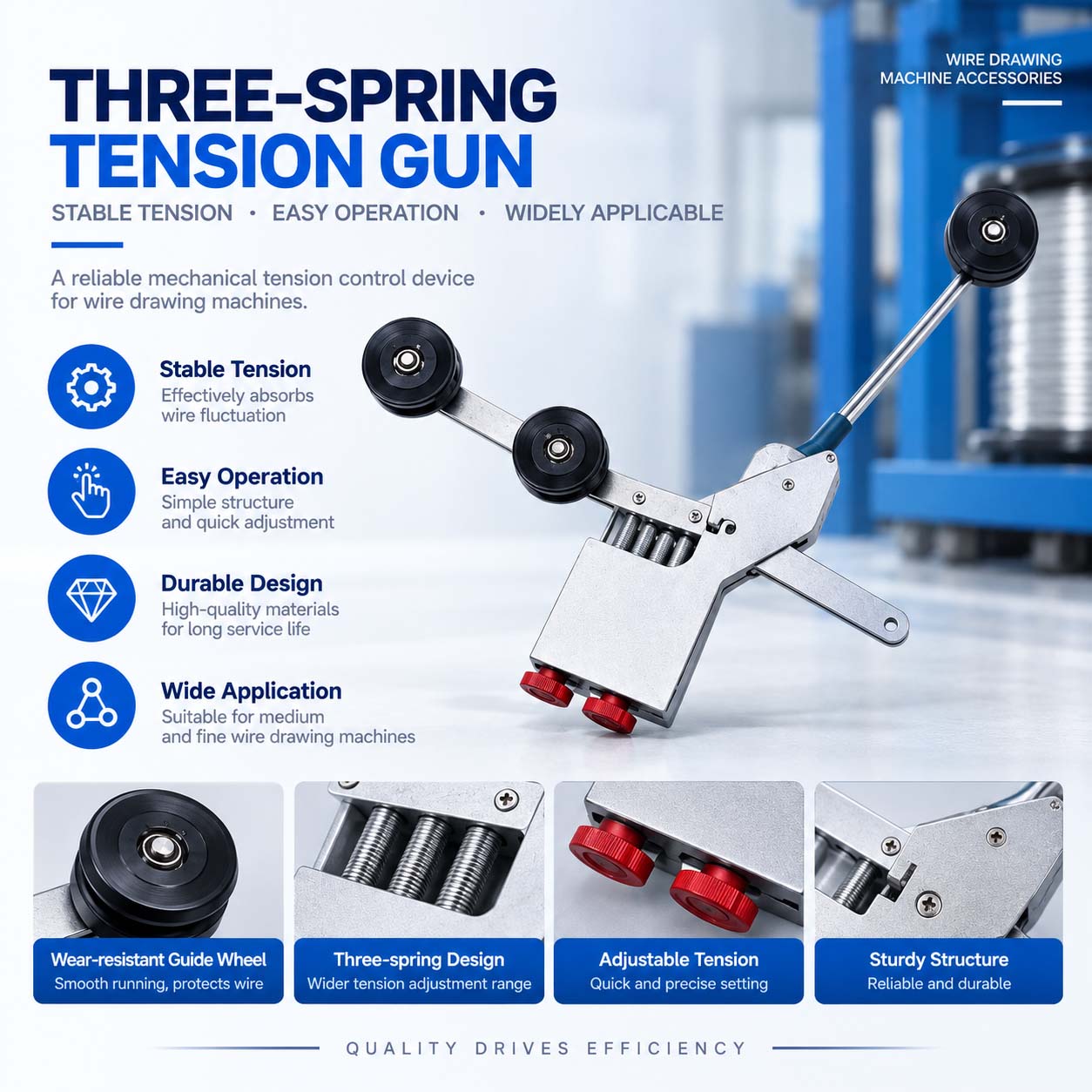
During the metal wire drawing process, tension control directly affects product quality and production efficiency. The Triple Spring Wire Tension Gun is a mechanical tension adjustment device widely used in medium and fine wire drawing machines due to its simple structure, reliable response, and easy adjustment.
Through the coordinated action of three springs, the tension gun absorbs wire fluctuations and maintains stable drawing tension, helping reduce wire breakage and ensuring consistent wire diameter and surface quality.
Structure and Working Principle
A triple spring tension gun generally consists of a tension body, three spring sets, a swing arm, and a guide wheel.
During operation, the wire passes through the guide wheel. When wire tension changes, the swing arm moves accordingly, compressing or releasing the springs to automatically adjust the tension. The three-spring design provides a wider adjustment range and better dynamic response under different drawing speeds.
Main Components
- Spring Assembly: Three springs with different specifications can be used individually or combined to achieve multi-level tension adjustment.
- Swing Arm Mechanism: Transfers wire tension changes and controls spring movement.
- Guide Wheel: Usually manufactured from wear-resistant materials such as zirconia ceramic or silicon carbide to reduce wire wear and maintain smooth running.
Applications
Triple spring wire tension guns are widely used in various metal wire drawing equipment, including:
- Medium and Fine Wire Drawing Machines: Suitable for copper wire, aluminum wire, alloy wire, and other metal wire production.
- High-Speed or Frequent Start-Stop Processes: Provides stable tension control during speed changes.
- Precision Wire Processing: Helps maintain consistent tension for applications requiring high surface quality and dimensional accuracy.
In complete wire processing systems, tension guns usually work together with drawing capstans, guide pulleys, and other wire handling components to achieve stable wire movement and production efficiency.
Selection Guide
When selecting a triple spring tension gun, consider the following factors:
- Wire Material and Diameter: Different wire materials and sizes require different tension ranges and spring specifications.
- Drawing Speed: High-speed applications require springs with suitable dynamic characteristics to ensure fast response and stable tension.
- Installation Space: Select the appropriate size and structure according to machine layout.
- Guide Wheel Material: Choose suitable guide wheel materials based on wire hardness and operating conditions. Ceramic wheels or tungsten carbide coated wheels are commonly used for high wear resistance.
Customized tension ranges and structures can be provided according to specific equipment requirements.
Maintenance and Troubleshooting
Proper maintenance ensures long-term stable operation:
- Check Spring Condition: Inspect springs regularly for fatigue, deformation, or loss of elasticity. Replace damaged springs in time.
- Clean Guide Wheel Grooves: Remove wire dust and contaminants to prevent slipping and abnormal wear.
- Lubricate Swing Arm Joints: Keep moving parts flexible and reduce mechanical resistance.
- Calibrate Tension Regularly: Periodic adjustment helps maintain accurate tension control and compensate for spring aging.
Common Problems and Solutions
Large Tension Fluctuation
Check whether springs are broken or weakened, and inspect guide wheel wear conditions.
Swing Arm Sticking
Clean the pivot area and apply suitable lubricant to restore smooth movement.
Wire Vibration During Operation
Check whether the guide wheel groove matches the wire diameter and confirm that the wheel is not excessively worn.
Frequently Asked Questions
Which Wire Drawing Machines Use Triple Spring Tension Guns?
They are mainly used in medium and fine wire drawing machines, and can also be applied to some large drawing machines depending on the required tension range.
How Can I Know When the Springs Need Replacement?
Replacement is recommended when the tension adjustment range decreases, wire tension becomes unstable, or permanent spring deformation appears.
What Happens When the Guide Wheel Is Worn?
A worn guide wheel may cause wire scratches, unstable tension, and even wire breakage. Regular inspection and timely replacement are necessary.
Can the Tension Be Adjusted Manually?
Yes. The tension range can be adjusted by changing spring combinations or modifying spring preload.
Does the Tension Gun Require Regular Calibration?
Regular calibration is recommended, typically every few months or according to production frequency, to maintain stable tension accuracy.
What Should Be Considered During Installation?
Ensure the tension gun is firmly installed, the guide wheel is aligned with the wire path, and avoid uneven wear caused by misalignment.
