

Coating Service Overview
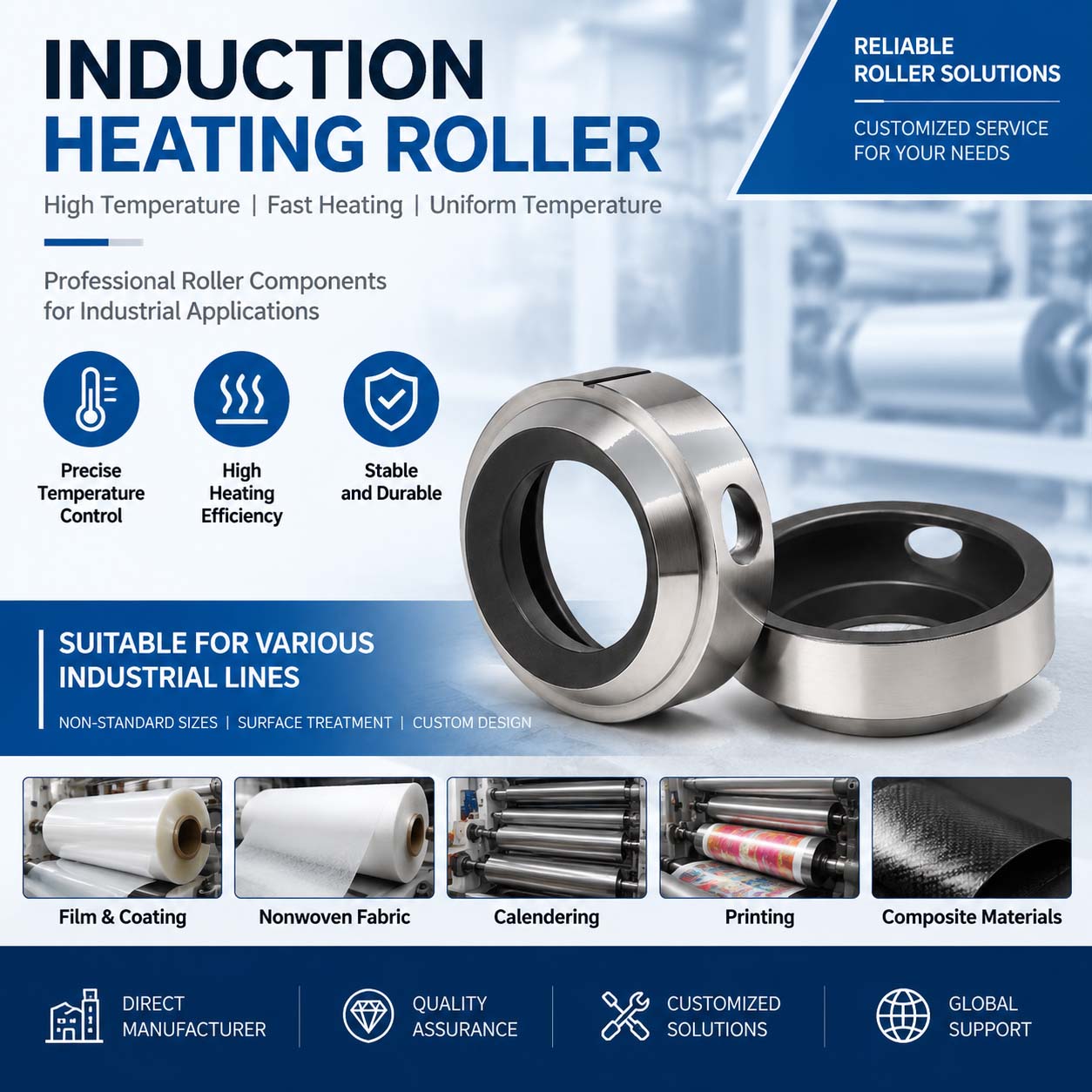
In cable manufacturing and industrial transmission systems, heating rollers are critical components for stable material stretching, forming, and processing.
During long-term operation, roller surfaces are exposed to friction, high temperature, and chemical environments, which may cause wear, corrosion, and reduced product quality.
Through advanced surface treatment technologies, heating rollers can achieve improved wear resistance, corrosion protection, and longer service life, reducing maintenance costs and production downtime.
Structure and Function of Heating Rollers
A typical industrial heating roller consists of:
- Roller body
- Heating elements
- Temperature control system
- Transmission components
The roller body is usually manufactured from high-quality steel and equipped with electric heating or electromagnetic induction heating systems to achieve uniform temperature control.
In cable production equipment, heating rollers are used to:
- Preheat conductors
- Heat insulation layers
- Improve material forming performance during stretching and coating processes
For industrial wear applications, heating rollers must withstand high contact pressure. Surface hardness, smoothness, and thermal stability directly affect final product quality.
Wear and Corrosion Resistant Surface Treatment
To improve roller performance under harsh conditions, advanced thermal spray technologies are commonly applied, including:
- HVOF tungsten carbide spraying
- Ceramic coating
- Hard chrome plating
These coatings provide:
- High hardness
- Low friction coefficient
- Excellent wear resistance
- Chemical corrosion resistance
Tungsten Carbide Coating
Tungsten carbide coating provides:
- Extremely high hardness
- Superior abrasive wear resistance
- Strong impact resistance
It is widely used for:
- Wire drawing machine components
- Cable pulling rollers
- High-speed industrial wear parts
Ceramic Coating
Ceramic coatings offer:
- High-temperature resistance
- Electrical insulation
- Corrosion protection
They are commonly used for:
- Enamel wire machine rollers
- Heating rollers
- High-temperature industrial components
Hard Chrome Plating
Hard chrome coating provides:
- Basic wear resistance
- Rust protection
- Cost-effective surface improvement
It is suitable for general industrial applications but usually has a shorter service life compared with advanced thermal spray coatings.
Applications and Selection Guide
Heating rollers are widely used in:
- Cable production lines
- Wire drawing machines
- Enamel wire equipment
- Winding machines
- Pay-off and take-up systems
When selecting a heating roller, consider:
Operating Temperature
Choose suitable heating methods and temperature control accuracy according to production requirements.
Load and Speed
High-load applications require:
- Strong roller structures
- High-hardness coatings
- Excellent dynamic balance
Working Environment
For corrosive gases or liquids:
- Ceramic coatings
- Alloy coatings
are recommended.
Installation Requirements
Ensure:
- Correct roller diameter
- Proper roller length
- Compatibility with existing equipment
Application Examples
Copper Wire Drawing
Heating rollers experience continuous high-speed friction. Tungsten carbide coating improves wear resistance and maintains dimensional accuracy.
Enamel Wire Production
Heating rollers must resist enamel paint corrosion and high temperatures. Ceramic coatings provide excellent protection and help maintain uniform coating quality.
Maintenance Recommendations
Proper maintenance can significantly extend heating roller service life:
- Regularly inspect coating wear and repair local damage promptly.
- Clean roller surfaces carefully and avoid hard particles scratching the coating.
- Monitor the heating system to prevent overheating and coating cracking.
- Lubricate bearings regularly to reduce abnormal wear.
- Cool rollers gradually after shutdown to avoid thermal shock.
For corrosion-sensitive areas such as oil seal positions, ceramic coating treatment can provide additional protection.
Frequently Asked Questions
1. Why does heating roller coating peel off?
Possible causes include:
- Poor bonding between coating and substrate
- Excessive operating temperature
- Mechanical impact
- Incorrect coating selection
The spraying process and working conditions should be reviewed.
2. How to choose a heating method?
- Electric heating: Simple structure and lower cost.
- Electromagnetic induction heating: Faster heating speed, higher efficiency, and better temperature control.
The choice depends on production speed and precision requirements.
3. Can worn heating rollers be repaired?
Yes. Worn rollers can be restored by:
- Removing damaged coating
- Applying new wear-resistant coating
- Grinding to required dimensions
Severely deformed rollers may require replacement.
4. Ceramic coating or tungsten carbide coating: which is better?
- Tungsten carbide coating: Higher hardness and better wear resistance.
- Ceramic coating: Better high-temperature and corrosion resistance.
The correct choice depends on actual operating conditions.
5. What should be checked during routine maintenance?
Inspect:
- Surface scratches and cracks
- Roller diameter wear
- Bearing temperature and vibration
- Heating and temperature control systems
6. What is the service life of a heating roller?
Service life depends on:
- Working temperature
- Load
- Speed
- Coating material
- Maintenance conditions
With proper coating and maintenance, service life can be extended significantly.
