

Coating Service Overview
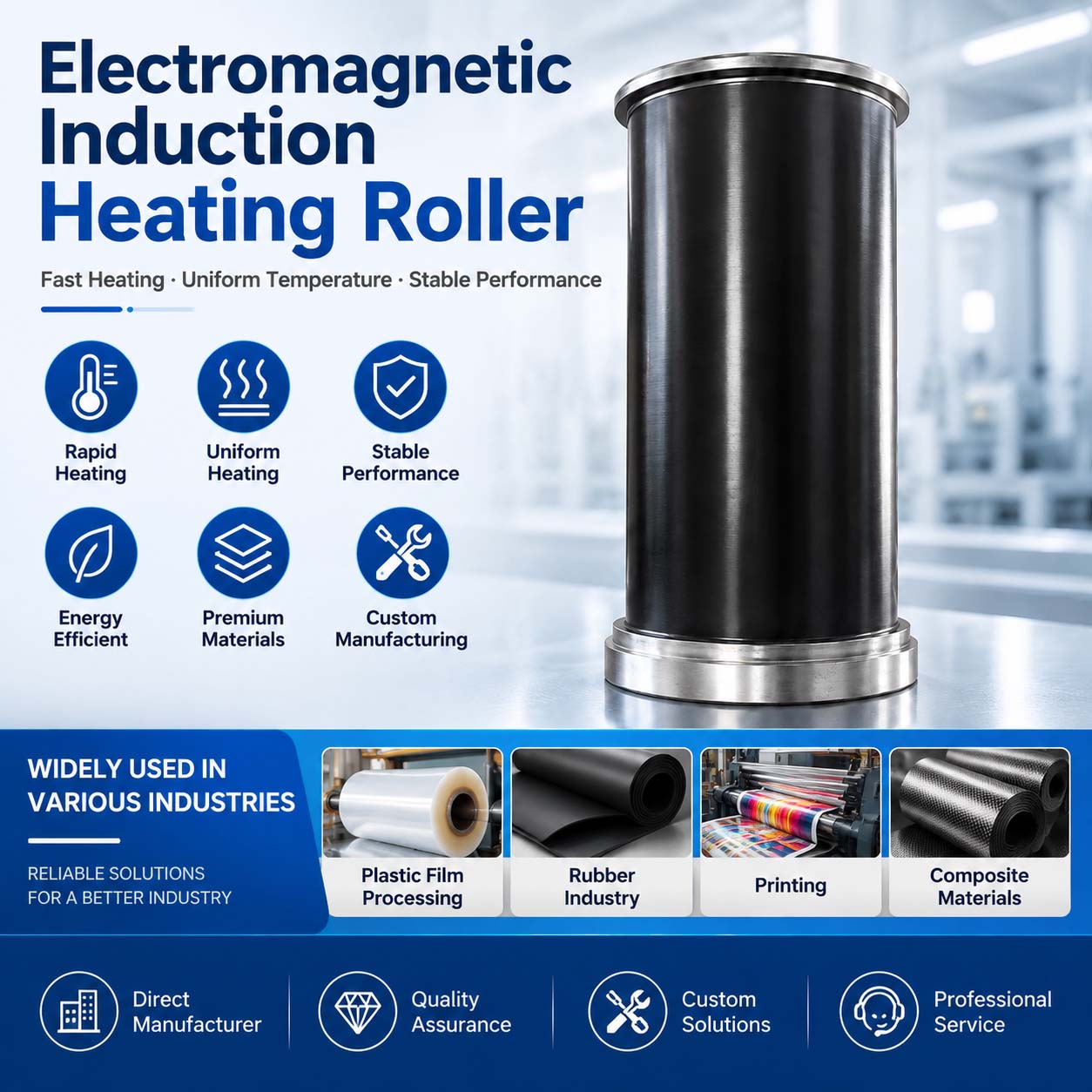
Electromagnetic induction heating rollers are essential components in wire and cable production, wire drawing machines, enamel wire equipment, and other industrial processing lines. Their surface performance directly affects product quality, production efficiency, and equipment reliability.
Under high-speed operation and high-temperature conditions, roller surfaces may suffer from wear, corrosion, and material adhesion, resulting in frequent replacement and increased maintenance costs.
By applying advanced thermal spray coating technologies, such as tungsten carbide coating and ceramic coating, heating rollers can achieve excellent wear resistance, corrosion resistance, and high-temperature performance, significantly extending service life.
Thermal Spray Coating Technology and Advantages
Thermal spraying is a surface treatment process that heats coating materials into molten or semi-molten particles and sprays them onto a pretreated substrate at high speed to form a dense protective coating.
For electromagnetic induction heating rollers, common coating technologies include:
- HVOF (High Velocity Oxygen Fuel) spraying for tungsten carbide coatings
- Plasma spraying for ceramic coatings
Tungsten Carbide Coating
Tungsten carbide coatings provide:
- Extremely high hardness
- Excellent wear resistance
- Strong coating adhesion
- Low porosity structure
With hardness reaching HV1200+, tungsten carbide coatings are suitable for severe wear conditions such as:
- Cable pulling rollers
- Wire drawing guide rollers
- High-speed friction components
They effectively resist:
- Abrasive wear
- Erosion wear
- Sliding friction
Ceramic Coating
Ceramic coatings, including:
- Chromium oxide (Cr₂O₃)
- Aluminum oxide (Al₂O₃)
offer excellent:
- High-temperature resistance
- Corrosion resistance
- Electrical insulation performance
For heating rollers, ceramic coatings help prevent oxidation, reduce material adhesion, and maintain smooth surface performance.
They are commonly used for:
- Enamel wire machine heating rollers
- High-temperature rollers
- Ceramic plated industrial components
Typical Applications
Coated electromagnetic heating rollers are widely used in:
Wire and Cable Production
Applications include:
- Heating rollers
- Pulling rollers
- Pay-off and take-up equipment components
Coatings improve wear resistance, reduce wire scratches, and maintain stable production quality.
Wire Drawing Equipment
Components such as:
- Guide rollers
- Tower wheels
- Drawing rollers
can be coated with tungsten carbide to withstand high-speed metal wire friction and maintain dimensional accuracy.
Enamel Wire Production
Heating rollers require:
- High temperature resistance
- Anti-corrosion performance
- Electrical insulation
Ceramic coatings help prevent enamel adhesion and improve coating uniformity.
Other Industrial Applications
Surface-coated rollers are also used in:
- Printing machinery
- Textile equipment
- Packaging machinery
- Paper processing equipment
Coating Selection Guide
The correct coating should be selected according to working conditions:
Heavy Wear and Impact Conditions
Recommended:
Tungsten Carbide Coating
Advantages:
- Higher hardness
- Better abrasive wear resistance
- Suitable for high-friction applications
High Temperature and Corrosion Conditions
Recommended:
Ceramic Coating
Advantages:
- Excellent thermal stability
- Good corrosion resistance
- Electrical insulation properties
Combined Wear and Corrosion Requirements
Recommended:
Composite coating solutions
A combination of bonding layers and surface coatings can provide balanced performance.
Maintenance Recommendations
Proper maintenance can extend the service life of coated rollers:
- Avoid strong mechanical impact on the coating surface.
- Regularly inspect coating wear and damage.
- Clean surfaces with soft tools to prevent scratches.
- Repair minor coating damage promptly.
- Recoat severely worn rollers when necessary.
Frequently Asked Questions
1. Which is more wear resistant: tungsten carbide coating or ceramic coating?
Tungsten carbide coatings generally provide better wear resistance, especially against abrasive wear.
Ceramic coatings maintain excellent performance at high temperatures and provide better corrosion resistance.
The best choice depends on the actual operating environment.
2. What is the typical coating thickness?
Typical thickness:
- Tungsten carbide coating: 0.1–0.3 mm
- Ceramic coating: 0.2–0.5 mm
The final thickness depends on roller size, operating conditions, and performance requirements.
3. Can thermal spray coatings peel off?
With proper surface preparation and professional spraying processes, coatings have strong bonding strength and normally do not peel off.
Possible causes of coating failure include:
- Poor substrate preparation
- Excessive impact
- Substrate fatigue
- Improper operating conditions
4. Can old rollers be recoated?
Yes. Worn or corroded rollers can be restored through:
- Removal of old coating
- Machining
- Surface preparation
- New thermal spray coating
This is often more economical than replacing new rollers.
5. What temperature range can coated rollers withstand?
Generally:
- Tungsten carbide coatings: suitable for applications below approximately 500°C
- Ceramic coatings: can withstand 800°C or higher depending on material type
6. How is coating quality tested?
Common inspection methods include:
- Coating thickness measurement
- Hardness testing
- Bond strength testing
- Porosity inspection
- Metallographic analysis
These tests ensure coating reliability and service performance.
