

Coating Service Overview
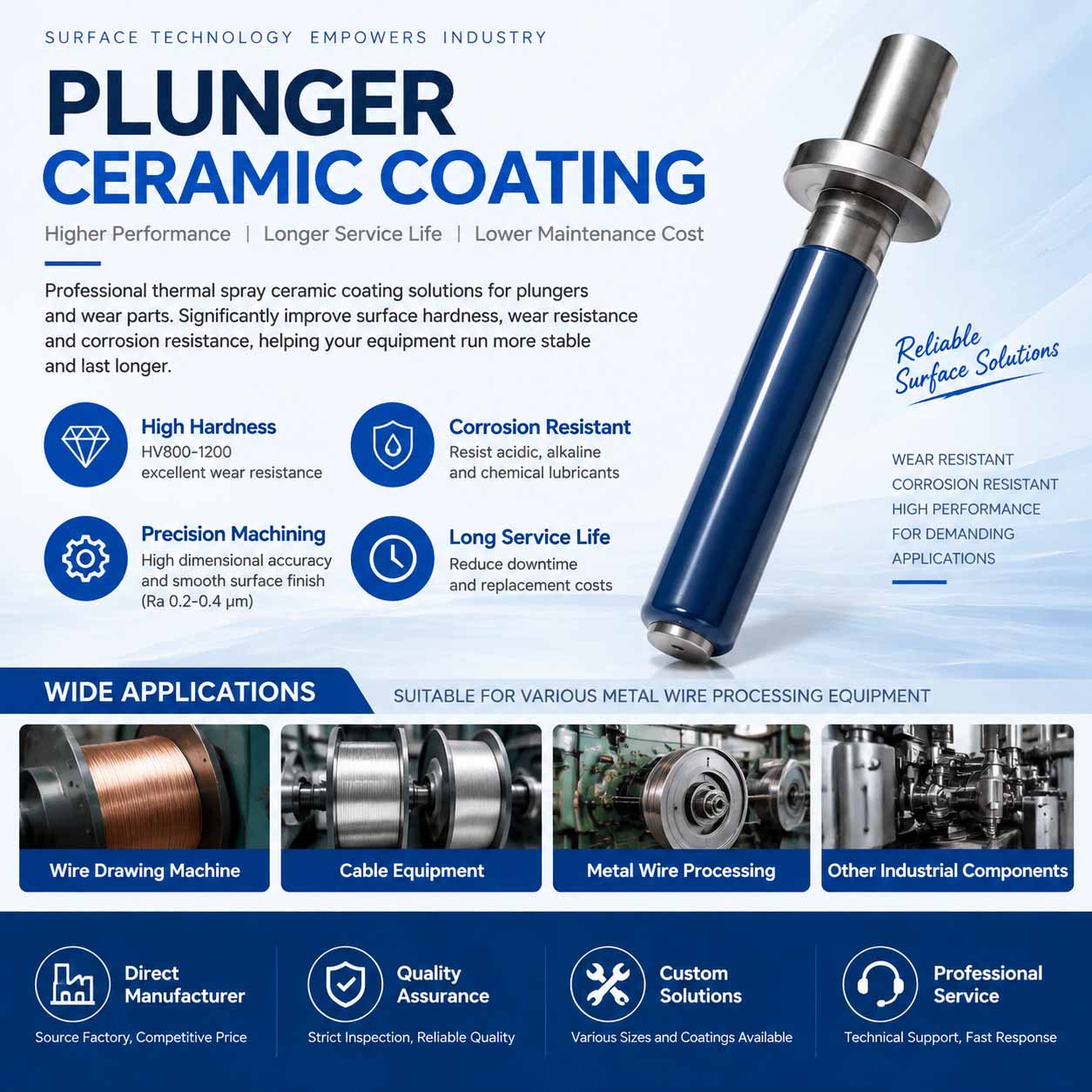
During metal wire drawing processes, components such as plungers, tower wheels, and guide rollers are exposed to high friction, heavy pressure, and corrosive lubricants. Wear and corrosion are major causes of equipment downtime and production loss.
For copper wire drawing machines, aluminum wire drawing machines, stainless steel wire drawing machines, and other metal wire processing equipment, we provide professional plunger ceramic coating and wear-resistant treatment solutions.
Through advanced thermal spray ceramic coating technology, component surfaces achieve higher hardness, better corrosion resistance, longer service life, and reduced replacement frequency.
Plunger Ceramic Coating Process and Advantages
The plunger is a key component in hydraulic and lubrication systems of wire drawing machines. Its surface condition directly affects sealing performance and equipment stability.
We use advanced processes including:
- Plasma spraying
- HVOF (High Velocity Oxygen Fuel) spraying
to apply dense ceramic coatings such as:
- Chromium oxide (Cr₂O₃)
- Aluminum oxide-titanium oxide (Al₂O₃-TiO₂)
Main Advantages:
High Hardness
Ceramic coatings can achieve hardness of HV800–1200, providing excellent resistance against abrasive wear.
Low Friction Performance
The ceramic surface reduces friction between the plunger and sealing components, lowering heat generation and energy consumption.
Excellent Corrosion Resistance
The dense coating structure protects against:
- Wire drawing lubricants
- Acidic liquids
- Alkaline environments
Size Restoration Capability
Worn plungers can be repaired by restoring the surface dimension before ceramic coating, avoiding complete replacement.
After precision finishing, the coated surface can achieve:
Ra 0.2–0.4 μm
to meet sealing requirements.
This technology is also suitable for shaft components in aluminum wire and stainless steel wire drawing machines.
Wear Resistant Parts for Wire Drawing Equipment
Besides plungers, we provide coating solutions for various metal wire processing components, covering the complete production process from pay-off to take-up.
Tower Wheels and Drawing Wheels
Tungsten carbide or ceramic coatings improve:
- Wear resistance
- Groove durability
- Wire surface protection
They help reduce wire scratches and extend service intervals.
Guide Rollers and Wire Passing Wheels
Ceramic coated rollers or full ceramic rollers provide:
- Low friction
- Smooth surface performance
- Reduced copper and aluminum powder adhesion
Straightening Rollers and Pressure Rollers
Surface hardening treatment improves:
- Roller life
- Wire straightness
- Processing stability
Die Holders and Die Sleeves
Wear-resistant treatment prevents:
- Die movement
- Uneven wear
- Reduced drawing accuracy
Oil Seal Position Ceramic Coating
Ceramic coating on shaft sealing areas helps solve:
- Shaft wear
- Oil leakage
- Seal failure problems
All components can be customized according to customer drawings or samples.
Applications and Coating Selection Guide
Copper Wire Drawing Machines
Copper drawing fluids are often mildly acidic, and copper particles may cause surface damage.
Recommended solutions:
- Chromium oxide ceramic coating for tower wheels and guide rollers
- Aluminum oxide-titanium oxide coating for plungers
Benefits:
- Reduced copper adhesion
- Lower wire breakage risk
- Improved wear resistance
Aluminum Wire Drawing Machines
Aluminum chips may accumulate and accelerate groove wear.
Recommended:
- Tungsten carbide coated guide rollers
- Chromium oxide coated plungers
For high-speed drawing equipment, HVOF spraying provides stronger coating adhesion and longer service life.
Stainless Steel Wire Drawing Machines
Stainless steel wire has high strength and causes severe component wear.
Recommended:
- Tungsten carbide coating for tower wheels and drawing rollers
- Ceramic coating for hydraulic components
- Ceramic or carbide rollers for straightening systems
Other Wire Processing Equipment
Wear-resistant coatings are also widely used in:
- Stranding machines
- Cable production lines
- Enamel wire equipment
- Winding machines
Heating rollers can combine ceramic coating technology with high-temperature resistance requirements.
Maintenance Recommendations
Proper maintenance helps maximize component life:
- Install coated parts carefully and avoid impact damage.
- Keep drawing lubricants clean; filtration accuracy below 10 μm is recommended.
- Inspect coating wear regularly.
- Repair or replace components when coating damage reaches the substrate.
- Store spare parts in dry environments.
- Recoat worn components after surface restoration to reduce lifecycle costs.
Frequently Asked Questions
1. Does ceramic coating affect dimensional accuracy?
No. Machining allowance is reserved before coating, and final grinding restores the required dimensions and tolerances.
2. Can ceramic coatings peel off?
With proper surface preparation and professional spraying, coating bonding strength can exceed 70 MPa.
Coating failure usually occurs due to:
- Severe impact
- Overloading
- Incorrect operating conditions
Damaged coatings can be repaired.
3. Can ceramic coated parts be used with food-grade lubricants?
Ceramic coatings are chemically stable and non-toxic, but specific materials should be evaluated according to food-contact requirements.
4. When should worn components be replaced?
Replacement or recoating is recommended when:
- More than 80% of coating thickness is worn
- Large-area peeling occurs
- The substrate becomes exposed
Regular groove measurement helps predict maintenance time.
5. Can customers provide their own parts for coating?
Yes. We provide professional surface treatment services for customer-supplied components, including:
- Ceramic coating
- Tungsten carbide coating
- Wear-resistant spraying
6. What is the delivery time?
Standard parts may be available from stock. Customized coating projects usually require:
2–4 weeks
depending on quantity, size, and process requirements.
