

Coating Service Overview
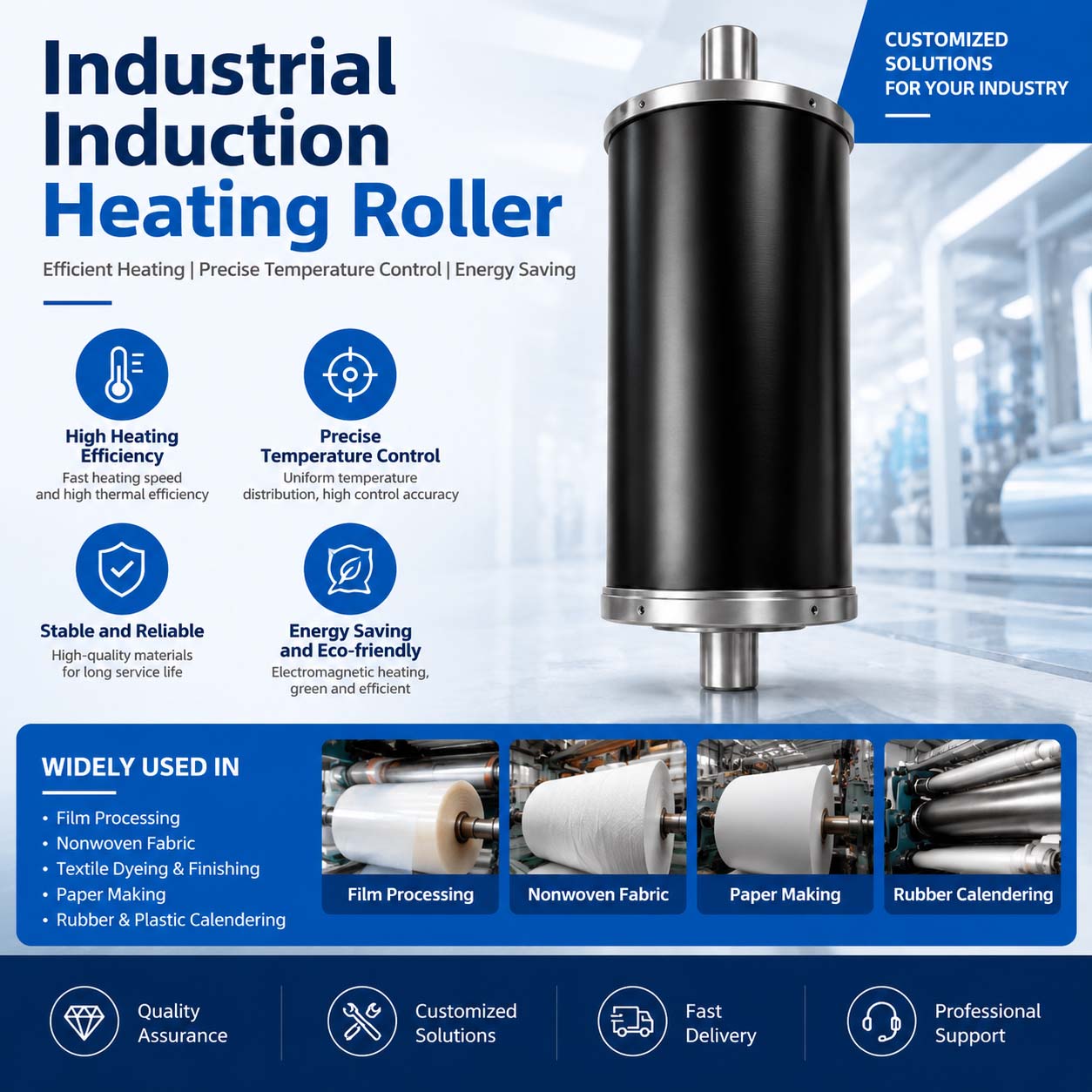
Industrial Induction Heating Roller and Wear Resistant Solutions for Cable Manufacturing
In wire and cable manufacturing, the industrial induction heating roller is one of the key components ensuring stable production performance. Especially in processes such as wire drawing, stranding, and extrusion, the wear resistance and temperature uniformity of heating rollers directly affect product quality and equipment service life.
This article introduces the working principles of induction heating rollers, selection of wear-resistant components, and advanced surface treatment technologies to provide practical guidance for equipment selection and maintenance.
Working Principle and Advantages of Induction Heating Rollers
An induction heating roller uses electromagnetic induction technology to generate eddy currents inside the roller body, producing fast and uniform heating.
Compared with traditional heating methods, it offers:
- High heating efficiency and lower energy consumption
- Precise temperature control
- Uniform roller surface temperature
- Compact structure and easy integration into production lines
In cable manufacturing, induction heating rollers are widely used for:
- Preheating processes
- Drying applications
- Material forming and sizing
They are especially suitable for high-speed wire drawing and enamel wire production.
Selection Guide for Wire Drawing Wear Parts
Wire drawing machines are critical equipment in cable production. Components such as:
- Guide rollers
- Tower wheels
- Wire passing wheels
are continuously exposed to wire friction and high tension.
When selecting wear-resistant parts, consider:
Material Selection
Common materials include:
- Tungsten carbide coating
- Ceramic coating
- Hard alloy materials
These materials provide:
- High hardness
- Low friction coefficient
- Excellent wear resistance
Surface Treatment
Advanced thermal spray processes can significantly improve component life, including:
- HVOF tungsten carbide spraying
- Ceramic thermal spraying
Equipment Compatibility
Component dimensions and precision must match the machine model to prevent:
- Wire vibration
- Surface scratches
- Uneven wear
Regular inspection and timely replacement help prevent wire breakage and quality problems.
Surface Coating Technologies for Wear Resistant Components
To extend the service life of heating rollers and industrial wear parts, advanced coating technologies are widely applied.
HVOF Tungsten Carbide Coating
High Velocity Oxygen Fuel (HVOF) spraying creates a dense tungsten carbide coating with:
- High bonding strength
- Low porosity
- Excellent wear resistance
It is suitable for:
- Wire drawing guide rollers
- Heating roller surfaces
- High-friction industrial components
Plasma Sprayed Ceramic Coating
Ceramic coatings provide:
- High-temperature resistance
- Corrosion resistance
- Electrical insulation
They are commonly used for:
- Enamel wire machine heating rollers
- Components operating in corrosive environments
The coating process should be selected according to:
- Operating temperature
- Working medium
- Wear type
- Required service life
Maintenance and Failure Prevention
Proper maintenance can significantly extend the life of induction heating rollers and wear-resistant components.
Recommended practices:
- Clean roller surfaces regularly to prevent contamination buildup.
- Check temperature control systems to avoid overheating.
- Lubricate bearings and transmission parts properly.
- Record replacement cycles and establish preventive maintenance plans.
- Avoid impact damage on coated surfaces.
- Regularly inspect coating thickness and surface condition.
Frequently Asked Questions
1. Where are induction heating rollers used in cable production?
They are widely used in:
- Wire drawing preheating
- Enamel wire drying
- Extrusion forming processes
where accurate temperature control is required.
2. How to know when wire drawing wear parts need replacement?
Replacement is recommended when:
- Visible grooves appear on the surface
- Wear exceeds allowable limits
- Wire surface quality decreases
- Wire breakage frequency increases
3. Tungsten carbide coating or ceramic coating: which should be chosen?
- Tungsten carbide coating: Better wear resistance, suitable for high-friction applications.
- Ceramic coating: Better high-temperature resistance and corrosion protection.
The choice depends on actual operating conditions.
4. What should be done if heating roller temperature is uneven?
Check:
- Induction coil condition
- Temperature control system calibration
- Heating system operation
Professional inspection and repair may be required.
5. Can worn wear-resistant parts be repaired?
Yes. Some components can be restored through:
- Thermal spray coating
- Ceramic coating treatment
- Surface restoration processes
The substrate condition should be evaluated before repair.
6. How to select a reliable wear-resistant component supplier?
Consider:
- Thermal spray technology capability
- Machining accuracy
- Industry experience
- Equipment compatibility
- Previous application cases
A professional supplier can provide customized solutions based on actual working conditions.
