

Coating Service Overview
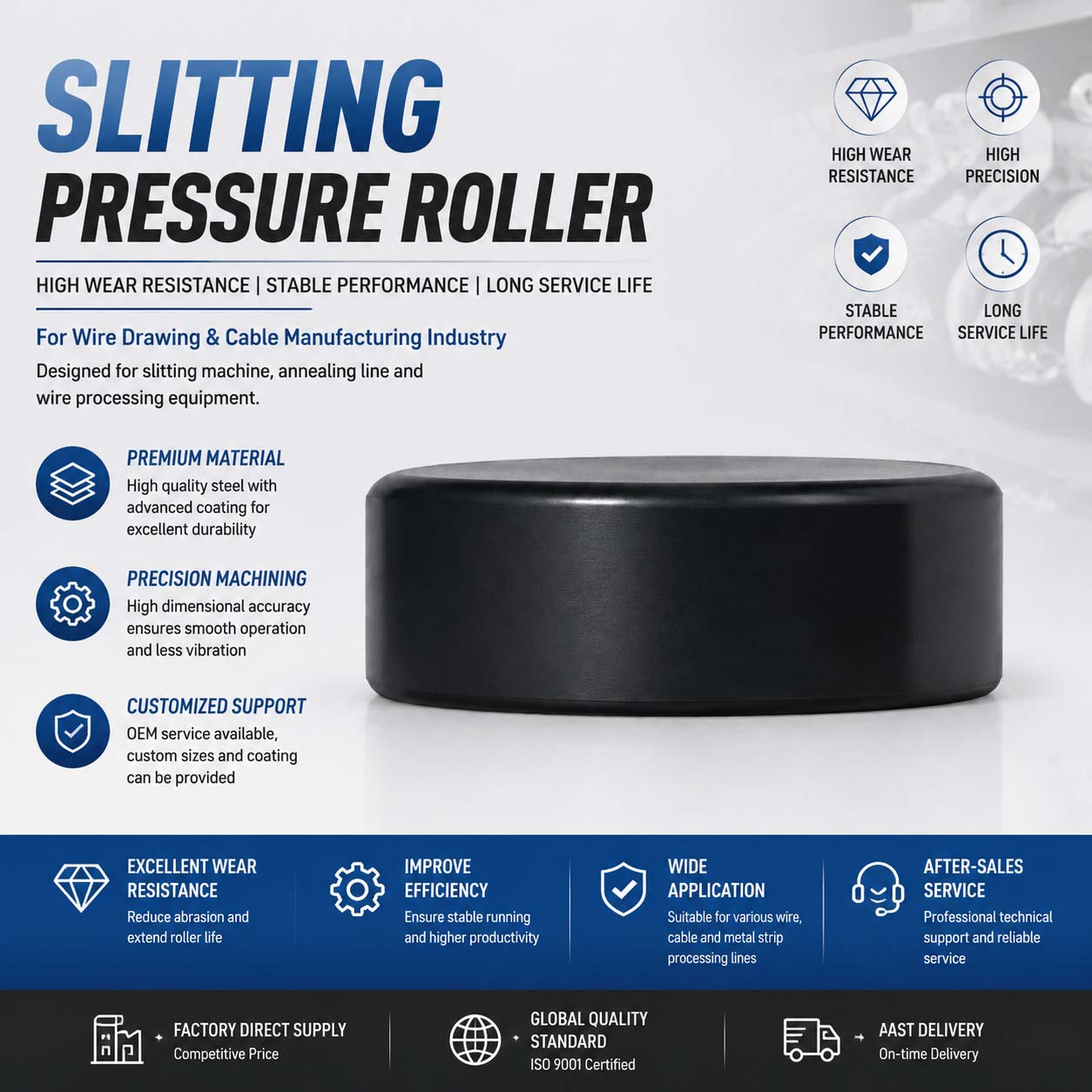
In wire drawing and cable manufacturing, annealing equipment plays a critical role in determining conductor performance. Components such as slitting pressure rollers, annealing furnace parts, and annealing machine accessories directly affect wire surface quality, production stability, and equipment service life.
This article introduces the functions, materials, selection methods, and maintenance points of these key components to help manufacturers reduce unplanned downtime and improve production efficiency.
Slitting Pressure Roller Functions and Materials
Slitting pressure rollers are mainly used for material guiding, positioning, and tension control during metal strip or wire processing. In annealing lines, the roller surface directly affects product quality, including scratches, dimensional accuracy, and running stability.
Common base materials include:
- 45# steel
- Stainless steel
- Aluminum alloy
For high-speed or high-wear applications, the roller surface can be treated with advanced coatings such as:
- Ceramic coating
- Tungsten carbide coating
These surface treatments improve:
- Wear resistance
- Anti-adhesion performance
- Surface hardness
- Service life
When selecting a slitting pressure roller, attention should be paid to:
- Surface hardness and roughness: The roller surface must match the wire material to avoid excessive wear or surface damage.
- Dimensional accuracy: Diameter, width, concentricity, and mounting tolerance must meet equipment requirements.
- Coating quality: Coating bonding strength is essential to prevent peeling during long-term operation.
Annealing Furnace Parts and Annealing Machine Components
Annealing furnace accessories usually include:
- Furnace tubes
- Guide rollers
- Sealing components
- Heating element supports
Annealing machine components include:
- Contact annealing wheels
- Conductive rings
- Cooling sleeves
- Wire guide rollers
These parts often operate under:
- High temperature
- Oxidation environment
- Water vapor
- Continuous mechanical friction
Therefore, proper material selection is essential.
Common Component Types
Annealing Wheels / Conductive Wheels
Used for electrical conduction and wire guidance. They require:
- Excellent conductivity
- High wear resistance
- Good thermal stability
Common materials include copper alloys and specially treated steel.
Guide Rollers and Wire Rollers
Used to control wire direction and reduce friction. Ceramic-coated rollers are widely used because they provide:
- Low friction coefficient
- Smooth wire contact
- Reduced wire damage
Sealing and Insulation Parts
Components such as furnace seals and insulation pads require:
- High temperature resistance
- Stable dimensions
- Long service life
Surface Treatment Solutions
Different working conditions require different surface technologies.
Ceramic Coating
Suitable for wire-contact components requiring:
- High wear resistance
- Low friction
- Anti-adhesion performance
- Excellent surface finish
Tungsten Carbide Coating
Recommended for extreme wear conditions where maximum hardness is required.
PTFE Coating
Suitable for anti-stick applications but with limited temperature resistance.
Ceramic-coated rollers and refurbished roller services can significantly extend component life while reducing replacement costs.
Application and Selection Guide
Slitting rollers and annealing components are widely used in:
- Copper wire production
- Aluminum wire production
- Alloy wire processing
- Stainless steel wire drawing
Selection should consider:
Wire Material and Diameter
Different metals have different hardness and adhesion characteristics. The roller material and coating should match the wire type.
Annealing Temperature and Atmosphere
High-temperature or oxidation environments require suitable heat-resistant materials and protective coatings.
Running Speed and Tension
High-speed production requires:
- Accurate machining
- Good dynamic balance
- Smooth rotation
Installation Requirements
Confirm:
- Shaft diameter
- Keyway dimensions
- Mounting method
- Equipment compatibility
Maintenance and Replacement
Proper maintenance can greatly extend roller life.
Recommended practices:
- Regularly inspect roller surfaces for wear, cracks, and coating damage.
- Remove oxidation and metal debris to prevent wire scratches.
- Use suitable high-temperature lubricants for bearings.
- Replace rollers when grooves, coating loss, or dimensional deviation affect product quality.
Frequently Asked Questions
Why does the slitting pressure roller wear quickly?
Possible causes include excessive wire tension, poor alignment, or unsuitable roller hardness. Upgrading to ceramic-coated or tungsten carbide-coated rollers can improve service life.
How to reduce copper sticking on annealing wheels?
Copper adhesion is related to temperature, surface roughness, and material compatibility. A smoother surface finish and ceramic coating can reduce sticking and extend cleaning intervals.
Can old rollers be repaired?
Yes. Some rollers can be recoated after inspection. The base material must be free from cracks and deformation. After repair, size accuracy and dynamic balance should be tested.
How to choose the right coating?
- Ceramic coating: General-purpose solution with excellent wear resistance and surface performance.
- Tungsten carbide coating: For heavy wear applications.
- PTFE coating: For anti-stick requirements.
Conclusion
High-quality slitting pressure rollers, annealing furnace parts, and annealing machine components are essential for stable wire and cable production. By selecting suitable materials, precision machining, and advanced surface coatings, manufacturers can improve product quality, reduce maintenance frequency, and achieve longer equipment service life.
