

Coating Service Overview
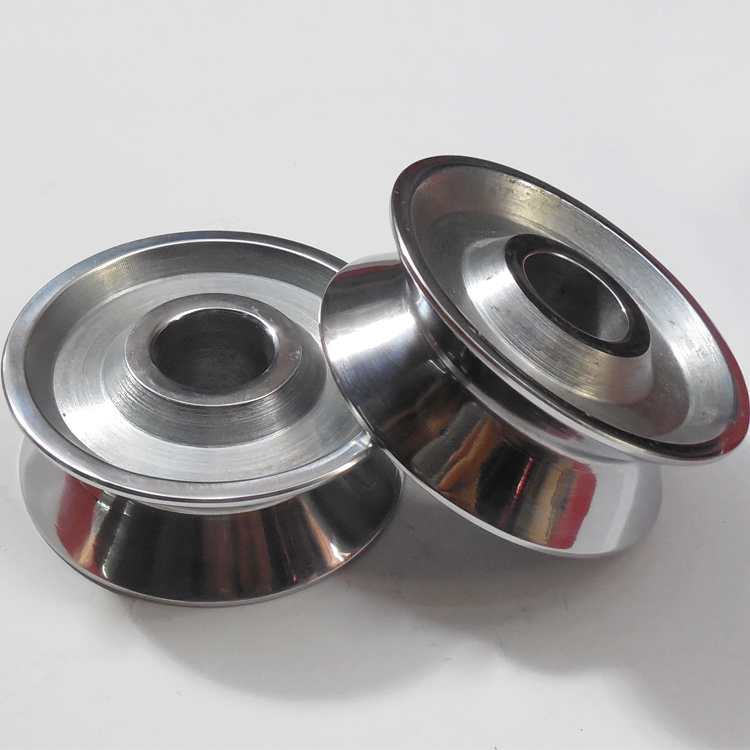
Tungsten Carbide Coating Manufacturer: How to Evaluate and Select a Supplier
A tungsten carbide coating manufacturer is a surface engineering supplier that applies tungsten carbide-based coatings — typically via thermal spray processes such as HVOF (High Velocity Oxy-Fuel) — onto metal substrates to improve wear resistance, erosion resistance, and service life of components. When sourcing one, the practical question is not simply “who sells tungsten carbide coating,” but which supplier can match the coating process, thickness, bonding strength, and surface finish to your specific component and operating conditions.
What a Tungsten Carbide Coating Manufacturer Actually Provides
In most industrial applications, a tungsten carbide coated part is not made entirely of tungsten carbide. Instead, a metal substrate — commonly steel or aluminum alloy — receives a wear-resistant tungsten carbide coating applied through advanced thermal spraying technology. The coating provides extremely high hardness, a low friction coefficient, and excellent wear resistance, reducing surface damage caused by high-speed movement or contact.
This distinction matters for sourcing. You are typically buying a coating service and a coated component, not a solid tungsten carbide block. That means the supplier’s value lies in substrate preparation, coating process control, and post-coating finishing.
Selection Logic: How to Judge a Tungsten Carbide Coating Supplier
Because coating performance depends on process control rather than a single material specification, evaluate suppliers across these dimensions:
- Process capability: Can the supplier apply HVOF coating, and do they also offer related surface engineering options such as ceramic coating, plasma spraying, and thermal spray coating? Different processes suit different substrates and operating temperatures.
- Coating thickness and bonding strength: For components such as tower pulleys, the coating thickness, bonding strength, and surface finish directly affect service life and production stability.
- Substrate compatibility: Confirm whether the supplier can coat steel, aluminum alloy, or other substrates relevant to your part, and whether lightweight designs (for example, aluminum alloy guide rollers) can be coated.
- Surface finish control: For wire-contact components, groove surface quality requires high hardness, low friction coefficient, excellent dimensional accuracy, and high wear resistance.
- Application experience: A supplier familiar with your industry’s failure modes can recommend the right coating rather than a generic one.
Where Tungsten Carbide Coatings Are Used
Tungsten carbide and related ceramic coatings are applied across general machinery and heavy industry, where critical components face friction wear, impact loads, corrosive media, high temperatures, dust erosion, and long-term continuous operation.
General machinery: Pumps, valves, compressors, fans, conveyors, packaging machines, printing equipment, textile machinery, plastic processing machines, and automated production systems. Typical wear-prone parts include shafts, bushings, bearing seats, pump and valve sealing surfaces, rollers, and guide wheels.
Steel and metallurgy: Continuous casting rolls, furnace rolls, guide rolls, pinch rolls, conveyor rollers, fan impellers, pump sleeves, valve sealing surfaces, hot rolling guides, submerged rolls, stabilizer rolls, screw conveyors, and dust removal equipment parts.
Wire drawing: Tower pulleys and capstan wheels used in fine wire drawing machines, micro wire drawing machines, multi-head wire drawing machines, and take-up roller assemblies. In micro wire drawing, capstan wheels commonly use tungsten carbide, ceramic, or surface-treated alloy steel; tungsten carbide capstan wheels are widely used for their hardness, wear resistance, and long service life, while ceramic capstan wheels offer a very smooth surface and low friction coefficient for ultra-fine wire.
Why Surface Degradation Matters More Than Structural Damage
Many mechanical failures do not start from structural damage but from surface degradation. Common problems include wear, scratches, corrosion, oxidation, dimensional deviation, sealing failure, and increased clearance between moving parts. Examples include shafts wearing after long-term rotation, bushings and bearing seats losing dimensional accuracy, pump and valve sealing surfaces failing from erosion and corrosion, and rollers and guide wheels suffering surface abrasion.
Although these problems occur only on the surface, they can lead to reduced efficiency, increased vibration, higher noise levels, unstable operation, and unexpected downtime. Applying a high-performance coating layer can improve wear resistance, corrosion resistance, high-temperature stability, oxidation resistance, erosion resistance, and operating reliability — extending service life while reducing maintenance costs.
Practical Notes Before You Order
- Match diameter and pass: For stepped components such as tower pulleys and capstan wheels, each step diameter must match the drawing die and pass schedule.
- Define operating conditions: Wire material, drawing speed, temperature, and corrosive media all influence coating choice.
- Clarify inspection criteria: Agree on coating thickness, surface finish, and dimensional tolerances before production.
- Plan maintenance: Coated components still require maintenance; understand re-coating or replacement intervals.
About This Supplier
This site covers ceramic guide wheels, tungsten carbide tower pulleys, and HVOF coating for wire drawing and general machinery applications. Detailed product and process information is available at spravon.com.
FAQ
Is a tungsten carbide tower pulley made entirely of tungsten carbide?
No. It usually uses a metal substrate such as steel or aluminum alloy, with a wear-resistant tungsten carbide coating applied through advanced thermal spraying technology.
What is the difference between a tungsten carbide capstan wheel and a ceramic capstan wheel?
Tungsten carbide capstan wheels offer extremely high hardness, excellent wear resistance, and long service life, and are suitable for high-speed wire drawing such as copper and alloy wire. Ceramic capstan wheels offer a very smooth surface and low friction coefficient, making them suitable for ultra-fine wire drawing and applications requiring high surface quality.
Which industries use tungsten carbide coatings?
They are used in general machinery (pumps, valves, compressors, fans, conveyors, and similar equipment) and in steel and metallurgy, where components face high temperature, heavy loads, impact, oxidation, corrosion, and continuous friction.
What should I specify when requesting a tungsten carbide coating quote?
Provide the substrate material, component dimensions and tolerances, operating conditions (load, speed, temperature, media), required coating thickness and surface finish, and the expected service life or maintenance interval.
