

Coating Service Overview
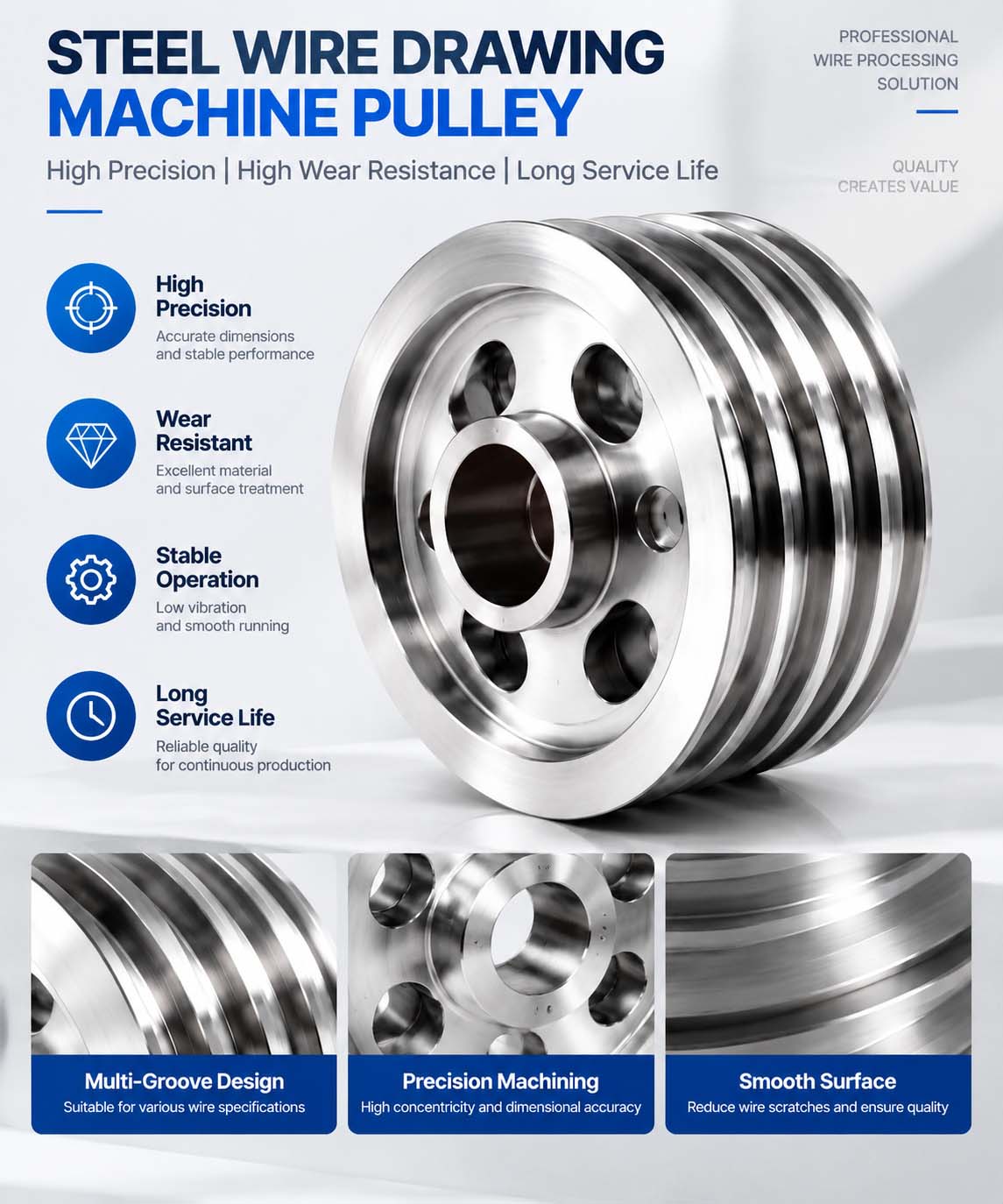
Steel wire drawing machine pulleys are key rotating components in wire drawing production lines. They are used to guide, tension, pull, and transfer wire during the drawing process. The material, surface condition, and dimensional accuracy of the pulley directly affect wire surface quality, dimensional tolerance, drawing stability, and production efficiency.
Choosing the right pulley according to actual working conditions and maintaining it properly can reduce wire scratches, vibration, abnormal wear, and downtime.
Common Types of Wire Drawing Machine Pulleys
According to their installation position and function, wire drawing machine pulleys mainly include:
- Drawing Capstans: Used in multi-pass drawing machines to transfer pulling force and control wire speed.
- Guide Pulleys: Change the wire direction and help maintain stable tension.
- Take-up Pulleys: Pull the finished wire from the final drawing die and transfer it to the next process.
- Wire Storage Pulleys: Provide temporary wire storage and tension buffering before winding.
Different pulley types can be manufactured from ceramic, coated metal, alloy, or engineering plastic depending on wire material, drawing speed, and operating conditions.
Main Materials and Applications
Zirconia Ceramic Pulleys
Zirconia ceramic offers high hardness, excellent wear resistance, low friction, and good toughness. Its surface can be polished to a very smooth finish, helping reduce scratches on wire surfaces.
Zirconia pulleys are suitable for high-speed drawing of stainless steel wire, spring wire, welding wire, copper wire, and other applications requiring high surface quality.
Silicon Carbide Ceramic Pulleys
Silicon carbide has extremely high hardness and excellent abrasion resistance. It is particularly suitable for abrasive wire materials such as high-carbon steel wire and bead wire.
Its excellent thermal conductivity also makes it suitable for demanding dry or semi-dry drawing conditions. However, silicon carbide is relatively brittle and should be protected from impact during installation and operation.
Tungsten Carbide Coated Pulleys
Tungsten carbide coatings can be applied to aluminum alloy or steel substrates to combine high wear resistance with good mechanical strength.
Aluminum-based coated pulleys are lightweight and have low rotational inertia, making them suitable for high-speed wire drawing equipment. Worn coatings can also be removed and recoated, helping reduce long-term replacement costs.
Other Pulley Materials
Hardened steel, chrome-plated steel, polyurethane, and engineering plastics are also used for specific applications.
Plastic wire storage pulleys are lightweight and suitable for fine wire and low-tension applications, while hardened steel pulleys are often used where mechanical strength is more important than surface finish.
How to Select the Right Pulley
Several factors should be considered when selecting a steel wire drawing machine pulley.
Wire Material and Diameter
For soft or surface-sensitive wire, a smooth zirconia ceramic pulley is often preferred. For hard or highly abrasive steel wire, silicon carbide or tungsten carbide coated pulleys provide better wear resistance.
Drawing Speed
High-speed drawing requires pulleys with excellent dynamic balance, low runout, and low rotational inertia. Precision ceramic pulleys and aluminum alloy coated pulleys are common choices.
Lubrication Conditions
Ceramic materials provide excellent corrosion resistance in wet drawing environments. In dry drawing applications, heat dissipation and wear resistance become more important.
Dimensional Accuracy
Outer diameter, bore size, groove dimensions, keyway, and mounting structure must match the machine. For precision equipment, radial and axial runout should be strictly controlled to ensure stable wire movement.
Cost and Service Life
Ceramic pulleys usually have a higher initial cost but provide excellent durability. Coated metal pulleys can often be recoated and reused, offering a cost-effective solution for many industrial applications.
Customized sizes, groove profiles, materials, and coatings can be supplied according to drawings or samples.
Maintenance Recommendations
Proper maintenance helps extend pulley service life and maintain consistent wire quality.
- Inspect the pulley surface regularly: Check for grooves, scratches, pits, coating damage, or cracks.
- Keep the surface clean: Remove metal powder, drawing lubricant, and contaminants after operation.
- Check bearings: Ensure smooth rotation and inspect for abnormal noise, looseness, or excessive vibration.
- Perform dynamic balancing: High-speed pulleys should be checked after repair or replacement.
- Store properly: Keep spare pulleys in a dry and clean environment. Ceramic components should be protected from impact, while metal pulleys should be protected against corrosion.
Frequently Asked Questions
Zirconia or Silicon Carbide: Which Is Better?
Zirconia provides better toughness and a smoother surface, making it suitable for applications where wire surface quality is important. Silicon carbide offers higher hardness and superior abrasion resistance, making it ideal for highly abrasive steel wires.
Why Do Grooves Appear on the Pulley Surface?
Common causes include abrasive particles on the wire, insufficient lubrication, excessive tension, unsuitable pulley material, or long-term concentrated contact in the same groove position.
Can Tungsten Carbide Coated Pulleys Be Repaired?
Yes. In many cases, the worn coating can be removed and a new tungsten carbide coating applied to the original substrate, provided the base material remains in good condition.
Can Ceramic Pulleys Be Repaired?
Minor surface wear may sometimes be corrected by precision grinding or polishing. However, pulleys with serious cracks, chipping, or structural damage should normally be replaced.
When Should a Wire Drawing Pulley Be Replaced?
Replacement is recommended when excessive groove wear, cracks, coating failure, abnormal runout, or surface damage begins to affect wire quality or machine stability.
Where Are Plastic Wire Storage Pulleys Used?
Plastic storage pulleys are commonly used for fine and ultra-fine wire applications where low weight, low inertia, and stable tension control are required. They are generally more suitable for low-speed and low-load operating conditions.
