

Coating Service Overview
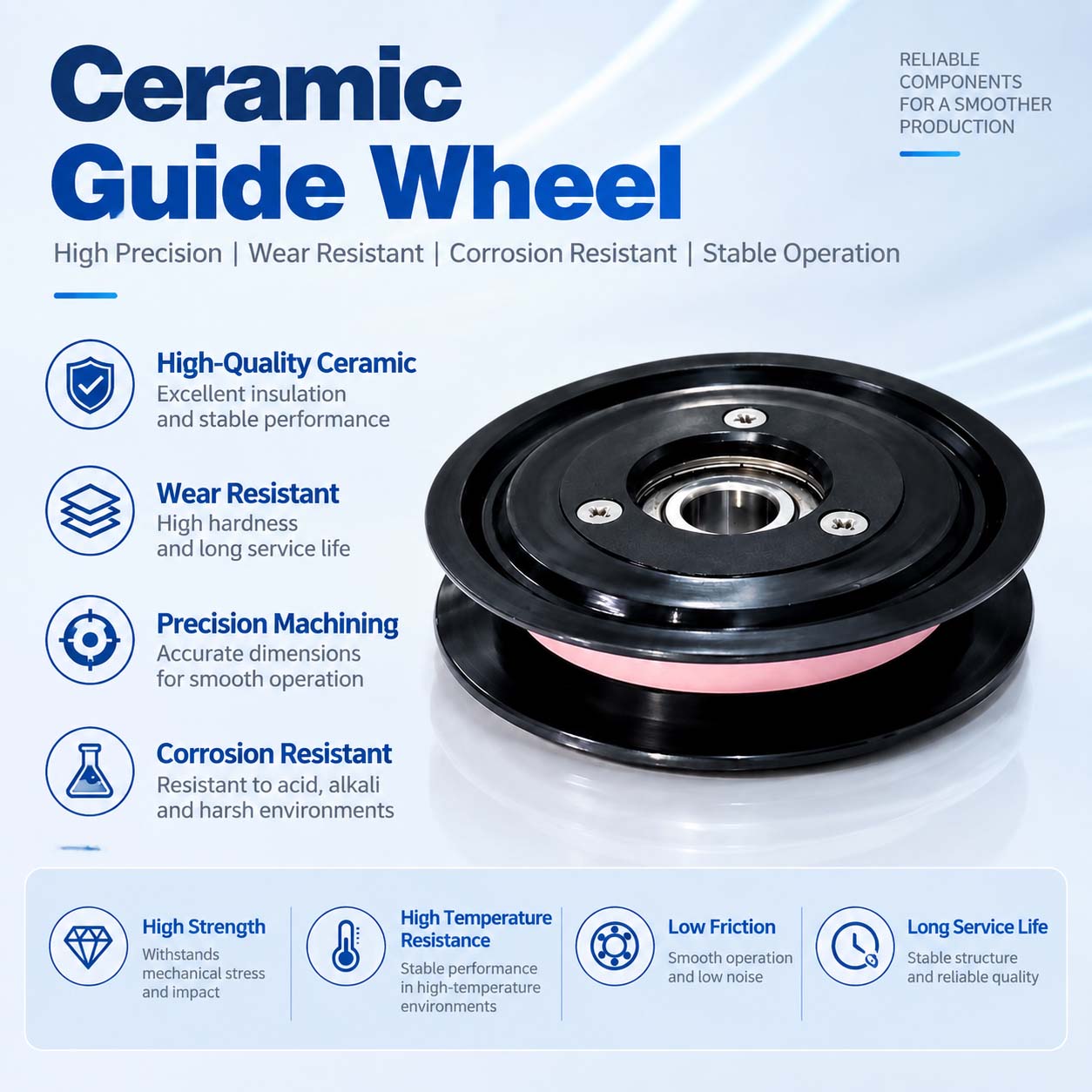
In precision manufacturing, guide wheels are essential components for the smooth transportation and guidance of wires, cables, fibers, and other materials. The CR1001 Modular Guide Wheel uses high-performance materials such as zirconia ceramic, tungsten carbide, and hard alloy to provide stable guidance in high-speed and high-wear working conditions.
With a lightweight design of approximately 2 grams, CR1001 is specially developed for precision applications requiring low inertia, high wear resistance, and reliable operation. This article introduces its structure, materials, applications, selection considerations, and maintenance recommendations.
Product Structure and Materials
The CR1001 is a modular guide wheel assembly, typically consisting of a wheel body, bearing, and optional outer ring components.
The main materials include:
Zirconia Ceramic
Zirconia ceramic provides:
- High hardness
- Excellent wear resistance
- Corrosion resistance
- Electrical insulation
- Stable performance under demanding conditions
It is suitable for clean environments, precision equipment, and applications requiring electrical isolation.
Tungsten Carbide and Hard Alloy
Tungsten carbide and hard alloy materials offer extremely high surface hardness and outstanding abrasion resistance.
They are ideal for:
- High-speed operation
- Heavy-load applications
- Continuous friction environments
- Long service life requirements
Metal-Ceramic Components
Metal-ceramic composite structures combine the toughness of metal with the wear resistance of ceramic, providing a balance between mechanical strength and surface durability.
The specific structure and material combination may vary depending on the application requirements.
Typical Applications
Due to its excellent material properties, the CR1001 modular guide wheel is widely used in precision industries.
Wire and Cable Production
Used for guiding enamel wires, optical fibers, steel wires, and cables during continuous production processes.
The smooth ceramic surface helps reduce friction and prevent scratches on sensitive materials.
Textile Machinery
Applied in synthetic fiber spinning, drawing, and winding processes.
The wear-resistant surface improves durability during high-speed fiber movement.
Precision Equipment
Suitable for compact transmission and positioning systems where low weight, low inertia, insulation, and high precision are required.
Selection Considerations
When selecting a CR1001 or similar guide wheel, the following factors should be considered:
Material Compatibility
The groove design, surface finish, and material hardness should match the processed material.
Soft wires require smooth surfaces to prevent damage, while harder materials require higher wear resistance.
Speed and Load
Tungsten carbide and hard alloy materials are suitable for high-load applications, while zirconia ceramic is preferred for high-speed, corrosion-resistant, and electrically insulated applications.
Working Environment
For humid or chemically corrosive environments, ceramic materials provide better resistance.
For applications involving impact or mechanical stress, metal-ceramic or hard alloy structures may provide improved durability.
Installation Dimensions
Before installation, confirm:
- Outer diameter
- Shaft size
- Thickness
- Groove dimensions
- Bearing specifications
Proper dimensional matching ensures stable operation and long service life.
Maintenance Recommendations
To maintain performance and extend service life:
- Regularly inspect the wheel surface for wear, grooves, or damage.
- Keep bearings properly lubricated when applicable.
- Avoid strong impacts that may crack ceramic components.
- Clean the surface with soft materials to prevent scratches.
- Replace worn components promptly to maintain guiding accuracy.
Maintenance intervals should be determined according to actual operating speed, load, and production conditions.
Frequently Asked Questions
What materials are used in CR1001 guide wheels?
CR1001 may use zirconia ceramic, tungsten carbide, hard alloy, and metal-ceramic composite materials. The exact material combination can be customized according to application requirements.
What line speed can the CR1001 handle?
The exact speed depends on the bearing type, wheel size, material, and operating conditions. Ceramic and hard alloy guide wheels are generally suitable for medium- and high-speed precision applications.
Does the 2 g weight include the bearing?
The actual configuration depends on the product design. Customers should confirm whether the specified weight includes the bearing and additional components.
Can CR1001 be used in food or medical applications?
Zirconia ceramic has good chemical stability and biocompatibility, but specific applications require confirmation of relevant certifications and compliance requirements.
How can I order samples or request technical information?
Customers can provide drawings, samples, material requirements, and operating conditions. A customized guide wheel solution can be recommended based on the actual application.
Customized Guide Wheel Solutions
We provide customized modular guide wheels for wire, cable, optical fiber, textile, and precision equipment applications.
Wheel materials, groove profiles, dimensions, coatings, and bearing configurations can be customized according to customer requirements to achieve high precision, low wear, and stable long-term operation.
