

Coating Service Overview
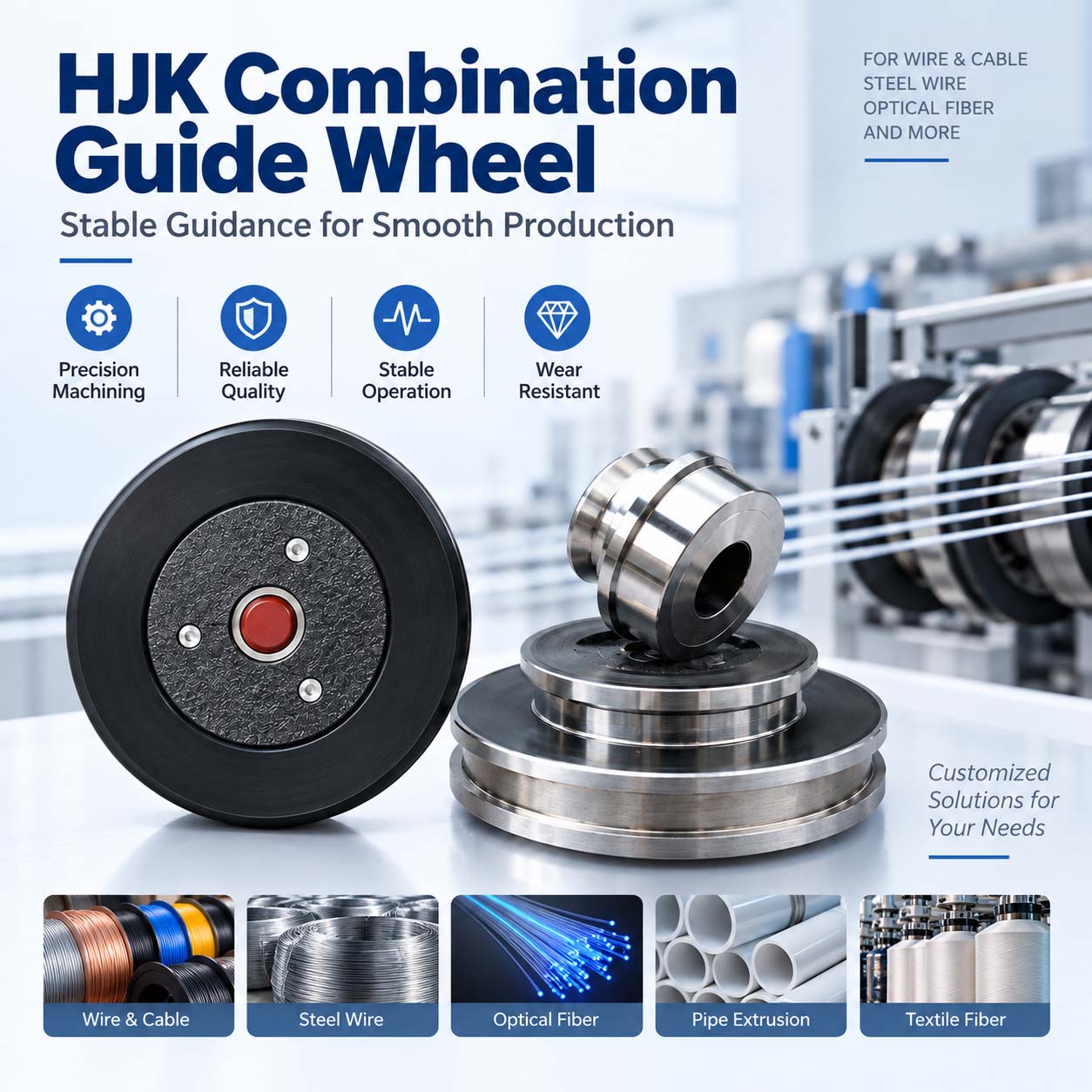
Guide wheel assemblies are widely used in wire and cable, steel wire, optical fiber, and other continuous wire-processing equipment. They provide accurate guiding, stable tension control, and smooth material transmission throughout the production process.
Compared with one-piece guide wheels, a Guide Wheel Assembly uses a modular or split design, allowing worn components to be replaced individually. This structure makes it easier to adapt to different wire diameters and production requirements while reducing maintenance costs and machine downtime.
Structure and Features
A typical guide wheel assembly consists of the wheel body, shaft sleeve, bearings, end covers, and fasteners. Depending on the operating conditions, the wheel body can be manufactured from steel, stainless steel, aluminum alloy, nylon, or other engineering materials.
Surface treatments and wear-resistant coatings can also be applied to improve durability and protect the processed material.
Key advantages include:
- Modular Design: Individual components can be replaced without changing the entire assembly.
- High Wear Resistance: Various surface treatments and coatings extend service life.
- Stable Guidance: Precision machining helps maintain smooth and accurate wire movement.
- Flexible Configuration: Groove dimensions, wheel materials, bearings, and mounting structures can be customized.
- Easy Maintenance: Replaceable parts reduce repair time and operating costs.
Materials and Surface Treatments
The selection of wheel material and surface treatment depends on line speed, tension, wire material, and operating environment.
Wheel Materials
Common materials include:
- Carbon Steel: High strength and suitable for general industrial applications.
- Stainless Steel: Provides good corrosion resistance for humid or corrosive environments.
- Aluminum Alloy: Lightweight and suitable for high-speed rotating applications.
- Nylon and Engineering Plastics: Suitable for applications requiring lightweight construction and reduced risk of scratching sensitive wire surfaces.
Surface Treatments
Different surface treatments can be used to improve hardness, wear resistance, and surface quality, including:
- Hard chrome plating
- Nitriding
- Ceramic coating
- Tungsten carbide coating
Ceramic and tungsten carbide coatings are particularly suitable for high-speed and highly abrasive applications. They help reduce groove wear and provide a smooth contact surface, minimizing the risk of scratching or damaging wires.
Bearing Options
Depending on rotational speed and load conditions, guide wheel assemblies can use deep-groove ball bearings, angular-contact bearings, or sliding bearings.
High-speed production lines generally require high-precision bearings with low rotational resistance and reliable lubrication.
Common Types of Guide Wheel Assemblies
Guide wheel assemblies can be classified according to their function and groove design.
Wire Guide Wheels
Wire guide wheels are used to change the direction of the wire and provide stable support during processing.
They require low friction, good wear resistance, and smooth groove surfaces. Typical applications include wire drawing machines, stranding machines, and cable production equipment.
Tension Guide Wheels
Tension guide wheels work together with tension sensors or tension control systems to maintain stable wire tension.
They are commonly used in enameled wire, optical fiber, fine wire, and precision winding applications where small tension fluctuations may affect product quality.
Haul-Off Wheel Assemblies
Haul-off wheel assemblies provide the pulling force required to move wire continuously through a production line.
They are usually connected to a drive system and require sufficient surface friction or specially designed grooves to prevent slippage while maintaining stable line speed.
Single-Groove and Multi-Groove Wheels
Depending on the production process, guide wheels can be designed with single grooves, multiple grooves, V-grooves, U-grooves, or customized groove profiles.
Multi-groove designs can guide several wires simultaneously, increasing production efficiency.
Main Applications
Guide wheel assemblies are commonly used in:
- Wire and Cable Manufacturing: Wire drawing, insulation extrusion, stranding, cabling, and winding processes.
- Steel Wire and Wire Rope Production: Guiding and tension control during drawing, twisting, coating, and take-up.
- Optical Fiber and Cable Production: Precise guiding and low-tension transmission of optical fibers and cables.
- Enameled Wire Production: Stable wire movement during coating, baking, and winding.
- Textile and Synthetic Fiber Machinery: Guiding and tension control during spinning, drawing, and winding.
- Metal Wire Processing: Suitable for stainless steel wire, copper wire, aluminum wire, and other metal wire production lines.
For high-speed wire applications, wear-resistant coatings can significantly reduce surface wear and extend guide wheel service life.
How to Select the Right Guide Wheel Assembly
Several factors should be considered when selecting a guide wheel assembly.
Wire Material and Diameter
Wire diameter, material hardness, surface condition, and coating should be considered when selecting the groove profile and wheel material.
Soft or delicate wires require smooth contact surfaces to prevent scratches, while harder and more abrasive wires require highly wear-resistant wheel surfaces.
Line Speed and Tension
High-speed production requires excellent machining accuracy, bearing performance, and dynamic balance.
The guide wheel should also be designed according to the expected tension range to prevent deformation, vibration, or premature bearing failure.
Installation Dimensions
Important dimensions include:
- Wheel outer diameter
- Wheel width
- Shaft diameter
- Groove dimensions
- Mounting position
- Flange, thread, or keyway specifications
Customized mounting structures are available according to customer drawings or equipment requirements.
Operating Environment
Temperature, humidity, dust, chemicals, and corrosion should also be considered.
For demanding environments, stainless steel components or corrosion-resistant ceramic coatings can help improve reliability and service life.
Installation and Maintenance
Correct installation and regular maintenance are essential for stable operation.
The guide wheel groove should be accurately aligned with the wire path. Incorrect alignment can cause uneven wear, tension fluctuations, or wire damage.
Recommended maintenance includes:
- Regular Cleaning: Remove dust, oil, wire residue, and other contaminants from the grooves.
- Bearing Lubrication: Lubricate bearings according to the recommended maintenance schedule.
- Wear Inspection: Regularly inspect groove dimensions and coating condition.
- Fastener Inspection: Check bolts, shafts, and mounting components for looseness.
- Vibration Monitoring: Abnormal vibration or noise may indicate bearing damage, poor alignment, or wheel imbalance.
When the coating begins to peel, crack, or expose the base material, recoating or replacement should be considered.
FAQ
What are the advantages of a guide wheel assembly compared with a one-piece guide wheel?
The modular structure allows worn components to be replaced individually, reducing maintenance costs and downtime. Different wheel bodies or groove profiles can also be installed to handle different wire sizes.
Can guide wheel assemblies be used for high-speed production?
Yes. High-speed applications require precision bearings, accurate machining, proper dynamic balancing, and suitable wear-resistant surface treatments.
Why does a guide wheel wear quickly?
Common causes include abrasive wire materials, incorrect groove dimensions, poor alignment, excessive tension, insufficient lubrication, or an unsuitable wheel material.
Can worn guide wheels be recoated?
In many cases, yes. If the base material remains in good condition, the wheel can be inspected, machined, and recoated with ceramic, tungsten carbide, or other wear-resistant coatings.
What causes short bearing life?
Possible causes include insufficient lubrication, contamination, excessive load, incorrect installation, poor alignment, or unsuitable bearing selection.
Custom Guide Wheel Assemblies
Guide wheel assemblies can be customized according to wheel dimensions, groove profiles, shaft sizes, bearing specifications, materials, surface coatings, line speed, tension, and installation requirements.
Customized ceramic coatings, tungsten carbide coatings, precision machining, and wear-resistant surface solutions are available for wire and cable, optical fiber, steel wire, and other high-speed continuous production applications.
