

Coating Service Overview
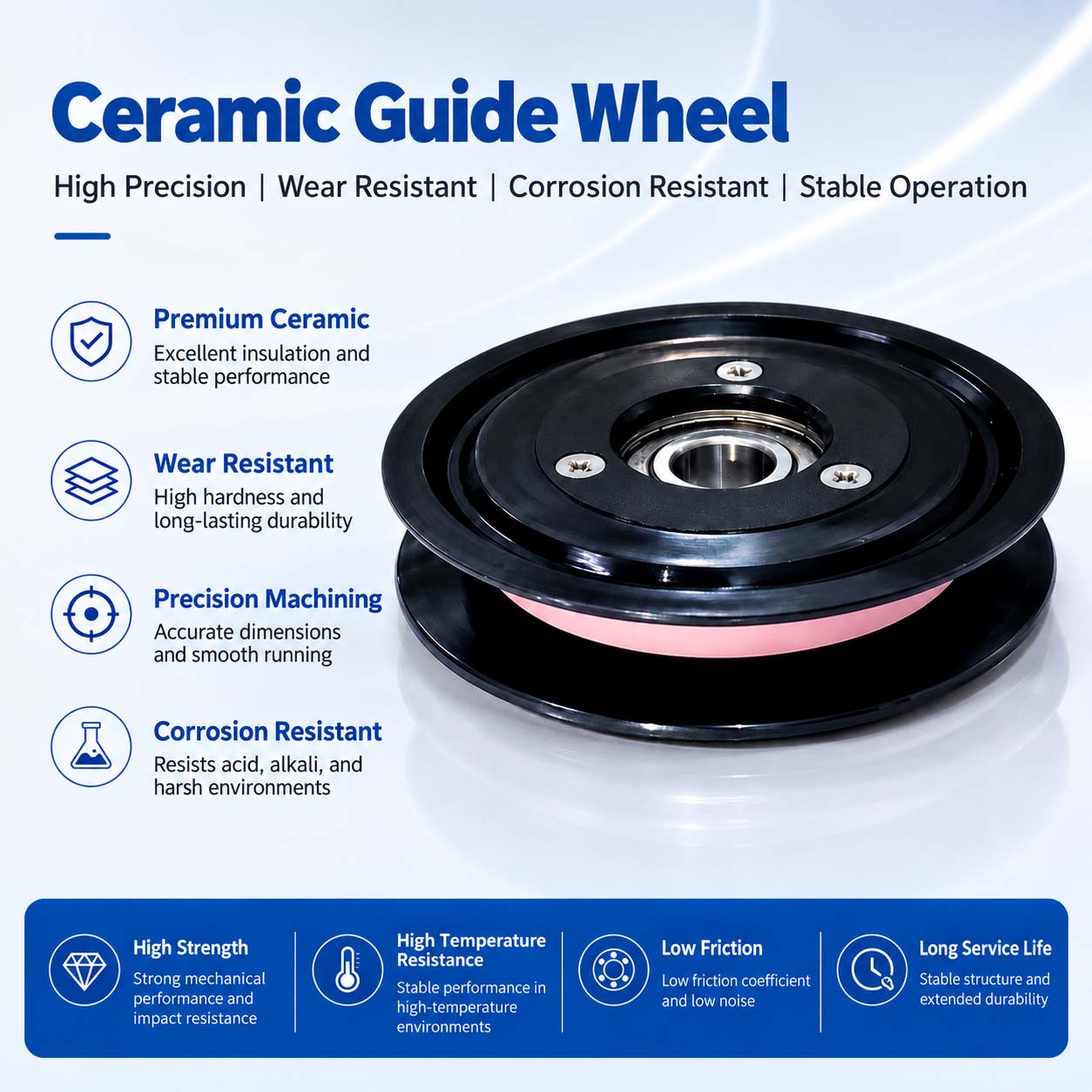
Ceramic spray coating is an effective surface treatment technology used to improve the performance and service life of industrial metal components. For precision parts such as guide wheel assemblies, ceramic coatings provide excellent wear resistance, high-temperature resistance, corrosion protection, and electrical insulation.
Our Ceramic Spray Coating Service for Metal Parts uses thermal spray technology to deposit high-performance ceramic materials onto metal substrates. Taking the CR1005 ceramic-coated metal part as an example, this article introduces the coating process, technical features, applications, material selection, and maintenance requirements.
Product Overview
CR1005 is a ceramic-coated metal component mainly designed for use in guide wheel assemblies and other precision transmission or guiding systems.
The component uses a metal substrate with a ceramic coating applied by thermal spraying. Depending on operating conditions, zirconia, alumina, and other ceramic materials can be selected.
The ceramic coating forms a hard and durable protective surface that helps reduce wear, resist high temperatures, improve corrosion resistance, and provide electrical insulation.
Main Specifications
- Product Model: CR1005
- Weight: Approx. 25 g
- Substrate: Metal
- Coating Type: Ceramic coating
- Optional Materials: Zirconia, alumina, and other ceramic materials
- Process: Thermal spray coating
Custom coating materials, thicknesses, and surface finishes are available according to customer drawings and application requirements.
Key Advantages of Ceramic Spray Coating
Excellent Wear Resistance
Ceramic coatings have high hardness and excellent resistance to abrasion. They are suitable for metal components that are continuously exposed to high-speed wire, cable, fiber, or other moving materials.
Reducing surface wear helps maintain dimensional accuracy and minimizes maintenance frequency.
High-Temperature Resistance
Ceramic materials maintain stable performance under elevated temperatures. This makes ceramic-coated parts suitable for equipment operating in high-temperature or thermal cycling environments.
Corrosion Resistance
Ceramic coatings provide an additional protective barrier between the metal substrate and the operating environment, helping reduce corrosion caused by moisture, chemicals, and other corrosive media.
Electrical Insulation
Certain ceramic materials, particularly alumina, provide excellent electrical insulation. Ceramic-coated metal parts can therefore be used in equipment where electrical isolation between the component and processed material is required.
Smooth Surface Performance
After spraying, the coating can be ground and polished to achieve the required surface finish. A smooth contact surface helps reduce friction and minimizes the risk of scratching wires, fibers, or other precision materials.
Typical Applications
Ceramic-coated metal parts are widely used in industries where components are exposed to wear, heat, corrosion, or electrical requirements.
Common applications include:
- Wire and Cable Manufacturing: Guide wheels, haul-off wheels, wire guides, and other components exposed to continuous wire friction.
- Optical Fiber Production: Precision guide components requiring low wear and smooth surface contact.
- Textile Machinery: Guide rollers and fiber-handling components operating at high speed.
- Synthetic Fiber Production: Components used for yarn guiding, drawing, and winding.
- Metal Wire Processing: Wear-resistant parts for drawing, guiding, coating, and winding lines.
- Industrial Machinery: Shafts, rollers, sleeves, bushings, and other components requiring enhanced surface properties.
Ceramic thermal spray coating is especially suitable for components where replacing the entire metal part would be expensive. Recoating or refurbishing the worn surface can help reduce operating costs.
Ceramic Coating Material Selection
Selecting the correct ceramic material is important for achieving reliable performance.
Alumina Ceramic Coating
Alumina coatings offer high hardness, excellent wear resistance, good electrical insulation, and relatively economical processing costs.
They are suitable for general wear-resistant applications, electrical insulation, guide wheels, rollers, and various industrial components.
Zirconia Ceramic Coating
Zirconia offers better toughness and excellent thermal resistance. It is particularly suitable for components exposed to high temperatures or repeated thermal cycling.
Compared with alumina, zirconia is often selected when thermal performance and toughness are more important.
The optimal coating material should be selected according to:
- Operating temperature
- Wear mechanism
- Required hardness
- Electrical insulation requirements
- Chemical environment
- Surface roughness
- Mechanical load
- Expected service life
Our coating process can be customized according to the actual working conditions of each component.
Coating Thickness
Ceramic coating thickness is generally customized according to the application.
A typical coating thickness ranges from approximately 0.1 to 0.5 mm, although other specifications can be provided depending on the substrate, operating conditions, and required final dimensions.
For precision components, allowance can be reserved for subsequent grinding and finishing to achieve the required dimensional tolerance and surface roughness.
Surface Preparation and Coating Process
Proper surface preparation is essential for reliable coating adhesion.
The typical process includes:
- Component Inspection: Check substrate material, dimensions, and surface condition.
- Cleaning and Degreasing: Remove oil, dirt, and contaminants.
- Surface Blasting: Roughen the metal surface to improve mechanical bonding.
- Thermal Spraying: Apply the selected ceramic material onto the prepared substrate.
- Grinding and Finishing: Machine or polish the coating when specific dimensions or surface roughness are required.
- Final Inspection: Check coating thickness, surface condition, and dimensional accuracy.
This controlled process helps provide good coating adhesion and consistent performance.
Maintenance Recommendations
Ceramic coatings are extremely hard, but they can be relatively brittle compared with metal. Proper handling and maintenance are therefore important.
- Avoid severe impact or dropping the coated component.
- Inspect the surface regularly for cracks, peeling, or abnormal wear.
- Use a soft cloth and non-corrosive cleaning agents during cleaning.
- Avoid sharp metal tools that may damage the coating.
- Check the component alignment to prevent uneven loading.
- Repair or recoat damaged surfaces before the substrate experiences serious wear.
Correct operation can significantly extend the service life of ceramic-coated components.
Frequently Asked Questions
Will the ceramic coating peel off?
Under normal operating conditions and with proper surface preparation, the coating provides strong adhesion. However, severe impact, substrate deformation, or improper installation may cause cracking or peeling.
Can ceramic coating be applied to non-metal parts?
Thermal spray ceramic coating is primarily used on metal substrates. Some non-metal materials may also be coated after special preparation, but feasibility must be evaluated according to the substrate material.
How long does the coating process take?
Production time depends on part size, quantity, coating material, thickness, and finishing requirements. Standard orders are generally completed within approximately 3–7 working days, subject to final production confirmation.
Can worn ceramic coatings be repaired?
Yes. If the metal substrate remains in suitable condition, the damaged coating can often be removed and the component recoated.
How do I choose the right ceramic coating?
The selection should be based on operating temperature, wear conditions, corrosion environment, insulation requirements, and required surface finish. Alumina is commonly selected for hardness and insulation, while zirconia is preferred for applications requiring improved toughness and thermal resistance.
Custom Ceramic Coating Service
We provide customized thermal spray ceramic coating services for metal parts, including guide wheels, rollers, sleeves, shafts, and other precision industrial components.
Customers can provide drawings, samples, substrate information, operating temperatures, coating thickness requirements, and working conditions. Based on these specifications, suitable ceramic materials and coating processes can be selected to improve wear resistance, heat resistance, corrosion resistance, and overall component service life.
