

Coating Service Overview
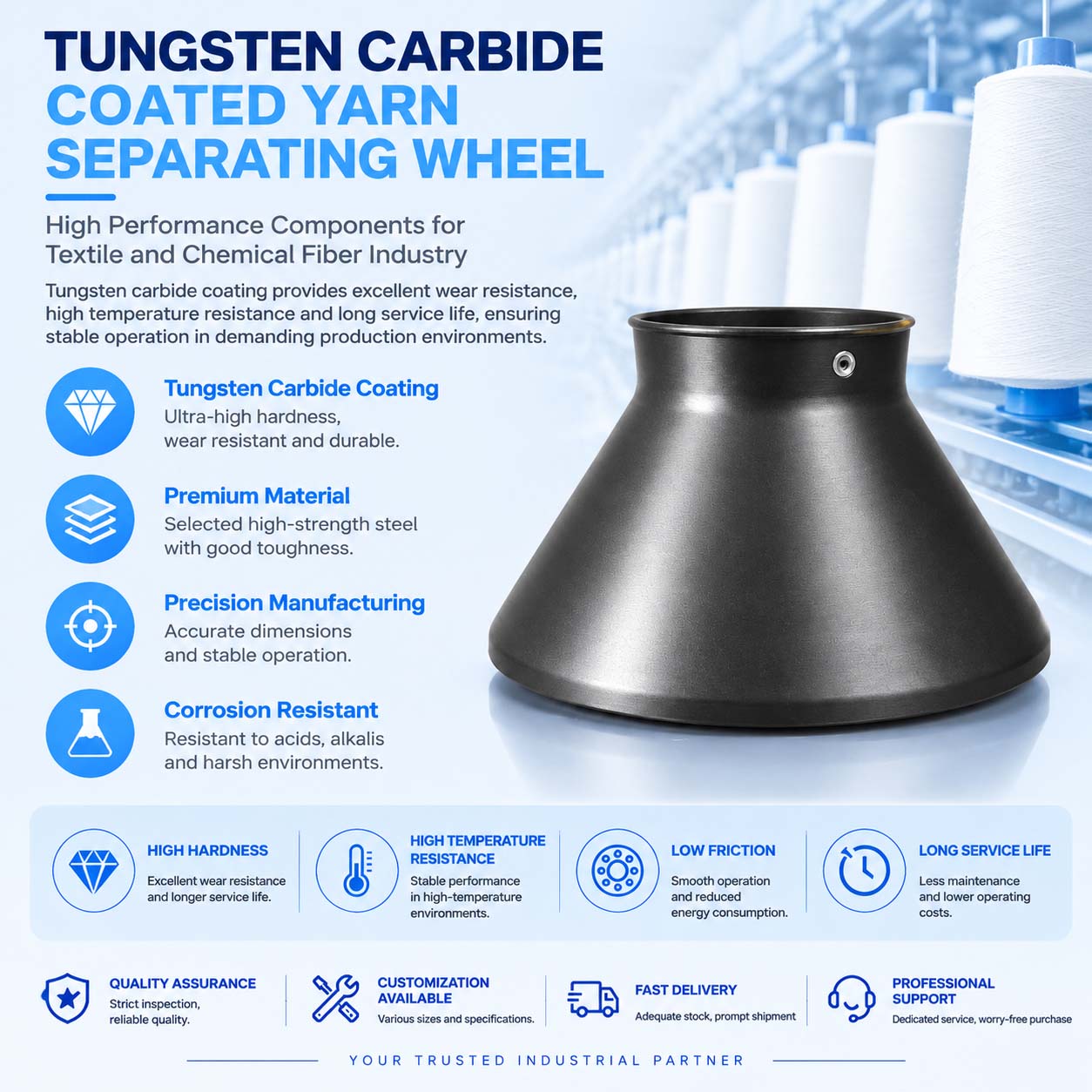
In textile, chemical fiber, and wire manufacturing industries, components such as yarn separating wheels are exposed to high-speed friction, elevated temperatures, and chemical environments for long periods. Conventional metal surfaces often cannot meet the requirements of modern industrial applications.
By applying ceramic coating or tungsten carbide coating technology on metal surfaces, components can achieve excellent wear resistance, high-temperature resistance, and electrical insulation performance, significantly extending service life.
This article introduces the coating service for yarn separating wheels, using Al₂O₃-TiO₂ (Alumina-Titania) ceramic coating as an example. The typical coating thickness is 0.2-0.3 mm, providing reliable surface protection for industrial equipment.
Coating Materials and Process
We use advanced thermal spraying technology to apply high-performance coatings onto metal substrates.
Common coating materials include:
Al₂O₃-TiO₂ (Alumina-Titania) Ceramic Coating
Combines high hardness, good toughness, and excellent electrical insulation. It is an ideal choice for guide components such as yarn separating wheels.
Tungsten Carbide (WC-Co) Coating
Provides extremely high hardness and superior wear resistance, suitable for heavy-load and severe abrasion conditions.
Ceramic Coating
Offers excellent heat resistance, oxidation resistance, and electrical insulation. Customized coating solutions are available according to application requirements.
The coating thickness is typically controlled at 0.2-0.3 mm. Through proper surface preparation, spraying, and finishing processes, strong bonding strength and smooth surface quality are achieved.
Applications
Metal surface ceramic and tungsten carbide coatings are widely used in:
Textile and Chemical Fiber Industry
Applied to yarn separating wheels, yarn guide components, measuring drums, and other parts to reduce fiber wear and prevent yarn defects.
Wire and Cable Industry
Used for wire guide wheels and aluminum alloy guide wheels to improve wear resistance and prevent wire surface scratches.
Other Industrial Applications
Including:
- High-temperature resistant coating
- Electrical insulation ceramic coating
- Corrosion-resistant surface treatment
- Wear-resistant component enhancement
Coating Selection Guidelines
The suitable coating should be selected according to operating conditions:
High Wear Conditions
Recommend tungsten carbide coating due to its high hardness and excellent resistance against abrasive wear.
High Temperature or Insulation Requirements
Recommend ceramic coatings such as Al₂O₃-TiO₂, which provide heat resistance above 500°C and excellent insulation properties.
Comprehensive Requirements
Alumina-Titania coating provides a balanced combination of wear resistance, insulation, and chemical stability, making it suitable for most guide wheel applications.
For accurate coating selection, please provide:
- Component dimensions
- Substrate material
- Operating temperature
- Contact materials and working environment
Our technical team can recommend the most suitable solution.
Maintenance Tips
Although coated components provide excellent durability, proper maintenance is still required:
- Avoid impact on coating edges during installation to prevent peeling.
- Regularly inspect coating surfaces and repair minor damage when necessary.
- Clean with soft materials and avoid scratching the coating.
- Store components in a dry environment to prevent substrate corrosion.
Frequently Asked Questions
Why is the coating thickness 0.2-0.3 mm?
This thickness range provides a good balance between wear resistance and bonding strength. Excessive thickness may increase internal stress and cause peeling, while insufficient thickness may reduce service life.
How high a temperature can Alumina-Titania coating withstand?
Al₂O₃-TiO₂ coating can generally withstand continuous temperatures above 500°C. Actual performance depends on substrate material and operating conditions.
Will the coating peel off?
With proper surface preparation and thermal spraying processes, coating adhesion is strong and peeling is unlikely during normal operation. Severe impact or substrate deformation may cause local failure.
Can old components be recoated?
Yes. Old coatings can be removed, surfaces re-prepared, and new coatings applied to restore performance.
What is the delivery time?
Processing time depends on quantity and coating requirements. Standard orders usually take approximately 5-10 working days.
Are sample tests available?
Yes. Test panels or sample components can be coated for performance evaluation before mass production.
Conclusion
Ceramic and Tungsten Carbide Coating Services for Yarn Separating Wheels provide effective surface protection solutions for textile, chemical fiber, wire, and industrial equipment. With excellent wear resistance, heat resistance, corrosion protection, and insulation performance, these coatings help improve component reliability and reduce maintenance costs.
