

Coating Service Overview
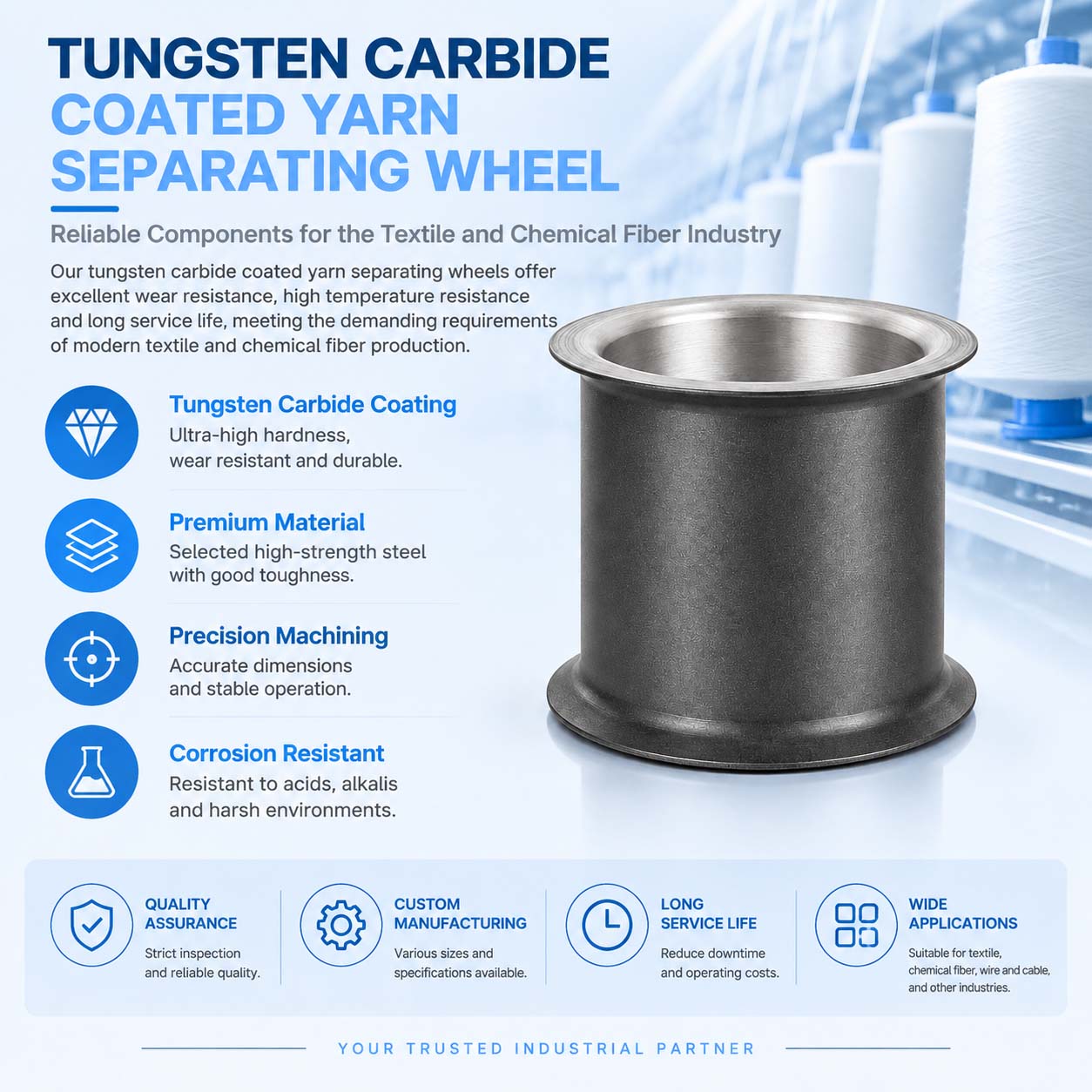
In textile and chemical fiber industries, components such as yarn separating wheels and ceramic guide wheels operate under high-speed rotation, continuous friction, and elevated temperatures. Conventional metal surfaces often cannot meet the requirements of wear resistance, heat resistance, and electrical insulation.
Al₂O₃-TiO₂ (Alumina-Titania) ceramic coating technology provides an effective surface enhancement solution by improving component durability and performance.
This article introduces the coating material, thickness, applications, selection guidelines, and maintenance considerations for ceramic coated yarn separating wheels.
Coating Material and Thickness
The coating uses Al₂O₃-TiO₂ ceramic material, applied through thermal spraying technology to form a dense protective layer on the component surface.
Alumina-Titania combines:
- The high hardness and heat resistance of alumina
- The toughness and stability of titanium oxide
The coating provides strong adhesion, excellent wear resistance, and reliable insulation performance.
Main Parameters:
- Coating Material: Al₂O₃-TiO₂ (Alumina-Titania)
- Coating Thickness: 0.2-0.3 mm
- Application Process: Thermal spraying
This thickness range provides effective wear protection without significantly increasing component weight or affecting dimensional accuracy. The exact thickness can be adjusted according to operating conditions.
Performance Advantages
High Temperature Resistance
Alumina-Titania coating can withstand high operating temperatures and is suitable for guide components used in thermal environments.
Excellent Electrical Insulation
The ceramic coating provides reliable insulation performance, helping prevent static accumulation and current leakage in specific applications.
Superior Wear Resistance
The high hardness coating effectively resists friction from yarns, fibers, and wire materials, extending the service life of separating wheels.
Chemical Stability
The coating provides good resistance against acids, alkalis, and organic solvents, making it suitable for chemical fiber production environments.
Applications
Al₂O₃-TiO₂ ceramic coated yarn separating wheels are widely used in textile and chemical fiber industries, including:
Chemical Fiber Spinning
Used for yarn guiding and separating processes to reduce fiber fuzzing and breakage.
Wire and Cable Processing
Used as wire guide components to reduce surface scratches and improve insulation safety.
Other Industrial Applications
Suitable for guide wheels, measuring drums, and other components requiring:
- High temperature resistance
- Electrical insulation
- Wear protection
Related products include ceramic guide wheels, aluminum alloy ceramic rollers, measuring drums, and other thermal spray coated components.
Selection Guidelines
When selecting ceramic coated separating wheels, consider:
Substrate Compatibility
The coating must bond properly with the base material, such as aluminum alloy or steel. Substrate suitability should be confirmed before processing.
Operating Conditions
Coating thickness should be selected according to temperature, media exposure, and line speed. The standard recommendation is 0.2-0.3 mm.
Dimensional Accuracy
After coating, precision grinding may be required to ensure correct outer diameter, surface finish, and runout accuracy.
Maintenance Tips
Proper maintenance can extend coating service life:
- Regularly inspect the coating surface for cracks, peeling, or abnormal wear.
- Clean with soft materials or neutral cleaners. Avoid scratching the coating.
- Store components in a dry environment to protect coating insulation performance.
- Avoid impact during installation and handling.
Frequently Asked Questions
What temperature can Alumina-Titania coating withstand?
Al₂O₃-TiO₂ coatings can generally withstand temperatures above 800°C. The actual temperature limit depends on coating composition, substrate material, and operating conditions.
Can the coating thickness of 0.2-0.3 mm be customized?
Yes. The thickness can be adjusted according to application requirements. However, excessive thickness may affect bonding strength, stress distribution, and dimensional accuracy.
Will the coating peel off?
With proper surface preparation and thermal spraying processes, the coating has strong adhesion. Peeling may occur due to unsuitable substrate materials, severe impact, or operation beyond design limits.
Is the insulation performance reliable?
Ceramic coatings provide excellent electrical insulation. Actual insulation resistance depends on coating density, thickness, and environmental humidity. Testing is recommended for critical applications.
Can coated separating wheels be re-machined?
Due to the high hardness of ceramic coatings, conventional machining is difficult. Precision grinding is normally used for dimensional adjustment. Extra machining allowance should be considered before coating.
How is coating quality evaluated?
Coating quality can be checked through:
- Visual inspection for cracks and pores
- Thickness measurement
- Bond strength testing
- Surface quality inspection
Conclusion
Al₂O₃-TiO₂ Ceramic Coated Yarn Separating Wheels provide excellent wear resistance, heat resistance, insulation performance, and chemical stability. They are an ideal surface treatment solution for textile, chemical fiber, wire, and precision industrial components requiring long-term stable operation.
