

Coating Service Overview
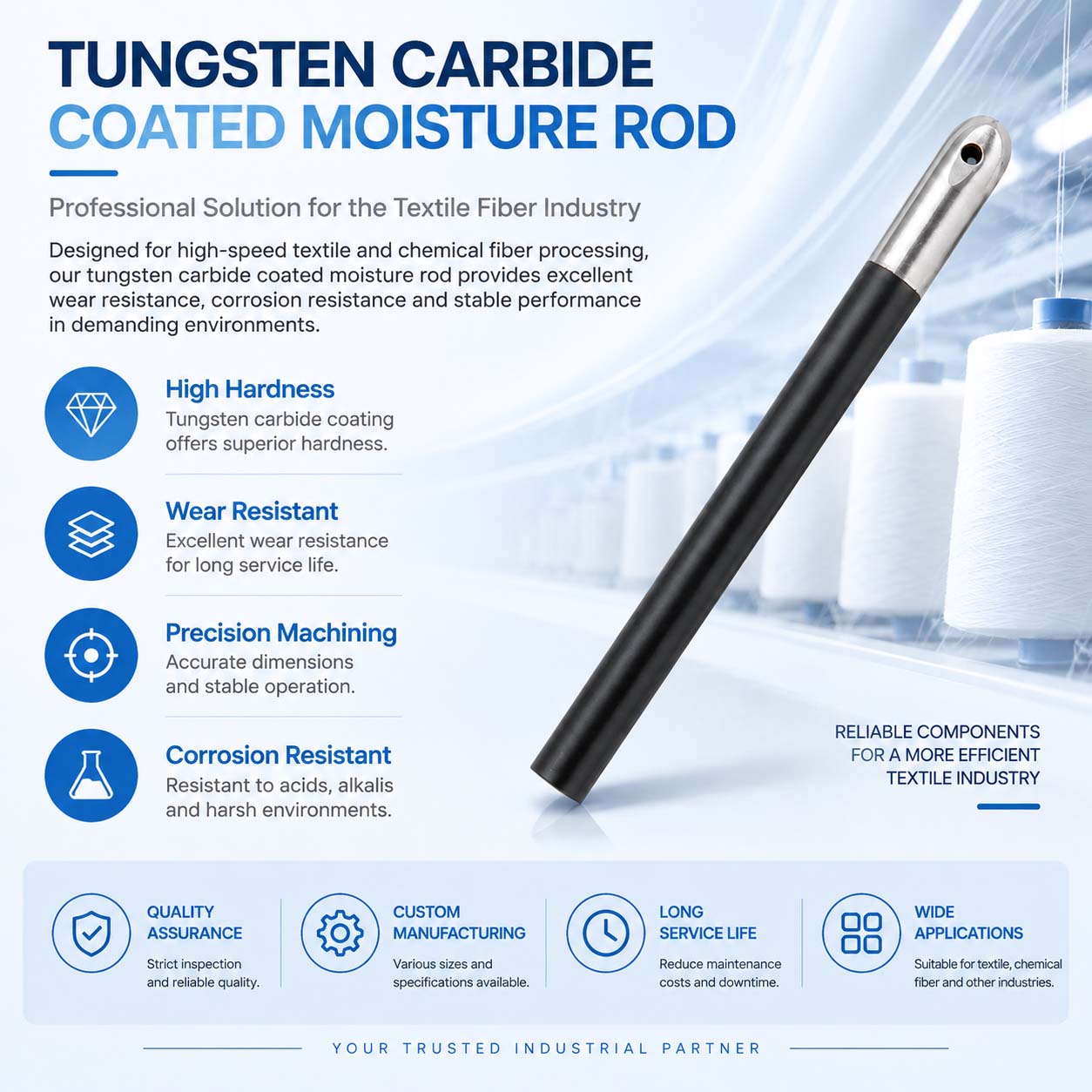
In textile, chemical fiber, and wire processing industries, the performance of guide wheels and guide rods directly affects production efficiency and product quality.
The Moisture Rod and Aluminum Alloy Ceramic Guide Wheel are important components where surface coating technology plays a key role. This article introduces the Al₂O₃-TiO₂ (alumina-titania) coating material, coating thickness, application fields, selection guidelines, and maintenance recommendations.
Coating Material and Process
Moisture rods and aluminum alloy ceramic guide wheels are commonly treated with thermal sprayed Al₂O₃-TiO₂ ceramic coatings.
This coating combines the high hardness of alumina with the toughness of titanium oxide, providing excellent:
- Wear resistance
- Corrosion resistance
- Electrical insulation performance
- Surface smoothness
Main Parameters:
- Coating Material: Al₂O₃-TiO₂ (Alumina-Titania)
- Coating Thickness: 0.2-0.3 mm
- Substrate Material: Aluminum alloy (commonly used for guide wheels)
- Bonding Strength: Strong adhesion between coating and substrate through thermal spraying technology
The smooth ceramic coating reduces friction, minimizes wire and fiber wear, and helps prevent fiber wrapping during operation. Its insulation properties also make it suitable for applications requiring electrical isolation.
Typical Applications
Textile and Chemical Fiber Industry
During spinning, stretching, and winding processes, moisture rods guide fiber bundles and require excellent wear and corrosion resistance against chemical fibers and moisture.
Aluminum alloy ceramic guide wheels are used for yarn transportation, where a smooth surface is essential to prevent fiber damage and ensure stable running.
Wire and Cable Processing
Wire guide wheels used in drawing and stranding processes are exposed to continuous high-speed friction. The Al₂O₃-TiO₂ coating improves wear resistance, extends service life, reduces wire scratches, and helps maintain product quality.
Selection Guidelines
When selecting moisture rods or ceramic guide wheels, consider:
Wire or Fiber Material
Different materials, such as metal wire, chemical fiber, and glass fiber, require different coating hardness and surface roughness.
Operating Speed
High-speed applications require excellent coating adhesion, proper dynamic balance, and stable operation.
Working Environment
For humid or corrosive environments, coatings with better corrosion resistance should be selected.
Dimensions and Compatibility
Confirm guide wheel diameter, groove profile, mounting size, and equipment compatibility before ordering.
Sample testing is recommended for special operating conditions.
Maintenance Tips
Proper maintenance can extend coating service life:
- Regularly inspect the coating surface. Replace or repair components if cracks or peeling occur.
- Clean with soft cloth or non-corrosive cleaning agents. Avoid scratching the coating.
- Store in a dry environment to prevent substrate corrosion.
- Avoid impact on coated areas during installation and use proper tools.
Frequently Asked Questions
What are the main advantages of Al₂O₃-TiO₂ coating?
Alumina-titania coating provides high hardness, excellent wear resistance, corrosion resistance, and a smooth surface finish. It effectively protects the substrate and extends component service life.
Can the 0.2-0.3 mm coating thickness be customized?
The standard coating thickness is 0.2-0.3 mm. Customized thickness may be available according to application requirements, although excessive thickness may affect bonding strength.
What materials are suitable for aluminum alloy ceramic guide wheels?
They are suitable for chemical fibers, cotton yarn, metal wires such as copper and steel wire, and other materials. The proper coating specification depends on wire hardness and tension conditions.
Can worn coatings be repaired?
Minor wear may allow continued use. Severe wear or coating peeling requires re-coating or replacement.
What is the difference between moisture rods and standard guide rods?
Moisture rods are specifically designed for wet or moisture-containing fiber bundles. Their coating provides improved resistance against water-related corrosion and wear.
How is coating quality evaluated?
Coating quality can be evaluated through visual inspection, thickness measurement, and bonding strength testing to ensure reliability.
Conclusion
The Al₂O₃-TiO₂ Ceramic Coated Moisture Rod and Aluminum Alloy Guide Wheel provide excellent wear resistance, corrosion protection, insulation performance, and smooth guiding characteristics. They are reliable solutions for textile, chemical fiber, wire, and cable processing industries requiring stable and durable guide components.
