

- Service: Ceramic Coated Aluminum Guide Wheel
- Category: Textile & Synthetic Fiber Industry Spray Welding Products
Coating Service Overview
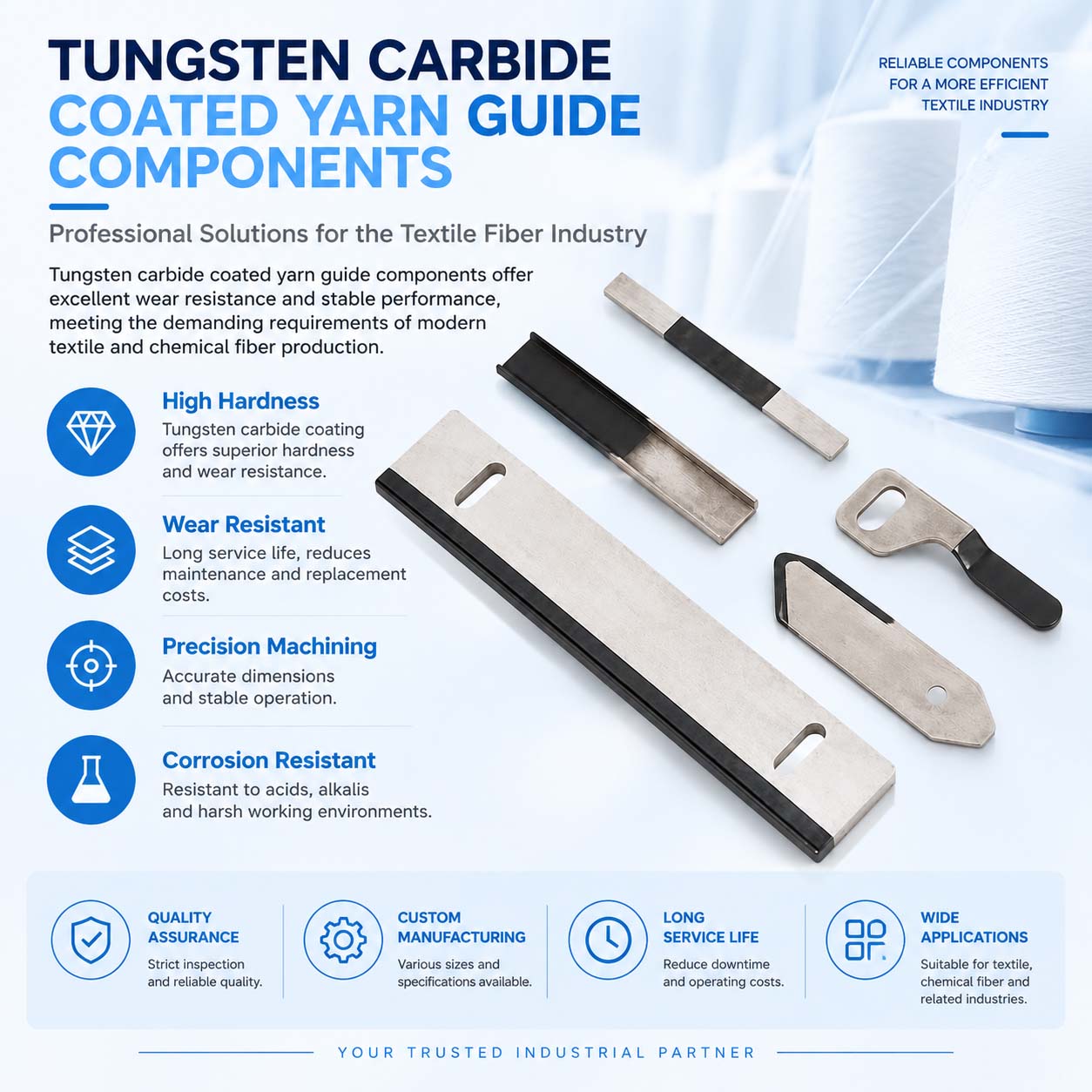
In textile and chemical fiber production, yarn guide components are continuously exposed to high-speed moving fibers, making surface wear a major concern. The Ceramic Coated Aluminum Guide Wheel uses an Al₂O₃-TiO₂ (Alumina-Titania) ceramic coating on an aluminum alloy substrate, combining lightweight design with excellent wear resistance.
With a typical coating thickness of 0.2-0.3 mm, it effectively withstands yarn friction, reduces replacement frequency, and improves production stability.
Coating Material and Structure
The key performance of the ceramic coated aluminum guide wheel comes from its advanced surface coating.
The coating material is Al₂O₃-TiO₂ ceramic composite, which provides high hardness, chemical stability, and excellent wear resistance. The coating thickness is optimized to provide sufficient protection while maintaining the toughness and balance of the aluminum alloy substrate.
Coating Advantages
Excellent Wear Resistance
The high hardness Al₂O₃-TiO₂ coating significantly reduces surface damage caused by continuous yarn friction.
Smooth Surface Finish
The dense and uniform ceramic coating provides a low-friction surface, reducing yarn damage, fuzzing, and breakage.
Corrosion Resistance
The chemically stable coating protects against moisture, oil contamination, and other corrosive factors in textile production environments.
Strong Coating Adhesion
The coating bonds firmly with the aluminum alloy substrate, ensuring stable operation under high-speed conditions.
Typical Applications
Ceramic coated aluminum guide wheels are widely used in textile and chemical fiber equipment, including:
- Spinning machines: guide rollers and yarn separating wheels
- Texturing machines: yarn guide wheels and measuring drums
- Winding and warping machines: tension control guide wheels
- Chemical fiber processing equipment: yarn passing rollers
In these applications, guide wheels must withstand continuous yarn tension and high-speed friction. The ceramic coating helps extend maintenance intervals and maintain stable yarn quality.
Selection and Installation Guidelines
When selecting a ceramic coated aluminum guide wheel, consider:
Yarn Type
Different fibers, such as polyester, nylon, and polypropylene, have different friction characteristics. Coating specifications should match the application requirements.
Operating Speed
High-speed applications require good dynamic balance to prevent vibration and unstable operation.
Yarn Tension
Wheel diameter and groove design should match yarn tension requirements to prevent slipping and excessive wear.
Installation Dimensions
Confirm shaft diameter, wheel diameter, width, and mounting dimensions before installation.
During installation, ensure smooth rotation without jamming. Bearings should be lubricated regularly to prevent uneven coating wear caused by bearing failure.
Maintenance Tips
To maximize service life:
- Clean the guide wheel surface regularly to remove oil, dust, and fiber residues.
- Inspect the coating weekly for peeling, cracks, or abnormal wear.
- Check bearing operation regularly and apply proper lubrication.
- Avoid impact during storage and handling to protect the coating surface.
If only minor coating wear occurs without substrate damage, professional evaluation may determine whether repair is possible. However, replacement is usually recommended to ensure yarn quality.
Frequently Asked Questions
Will the ceramic coating peel off?
Under normal operating conditions, the Al₂O₃-TiO₂ coating has strong adhesion to the aluminum alloy substrate and is not easy to peel. Severe impact or long-term overload operation may cause local damage.
Why is the coating thickness 0.2-0.3 mm?
This thickness range provides sufficient wear protection while avoiding excessive internal stress and maintaining proper wheel balance.
What types of yarn are suitable?
It is suitable for polyester, nylon, polypropylene, and some short fibers. For highly abrasive materials such as glass fiber, coating performance should be evaluated before use.
When should the guide wheel be replaced?
Replacement is recommended when the coating is worn through, grooves or cracks appear, or the wheel rotation becomes unstable.
Can ceramic coated aluminum guide wheels be repaired?
Generally, replacement is preferred. Re-coating may affect dimensional accuracy and dynamic balance, making a new component a more reliable and economical solution.
What is the difference compared with ordinary aluminum guide wheels?
Ordinary aluminum guide wheels have no protective coating and wear quickly, which may affect yarn quality. Ceramic coated aluminum guide wheels provide higher surface hardness, longer service life, and better protection against yarn fuzzing and breakage.
Conclusion
The Ceramic Coated Aluminum Guide Wheel with Al₂O₃-TiO₂ Coating provides an ideal combination of lightweight structure, wear resistance, corrosion protection, and smooth surface performance. It is widely used in textile and chemical fiber production lines requiring stable yarn guidance and long-term reliable operation.
