

Coating Service Overview
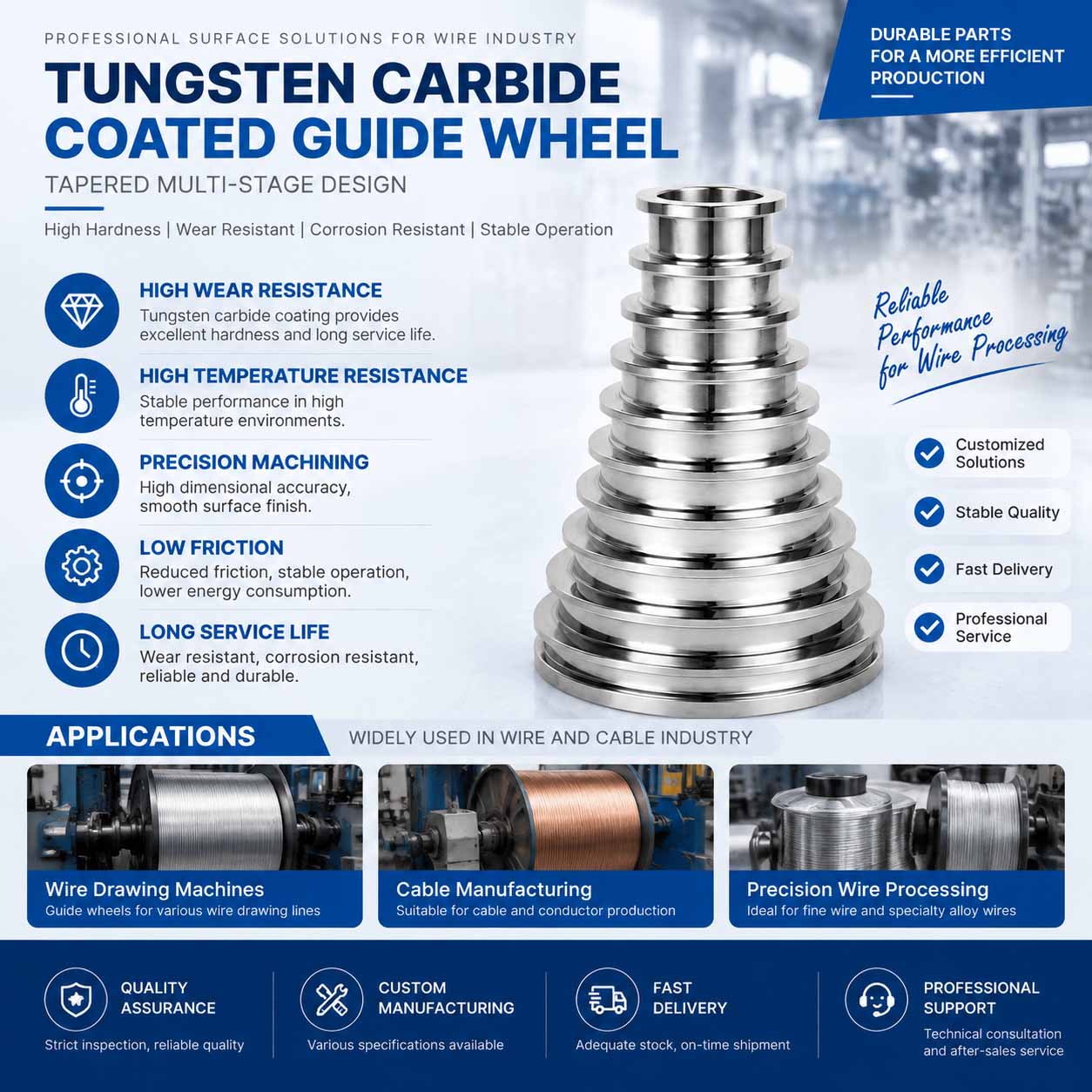
In wire and cable manufacturing and metal wire processing, guide wheels are critical components exposed to continuous friction. Micro wire drawing tower wheels with wear-resistant coatings can significantly improve service life, reduce replacement frequency, and maintain stable wire processing performance.
This article introduces coating characteristics, applications, selection methods, and maintenance recommendations to help customers choose the right guide wheel solution.
Features of Tungsten Carbide Coated Guide Wheels
Micro wire drawing tower wheels are treated with advanced wear-resistant coatings, such as tungsten carbide coating, to improve surface performance.
Typical coating thickness:
1.0–1.2 mm
The coating provides high hardness and strong bonding strength, effectively resisting wear caused by high-speed wire movement.
Main Advantages
High Wear Resistance
The coating provides excellent hardness and durability, allowing the guide wheel to withstand continuous friction from metal wires.
Uniform Coating Thickness
A controlled coating process ensures:
- Smooth surface finish
- Stable dimensions
- Reduced wire surface damage
Thermal Shock Resistance
The coating can withstand temperature variations during wire drawing processes and reduces the risk of cracking or peeling.
Applications of Micro Wire Drawing Tower Wheels
Micro wire drawing tower wheels are widely used in:
- Wire and cable manufacturing
- Fine wire drawing machines
- Annealing equipment
- Precision metal wire processing systems
Typical applications include:
Fine Copper Wire Drawing
Used for:
- Electronic wires
- Precision cables
- Small-diameter copper wire processing
Aluminum and Alloy Wire Drawing
Provides stable guidance while reducing friction and surface damage.
Wire Passing and Guide Systems
Wear-resistant guide wheels help:
- Reduce wire vibration
- Maintain accurate wire positioning
- Improve production stability
Annealing Equipment
Suitable for components operating under continuous friction and temperature changes.
Selection and Customization Guide
When selecting a micro wire drawing tower wheel, consider:
Wire Material
Different materials require different surface properties:
- Copper wire
- Aluminum wire
- Alloy wire
- Fine metal wire
Wire Diameter and Speed
High-speed and fine wire applications require:
- Higher coating quality
- Better surface finish
- Accurate dimensions
Equipment Type
The guide wheel should match:
- Machine model
- Installation structure
- Operating conditions
Customized sizes and coating solutions can be provided according to drawings or samples.
Maintenance Recommendations
Proper maintenance can extend guide wheel service life:
- Regularly inspect coating wear and surface condition.
- Remove metal particles and debris to prevent scratches.
- Ensure smooth rotation and avoid uneven wear.
- Replace or refurbish wheels when severe grooves or coating damage appear.
Frequently Asked Questions
1. What types of wires are suitable for tungsten carbide coated guide wheels?
They are commonly used for:
- Copper wire
- Aluminum wire
- Alloy wire
- Precision metal wire processing
The final selection depends on wire hardness, speed, and production conditions.
2. Can the 1.0–1.2 mm coating thickness be customized?
Yes. Standard coating thickness is around 1.0–1.2 mm. Customized thickness can be considered according to application requirements and process feasibility.
3. How long is the service life of coated guide wheels?
Service life depends on:
- Wire material
- Drawing speed
- Tension
- Lubrication conditions
- Operating environment
Actual performance should be evaluated based on specific working conditions.
4. When should the coating be refurbished?
Recoating is recommended when:
- Visible wear grooves appear
- Wire surface quality decreases
- Coating damage affects production stability
5. What is the difference between micro tower wheels and standard guide wheels?
Micro wire drawing tower wheels are designed for precision fine wire processing. With wear-resistant coating, they provide:
- Higher durability
- Better surface protection
- More stable operation
compared with untreated or standard guide wheels.
6. Can samples be provided for testing?
Yes. Sample testing can usually be arranged according to product specifications and customer requirements.
