

Coating Service Overview
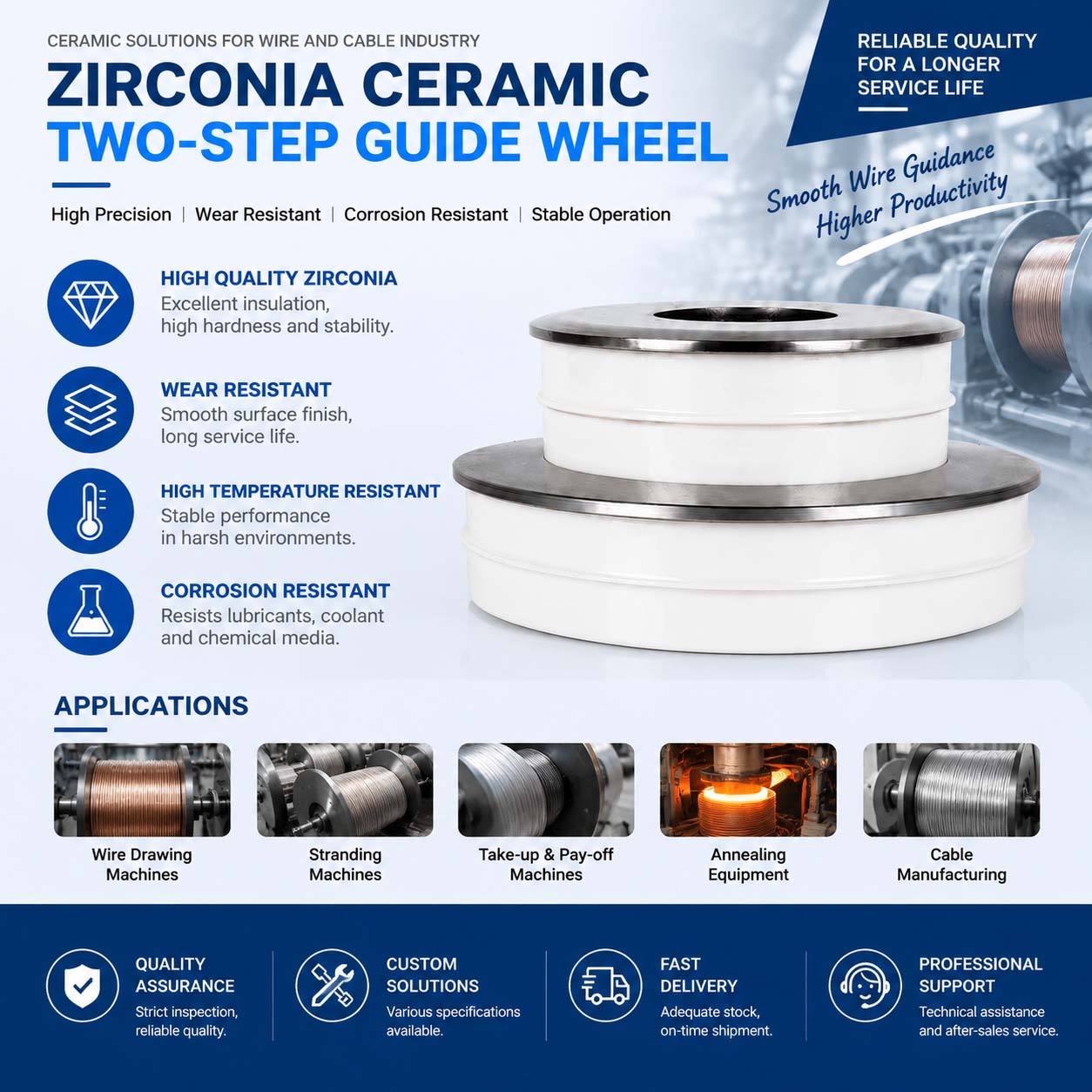
In wire and cable manufacturing, guide wheels are essential components used in wire drawing, winding, pay-off, and take-up processes.
The zirconia medium wire drawing tower wheel is made from high-purity zirconia ceramic material. With excellent wear resistance, corrosion resistance, and superior surface finish, it is an ideal solution for:
- Medium wire drawing machines
- Winding machines
- Pay-off and take-up machines
- Annealing equipment
The zirconia ceramic surface reduces friction between the wire and guide wheel, minimizes wire damage, extends component life, and helps manufacturers reduce maintenance costs while improving production stability.
Product Features
High Performance Zirconia Ceramic Material
The main body is made of zirconia ceramic, featuring:
- High hardness
- High toughness
- Low friction coefficient
- Excellent mechanical stability
Excellent Wear Resistance
Zirconia ceramic maintains a smooth surface during long-term operation, reducing:
- Wire scratches
- Surface damage
- Guide wheel wear
Corrosion Resistance
The ceramic material provides excellent resistance against:
- Drawing lubricants
- Cooling fluids
- Moisture and industrial environments
It does not rust or corrode like traditional metal components.
Smooth Surface Finish
Precision machining provides:
- Low surface roughness
- Reduced wire running resistance
- Lower risk of wire breakage
High Dimensional Accuracy
Strict dimensional control ensures:
- Accurate equipment matching
- Stable rotation
- Reliable wire guidance
Applications
Zirconia medium wire drawing tower wheels are widely used in:
- Medium wire drawing machines
- Winding machines
- Pay-off machines
- Take-up machines
- Annealing equipment
They are suitable for processing:
- Copper wire
- Aluminum wire
- Alloy wire
- Stainless steel wire
They can also be applied in precision wire production, including:
- Optical fiber-related equipment
- Enamel wire manufacturing
- High-quality cable production
Selection Guide
When selecting zirconia ceramic tower wheels, consider:
Wire Material and Diameter
Different wire materials require different:
- Surface hardness
- Groove designs
- Wheel specifications
Proper matching helps ensure smooth wire movement and stable production.
Equipment Specifications
Confirm:
- Outer diameter
- Inner bore size
- Groove type
- Number of grooves
- Installation dimensions
to ensure compatibility with existing equipment.
Operating Speed
For high-speed drawing applications, choose guide wheels with:
- Better dynamic balance
- Higher machining accuracy
to reduce vibration and improve running stability.
Working Environment
For applications involving:
- Corrosive fluids
- High humidity
- Continuous operation
zirconia ceramic provides excellent protection.
Customized sizes can be manufactured according to customer drawings or samples.
Maintenance Recommendations
Proper maintenance helps extend zirconia tower wheel service life:
- Regularly inspect the wheel surface for cracks, chips, or abnormal wear.
- Keep the ceramic surface clean and remove metal particles regularly.
- Use soft cloths and suitable cleaners when necessary.
- Check bearing rotation and lubrication conditions.
- Avoid impact or direct force on ceramic surfaces during installation.
- Store spare wheels in dry, dust-free environments.
Frequently Asked Questions
1. What wires are suitable for zirconia medium tower wheels?
They are suitable for:
- Copper wire
- Aluminum wire
- Alloy wire
- Stainless steel wire
- Enamel wire
They are especially suitable for precision wire applications requiring high surface quality.
2. What are the advantages compared with metal guide wheels?
Zirconia ceramic guide wheels provide:
- Higher hardness
- Better wear resistance
- Lower friction
- Smoother surface
- Better corrosion resistance
They effectively reduce wire damage and improve service life.
3. How to know when the guide wheel needs replacement?
Replacement is recommended when:
- Deep wear grooves appear
- Cracks or edge damage occur
- Wire scratches increase
- Wire breakage frequency rises
4. Can non-standard sizes be customized?
Yes.
Customized options include:
- Outer diameter
- Inner diameter
- Groove design
- Thickness
- Special dimensions
Customers can provide drawings or samples for manufacturing.
5. Is zirconia ceramic easy to break?
Zirconia has higher toughness than many traditional ceramics, but it remains a ceramic material.
Avoid:
- Strong impact
- Improper installation
- Hard object collisions
With correct installation and operation, it provides reliable performance.
6. What should be done if the surface becomes rough after use?
For minor surface roughness, polishing may restore performance.
If severe wear occurs, replacement is recommended to avoid affecting wire quality.
