

Coating Service Overview
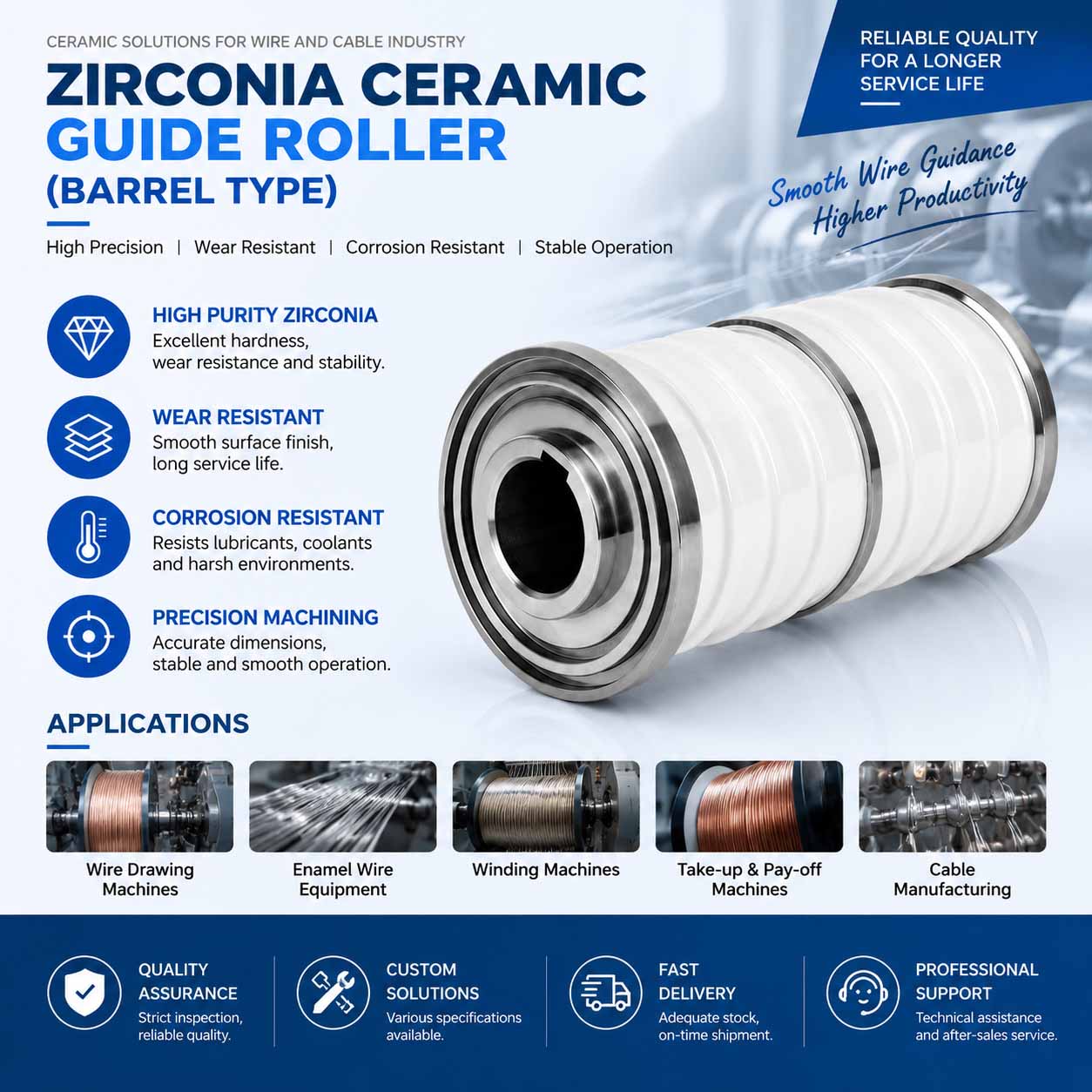
In wire and cable manufacturing, guide wheels are critical components in wire drawing, winding, take-up, and enamel wire production equipment. Their surface quality and wear resistance directly affect wire quality, production efficiency, and equipment stability.
The zirconia ceramic multi-head tower wheel is made from high-purity zirconia (ZrO₂) ceramic material. With excellent hardness, wear resistance, corrosion resistance, and a smooth surface finish, it is an ideal solution for precision wire drawing and guiding applications.
Material Features of Zirconia Ceramic
The main material of the multi-head tower wheel is zirconia ceramic (ZrO₂), which provides excellent mechanical and chemical properties.
High Hardness and Wear Resistance
Zirconia ceramic offers:
- High surface hardness
- Excellent abrasion resistance
- Long service life
The smooth ceramic surface reduces friction between the wire and guide wheel, minimizing:
- Wire scratches
- Surface damage
- Production defects
Low Friction Coefficient
The low-friction ceramic surface helps:
- Reduce wire running resistance
- Improve wire stability
- Lower energy consumption
Excellent Corrosion Resistance
Zirconia ceramic is highly resistant to:
- Drawing lubricants
- Cooling fluids
- Enamel wire coatings
- Chemical environments
It maintains stable performance without rust or corrosion.
Thermal Stability
The material provides good thermal stability and chemical inertness, making it suitable for continuous production lines.
Applications
Zirconia ceramic multi-head tower wheels are widely used in:
Wire Drawing Machines
Used as multi-groove guide wheels for:
- Copper wire drawing
- Aluminum wire processing
- Alloy wire production
The multi-head design allows multiple wire paths, improving production efficiency.
Wire Guide Rollers
Used for:
- Wire positioning
- Direction control
- Stable wire movement
The smooth zirconia surface protects wire quality during high-speed operation.
Enamel Wire Equipment
Applied in enamel wire production lines where guide wheels must withstand:
- High-speed rotation
- Coating materials
- Continuous operation
Other applications include:
- Winding machines
- Take-up and pay-off machines
- Precision cable production equipment
Selection and Customization Guide
When selecting zirconia multi-head tower wheels, consider:
Wire Material and Diameter
Different materials require suitable:
- Groove dimensions
- Surface finish
- Wheel specifications
Common materials include:
- Copper wire
- Aluminum wire
- Alloy wire
- Stainless steel wire
Groove Design and Size
Multi-head tower wheels are available with different configurations:
- 2-head
- 4-head
- 6-head
- Customized designs
Groove number, diameter, and spacing should match the equipment design.
Installation Requirements
Confirm:
- Inner bore size
- Shaft dimensions
- Fixing method
- Equipment compatibility
Working Environment
Consider:
- Lubricant type
- Temperature
- Operating speed
- Chemical exposure
Zirconia ceramic provides excellent performance in most industrial environments.
Customized products can be manufactured according to customer drawings or samples.
Maintenance Recommendations
Proper maintenance helps extend service life:
- Regularly clean the wheel surface to remove metal particles and lubricant residue.
- Inspect grooves for wear, cracks, or surface damage.
- Avoid impact during installation and handling.
- Maintain proper lubrication conditions.
- Store ceramic components in dry environments away from hard objects.
Frequently Asked Questions
1. What are the advantages of zirconia multi-head tower wheels compared with metal wheels?
Zirconia ceramic wheels provide:
- Higher hardness
- Better wear resistance
- Lower friction
- Better corrosion resistance
- Cleaner wire processing
They are especially suitable for high-speed and precision wire production.
2. What is the purpose of a multi-head tower wheel design?
The multi-head design allows multiple wires to be guided simultaneously, improving:
- Production efficiency
- Equipment utilization
- Processing stability
It is commonly used in multi-wire drawing systems.
3. How to determine when the tower wheel needs replacement?
Replacement is recommended when:
- Groove wear becomes visible
- Wire surface quality decreases
- Wire breakage increases
- Cracks or edge damage appear
Regular measurement of groove dimensions helps predict service life.
4. Can zirconia tower wheels be repaired?
Minor surface wear may be restored through precision grinding.
However, severe cracks or ceramic breakage usually require replacement.
5. What types of wire drawing machines are suitable?
Zirconia multi-head tower wheels can be used for:
- Large wire drawing machines
- Medium wire drawing machines
- Fine wire drawing machines
- Micro wire drawing equipment
Selection depends on machine parameters and wire specifications.
6. Is zirconia ceramic corrosion resistant?
Yes.
Zirconia has excellent chemical stability and can resist most:
- Acids
- Alkalis
- Organic solvents
- Industrial lubricants
making it suitable for wire drawing and enamel wire environments.
