

Coating Service Overview
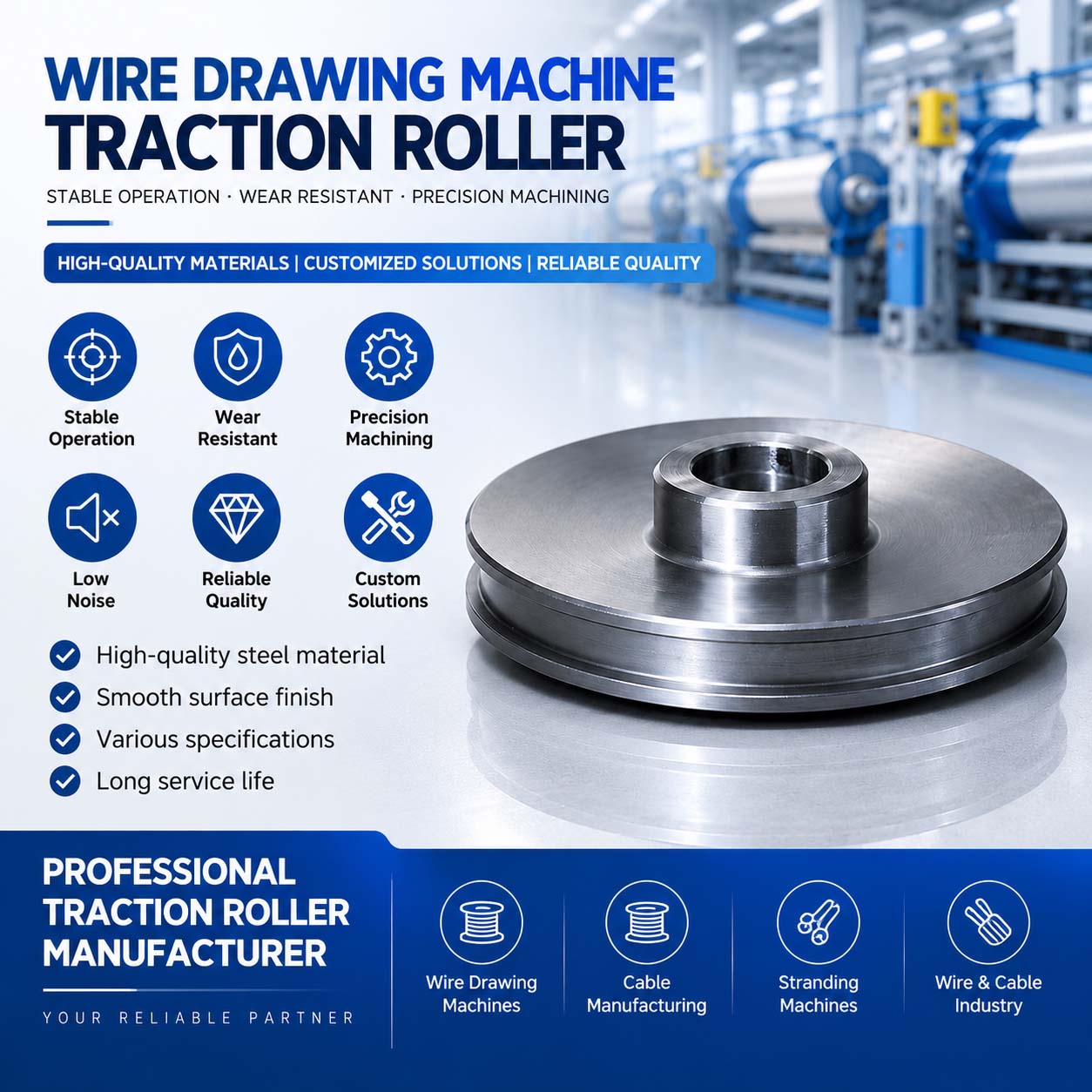
In the wire and cable manufacturing industry, the performance of wire drawing machine components directly affects production efficiency and product quality. Key parts such as traction rollers, tower pulleys, and guide rollers are exposed to continuous high-speed friction and tension, making wear resistance and operational stability essential.
We specialize in providing high-performance wire drawing machine components, including tungsten carbide tower pulleys, ceramic guide rollers, and tungsten carbide rings. Through advanced thermal spray coating technology, we improve surface hardness, wear resistance, and service life, helping customers reduce downtime and maintenance costs.
Product Types and Features
Tungsten Carbide Tower Pulley
Tungsten carbide tower pulleys are manufactured using advanced coating processes such as:
- HVOF (High Velocity Oxygen Fuel) spraying
- Plasma spray coating
The tungsten carbide coating provides:
- Extremely high hardness
- Excellent wear resistance
- Strong bonding strength
- Long service life under high-speed operation
The multi-groove design allows multiple wires to pass simultaneously, making it suitable for continuous wire drawing production lines. Groove numbers such as single groove, double groove, and triple groove can be customized according to equipment requirements.
Ceramic Guide Roller
Ceramic guide rollers are produced by applying ceramic coatings such as:
- Chromium oxide (Cr₂O₃)
- Aluminum oxide (Al₂O₃)
The ceramic surface provides:
- Low friction coefficient
- Excellent corrosion resistance
- High-temperature resistance
- Smooth wire contact performance
Ceramic coated rollers help reduce wire scratches and are especially suitable for enamel wire, fine wire, and applications requiring high surface quality.
Roller dimensions, groove shapes, and specifications can be customized according to customer drawings.
Tungsten Carbide Ring
Tungsten carbide rings are wear-resistant circular components used for wire guidance and positioning.
By applying tungsten carbide coating on the inner or outer surface, the ring achieves much higher wear resistance compared with conventional steel parts.
They are commonly used together with tower pulleys and guide rollers to maintain stable wire paths and reduce wire vibration.
Standard and customized sizes are available according to customer requirements.
Application Areas
These components are widely used in:
Wire and Cable Industry
For copper wire, aluminum wire, and alloy wire drawing and stranding processes.
Metal Wire Production
For steel wire, stainless steel wire, welding wire, and other high-strength wire manufacturing.
Enamel Wire Industry
For fine wire drawing and coating processes requiring excellent surface protection.
Optical Fiber and Cable Industry
For processing fiber reinforcement wires and armored steel wires.
Selection and Maintenance Guide
How to Select the Right Components
Selection should consider:
Wire Material and Diameter
Hard materials usually require tungsten carbide coatings, while soft wires or applications requiring high surface quality are better suited for ceramic coatings.
Machine Speed and Tension
For high-speed and high-tension applications, coatings with high bonding strength and toughness are recommended. HVOF coating is preferred for demanding conditions.
Groove Design and Dimensions
Components should match existing equipment specifications. Customer drawings or samples ensure accurate fitting and performance.
Working Environment
Ceramic coatings provide advantages in corrosive and high-temperature environments.
Maintenance Recommendations
Proper maintenance can extend component service life:
- Regularly inspect coating wear and repair components when deep grooves or coating damage appear.
- Keep roller surfaces clean to prevent metal particles from causing abnormal wear.
- Ensure proper bearing lubrication to avoid excessive local wear caused by poor rotation.
- For repairable components, thermal spray recoating can restore dimensions and performance at a lower cost than replacement.
Frequently Asked Questions
What is the difference between tungsten carbide and ceramic coatings?
Tungsten carbide coating provides higher hardness and superior wear resistance, making it suitable for dry or wet wire drawing applications.
Ceramic coating offers lower friction, insulation, corrosion resistance, and high-temperature performance, making it ideal for enamel wire and precision wire processing.
How long is the service life of a tower pulley?
Service life depends on wire material, drawing speed, tension, lubrication, and operating conditions. Thermal spray coatings can significantly extend replacement intervals, but actual performance depends on the specific application.
Can worn guide rollers be repaired?
Yes. Through surface preparation, thermal spraying, and precision grinding, worn rollers can be restored to their original dimensions and performance. Repair costs are usually lower than replacing new parts.
Can customized components be manufactured?
Yes. Customers can provide drawings or samples with material requirements, coating specifications, and dimensional tolerances. We provide customized manufacturing solutions.
What is the delivery time?
Standard products may be available quickly. Customized components depend on quantity and process complexity. Please contact our sales team for an accurate delivery schedule.
Will the coating peel off?
Thermal spray coatings have strong mechanical bonding with the substrate and normally do not peel off under proper operating conditions. Abnormal impact, overload, or improper maintenance may cause local coating damage and require inspection.
Professional Wire Drawing Machine Parts and Thermal Spray Coating Solutions provide reliable wear protection for wire drawing, cable manufacturing, and metal processing industries, helping customers improve production stability, reduce maintenance costs, and extend equipment service life.
