

Coating Service Overview
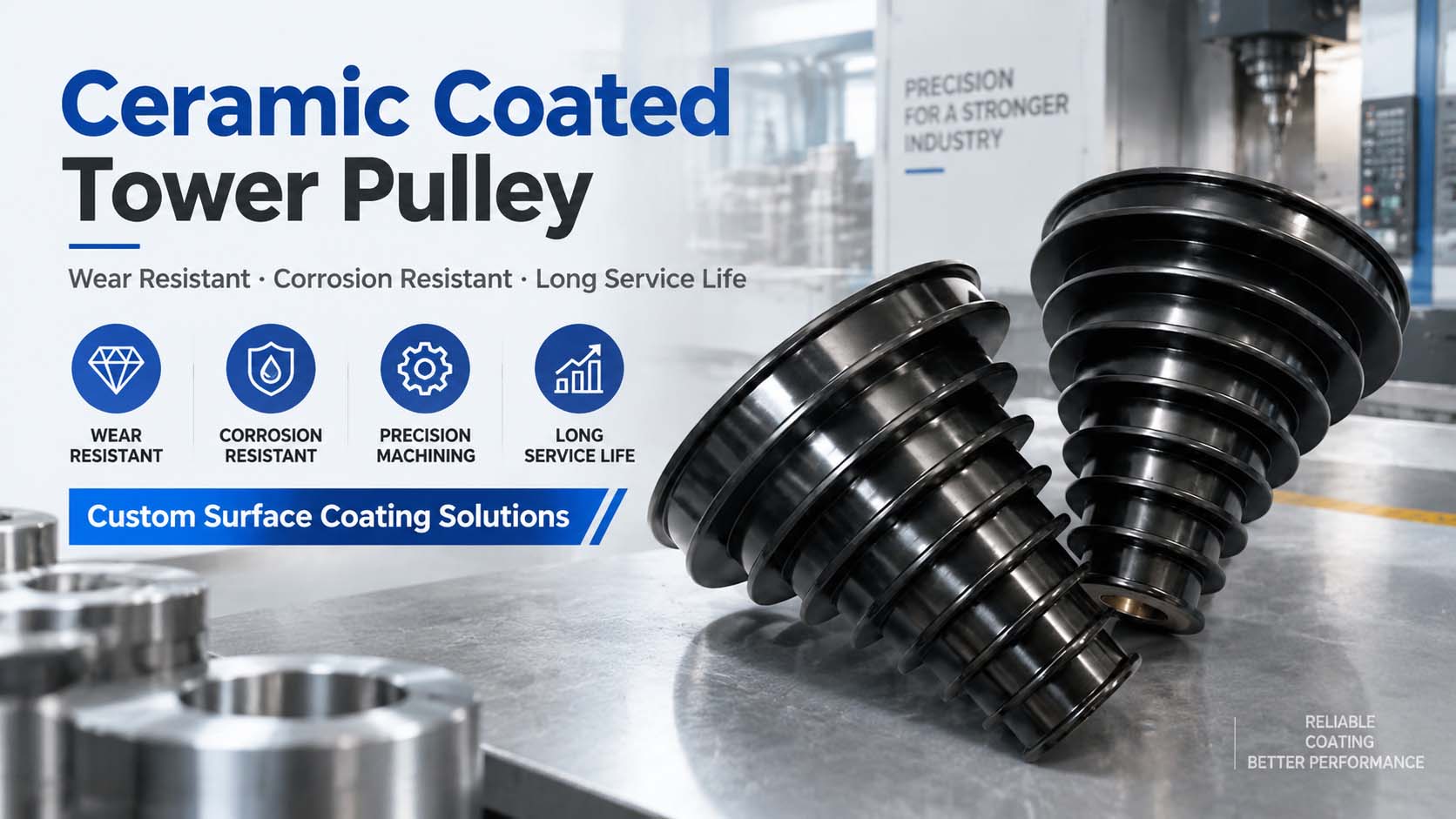
In industrial equipment, tower pulleys are critical components for power transmission and wire guiding. They are continuously exposed to friction, wear, and corrosion during operation, and their surface performance directly affects equipment efficiency, stability, and service life.
Ceramic coating for tower pulleys is an advanced thermal spray surface treatment technology that deposits high-performance ceramic materials onto the pulley surface. This process provides excellent wear resistance, corrosion protection, and high-temperature performance, making it an effective solution for industrial component protection and refurbishment.
What Is Ceramic Coating for Tower Pulley?
Tower pulley ceramic coating, also known as ceramic thermal spray coating, uses advanced processes such as:
- HVOF (High Velocity Oxygen Fuel) spraying
- Plasma spraying
to apply ceramic materials such as chromium oxide (Cr₂O₃), aluminum oxide (Al₂O₃), and tungsten carbide (WC) onto the pulley surface.
During spraying, ceramic powders are heated to a molten or semi-molten state and accelerated onto the substrate, forming a dense protective coating with:
- High hardness;
- Strong bonding strength;
- Low friction coefficient;
- Excellent resistance to wear and corrosion.
The coating effectively protects the tower pulley from abrasive wear, adhesive wear, and chemical corrosion.
Advantages of Ceramic Coated Tower Pulley
Excellent Wear Resistance
Ceramic coatings can achieve hardness above HRC70, significantly improving surface durability and reducing groove wear caused by continuous wire friction.
Corrosion Resistance
The dense ceramic layer isolates the substrate from moisture, chemicals, acids, and alkali environments, providing long-term protection.
High Temperature Performance
Advanced ceramic coatings can withstand temperatures above 800°C, making them suitable for high-temperature industrial applications.
Strong Coating Adhesion
Professional thermal spray processes provide coating bonding strength exceeding 70 MPa, ensuring stable performance during operation.
Repairable Surface Solution
Worn tower pulleys can be recoated and restored to original dimensions, reducing replacement costs and extending component life.
Applications of Ceramic Coated Tower Pulley
Ceramic coated tower pulleys are widely used in industries requiring high wear resistance and surface protection.
Wire Drawing Machine Tower Pulley
During metal wire drawing, tower pulleys experience continuous high-speed friction from wire materials. Ceramic coatings improve wear resistance, reduce wire scratches, and extend service intervals.
Textile Machine Guide Wheels
In textile and fiber processing equipment, ceramic-coated guide wheels reduce yarn damage and improve running stability.
Printing Machine Rollers
Ceramic coated rollers provide wear resistance and excellent surface release properties for printing and coating applications.
Chemical and Industrial Equipment Shafts
Ceramic coatings protect pump shafts, sleeves, and other components operating in corrosive environments.
Coating Selection Guide
The proper coating material should be selected according to working conditions:
Tungsten Carbide Coating
Recommended for:
- Severe abrasive wear;
- Heavy-load applications;
- High-strength wire processing.
Provides extremely high hardness and excellent impact resistance.
Chromium Oxide / Aluminum Oxide Ceramic Coating
Recommended for:
- General wear protection;
- Corrosion resistance;
- Smooth surface requirements.
Zirconia Ceramic Coating
Suitable for:
- High-temperature environments;
- Thermal insulation applications;
- Heat-resistant components.
Maintenance Recommendations
To maximize coating service life:
- Regularly inspect coating wear and surface damage;
- Repair local damage promptly to prevent substrate exposure;
- Avoid strong impact that may cause ceramic cracking;
- Use neutral cleaning agents and avoid prolonged exposure to strong acids or alkalis.
Frequently Asked Questions
What is the typical coating thickness?
The coating thickness is usually 0.1–0.5 mm, depending on wear allowance and application requirements.
Will ceramic coating affect pulley dimensions?
No. Machining allowance is reserved before spraying, and precision grinding after coating restores the required dimensions.
Will the coating peel off?
Under proper surface preparation and professional spraying conditions, ceramic coatings have strong adhesion and are not likely to peel during normal operation.
Can ceramic coating be applied to all metal substrates?
Most metal substrates, including steel, stainless steel, and aluminum alloy, can be coated. The process must be adjusted according to substrate properties.
Is repairing old tower pulleys economical?
Yes. For high-value components, recoating is usually much more economical than replacement, while performance can reach or exceed that of new parts.
How is coating quality inspected?
Coating quality can be evaluated through:
- Visual inspection;
- Thickness measurement;
- Hardness testing;
- Bond strength testing.
Professional ceramic thermal spray coating solutions help tower pulleys achieve longer service life, improved wear resistance, and stable performance in wire drawing and industrial applications.
