

Coating Service Overview
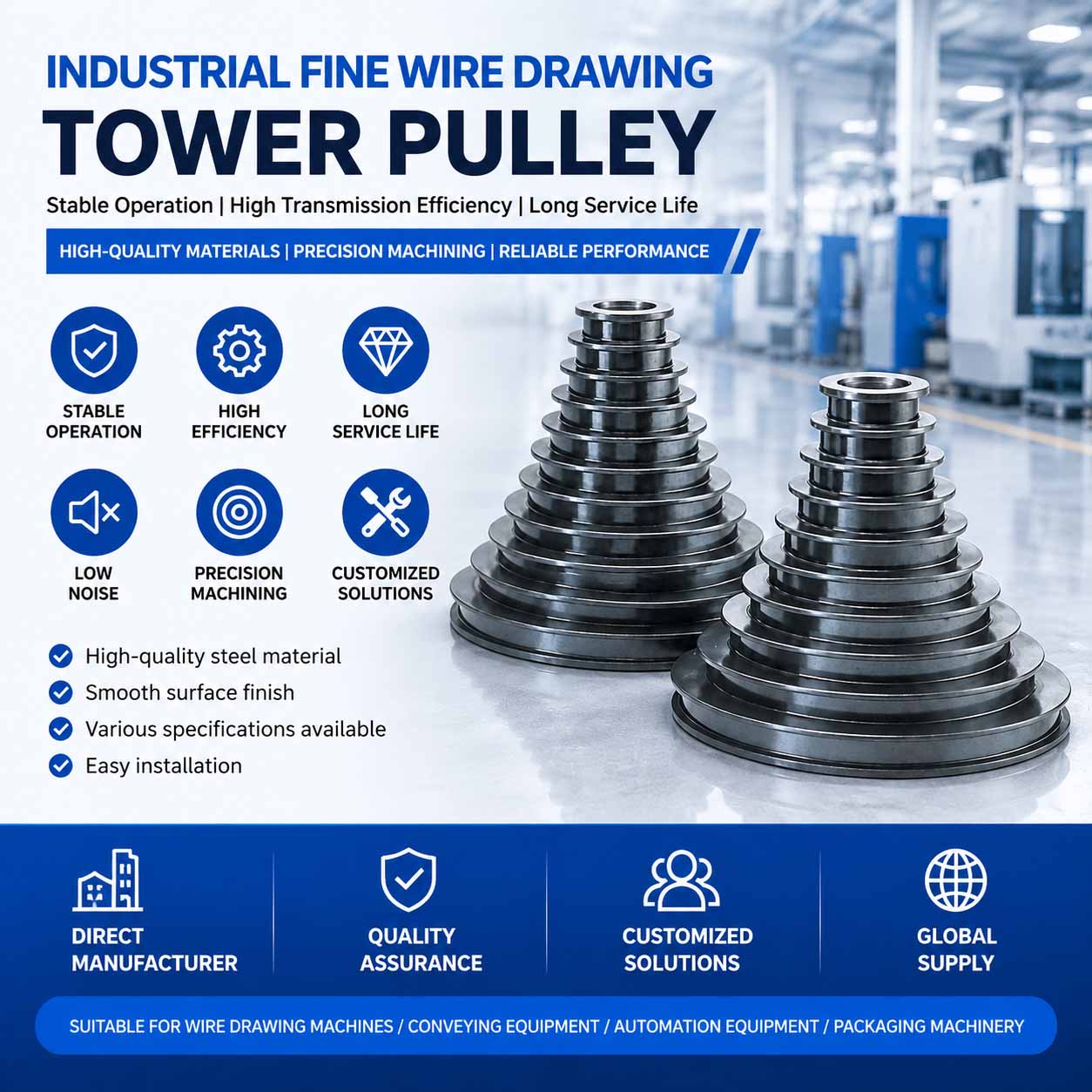
In wire and cable manufacturing, as well as metal wire drawing industries, the fine wire drawing tower pulley (also known as wire drawing tower wheel or traction pulley) is a key transmission component of wire drawing machines.
During high-speed operation, wire continuously contacts the pulley grooves under high tension and friction, causing surface wear, groove damage, and coating failure over time. Excessive wear can directly affect wire surface quality, dimensional accuracy, and increase the risk of wire breakage.
Selecting the right wear-resistant surface treatment technology for industrial tower pulleys is essential to improve equipment efficiency, reduce maintenance costs, and extend service life.
Common Failure Modes of Fine Wire Drawing Tower Pulleys
Industrial tower pulleys mainly suffer from the following types of wear:
Abrasive Wear
Hard particles or oxide scale on the wire surface can scratch the pulley grooves during high-speed sliding, creating grooves and surface damage.
Adhesive Wear
Under high temperature and pressure, the wire may locally bond with the pulley surface. When separated, material transfer and surface peeling may occur.
Fatigue Wear
Repeated contact stress can generate micro-cracks on the groove surface, eventually causing pitting and coating failure.
Plastic Deformation
Under heavy loads, groove edges may deform or collapse, reducing wire guiding accuracy.
These failures are closely related to pulley material, hardness, surface finish, lubrication, and cooling conditions. Improving the groove surface performance through advanced surface engineering technology is one of the most effective methods to extend pulley life.
Common Surface Treatment Technologies
For industrial fine wire drawing tower pulleys, thermal spray coating technology is widely used to create high-performance wear-resistant surfaces. Among various options, tungsten carbide and ceramic coatings are the most common solutions.
Tungsten Carbide Coating
WC-Co tungsten carbide coating provides extremely high hardness and excellent resistance to abrasive wear.
Using HVOF (High Velocity Oxygen Fuel) spraying or plasma spraying technology, a dense coating with strong adhesion and low porosity can be produced.
Main advantages:
- Hardness typically reaches HV1100–1300;
- Excellent wear and impact resistance;
- High bonding strength;
- Suitable for steel wire, copper wire, and demanding dry drawing applications.
Ceramic Coating
Ceramic coatings such as chromium oxide (Cr₂O₃) and aluminum oxide-titanium oxide (Al₂O₃-TiO₂) provide:
- High hardness;
- Low friction coefficient;
- Excellent chemical stability;
- Good corrosion resistance.
Ceramic coatings effectively reduce adhesive wear and are suitable for copper wire, aluminum wire, and applications requiring smooth wire contact surfaces.
Other Coating Options
Depending on operating conditions, metal-ceramic composite coatings and nickel-based alloy coatings can also be selected to balance wear resistance and impact strength.
For enamel wire machine guide components requiring electrical isolation, specialized insulation coating solutions are available.
Thermal Spray Processing Steps
A professional tower pulley coating process usually includes:
1. Surface Preparation
The pulley is cleaned and degreased. Sand blasting is performed to increase surface roughness and improve coating adhesion.
2. Preheating
The component is evenly preheated to reduce thermal stress during spraying.
3. Coating Application
Selected coating materials are sprayed layer by layer to the required thickness, leaving machining allowance for finishing.
4. Precision Finishing
Diamond grinding or ultra-precision machining restores groove dimensions, surface roughness, and accuracy.
5. Quality Inspection
Final inspection includes:
- Hardness testing;
- Coating thickness measurement;
- Surface roughness testing;
- Crack and defect inspection.
Strict control of spraying distance, powder feeding rate, and gas parameters ensures coating quality and bonding strength.
Selection and Maintenance Guide
When selecting a coating solution, consider:
Wire Material and Diameter
- Hard materials such as high-carbon steel wire: tungsten carbide coating is recommended.
- Soft materials such as copper and aluminum wire: ceramic coating helps reduce adhesion and surface damage.
Drawing Speed and Tension
High-speed and heavy-load applications require coatings with high fatigue resistance and bonding strength.
Lubrication Conditions
Wet drawing with sufficient lubrication places lower requirements on coating performance, while dry drawing requires stronger anti-seizure and wear resistance.
Cost and Service Life
Tungsten carbide coatings have higher initial costs but provide longer service life. Ceramic coatings offer excellent performance and are suitable for multiple refurbishment cycles.
Regular inspection of groove wear is recommended. Remove accumulated debris and avoid foreign particles damaging the coating. When the coating wears through to the substrate, timely recoating can prevent wire damage and equipment failure.
Frequently Asked Questions
How long can a coated tower pulley last?
Service life depends on wire material, drawing speed, tension, and lubrication conditions. Under suitable conditions, tungsten carbide coated pulleys can provide several times longer service life than untreated hardened steel pulleys.
Can worn tower pulleys be repaired?
Yes. If the substrate has no severe cracks or deformation, old coatings can be removed and the pulley can be recoated to restore original dimensions and performance.
How to choose between tungsten carbide and ceramic coating?
- Tungsten carbide coating: Best for steel wire, heavy loads, and severe abrasive wear.
- Ceramic coating: Best for copper/aluminum wire, low friction requirements, and corrosion-resistant applications.
What is the typical processing time?
Depending on pulley size, quantity, and coating type, standard processing usually takes several days to one week, including spraying, grinding, and inspection.
What preparation is required before spraying?
The pulley surface must be completely cleaned, degreased, and grit blasted. Old coatings must be fully removed to ensure strong bonding of the new coating.
Do coated pulleys require special lubricants?
Generally, no special lubricant is required. However, clean and suitable lubricants can help extend coating and wire life. Avoid contaminated lubricants containing hard particles.
Advanced thermal spray coating solutions provide industrial fine wire drawing tower pulleys with superior wear resistance, stable operation, and extended service life, helping wire manufacturers improve productivity and reduce operating costs.
