

Coating Service Overview
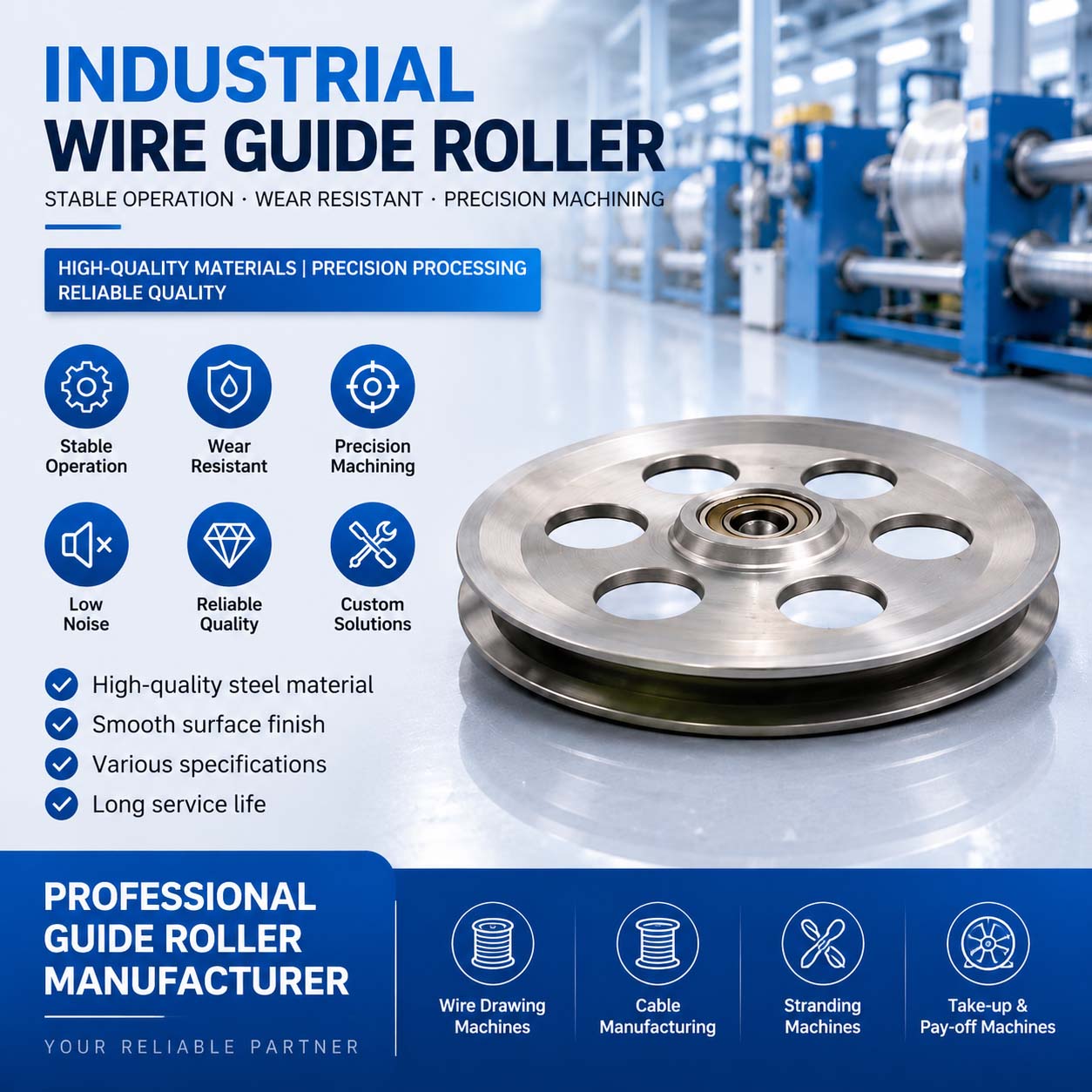
Wire drawing machine guide rollers are critical components in wire production, continuously exposed to high-speed friction and tension. Over time, conventional metal rollers may suffer from surface wear, groove damage, and dimensional changes, affecting wire quality and production efficiency.
By applying advanced thermal spray coating technology, ceramic or tungsten carbide coatings can be deposited onto guide roller surfaces to significantly improve wear resistance, extend service life, and reduce maintenance downtime.
This article introduces coating technologies, material selection, applications, and maintenance recommendations for wire drawing guide rollers.
Overview of Thermal Spray Technology
Thermal spraying is a surface engineering process that heats coating materials into molten or semi-molten particles and accelerates them onto the workpiece surface to form a protective coating.
Common thermal spray processes for wire drawing rollers include:
HVOF (High Velocity Oxygen Fuel) Coating
HVOF uses high-speed flame energy to accelerate powder particles to supersonic velocity, creating a dense coating with excellent bonding strength.
It is especially suitable for hard materials such as tungsten carbide, providing outstanding resistance against friction, impact, and wear.
Plasma Spray Coating
Plasma spraying uses a high-temperature plasma arc to process ceramic materials with high melting points. It provides uniform coatings with controlled porosity and is widely used for ceramic applications.
Arc Spray Coating
Arc spraying is a cost-effective solution for general wear protection. Compared with HVOF and plasma spraying, coating density and performance are relatively lower.
The suitable process should be selected according to roller material, working conditions, and performance requirements.
Coating Materials and Performance
Ceramic Coating
Ceramic coatings mainly include:
- Aluminum oxide (Al₂O₃)
- Chromium oxide (Cr₂O₃)
Advantages:
- Excellent wear resistance
- Electrical insulation performance
- High-temperature resistance
- Good chemical stability
Ceramic coated rollers are widely used in enameling machines and applications requiring insulation or anti-sticking performance.
However, ceramic coatings are relatively brittle and require careful consideration under heavy impact loads.
Tungsten Carbide Coating
Tungsten carbide coating is one of the most commonly used hard coatings for wire drawing rollers.
Key features:
- High hardness (microhardness above 1200 HV)
- Excellent sliding wear resistance
- Dense structure with low porosity
- Strong bonding strength with metal substrates
HVOF tungsten carbide coating is ideal for:
- High-speed wire drawing
- High-tension wire production
- Steel wire and welding wire processing
It effectively protects roller surfaces from continuous friction and maintains stable groove dimensions.
Applications and Selection Guide
The correct coating should be selected according to wire material, drawing speed, and lubrication conditions.
Steel Wire and Welding Wire Drawing
Recommended:
Tungsten carbide coating
Provides high wear resistance and withstands high contact stress during heavy-duty drawing.
Copper and Aluminum Wire Drawing
Recommended:
Ceramic coating
Reduces metal adhesion and provides a smooth surface finish to protect wire quality.
Enamel Wire Production
Recommended:
Ceramic coating
Provides electrical insulation and stable surface performance.
Multi-Groove Guide Rollers and Tower Pulleys
Thermal spray coating can be applied to groove bottoms and side walls to repair worn areas and restore dimensional accuracy.
Guide Roller Repair and Maintenance
Thermal spray technology can also be used for repairing worn guide rollers. The repair process usually includes:
- Surface preparation and sand blasting
- Thermal spray coating application
- Precision grinding and finishing
When the roller substrate remains intact, repaired rollers can achieve performance close to new components, while repair costs are typically only 30–50% of replacement costs.
Maintenance Recommendations
- Check coating surfaces regularly for cracks or peeling.
- Keep lubrication systems clean to prevent abrasive particles from damaging the coating.
- Measure groove wear periodically. Repair is recommended when wear exceeds approximately 0.2 mm.
- Store spare rollers in a dry environment to prevent corrosion.
If local coating damage occurs, professional repair should be performed to avoid further substrate damage.
Frequently Asked Questions
Will thermal spray coating peel off?
With proper surface preparation and process control, coating bonding strength can exceed 70 MPa. Coating failure usually results from poor preparation, incorrect parameters, overload impact, or corrosion.
How to choose between ceramic and tungsten carbide coating?
Choose ceramic coating when electrical insulation, low friction, or high-temperature resistance is required. Choose tungsten carbide coating when maximum wear resistance and impact resistance are needed.
Is repairing old guide rollers cost-effective?
Yes. When the substrate is not seriously damaged, recoating can restore performance at a much lower cost than replacing new rollers.
What is the typical coating thickness?
For wire drawing guide rollers, coating thickness is generally 0.1–0.3 mm. Final dimensions are achieved through precision grinding.
HVOF or plasma spray—which is better?
HVOF provides denser coatings and is ideal for tungsten carbide. Plasma spraying is better suited for ceramic coatings due to its high-temperature capability.
Are coated rollers ready for immediate use?
Yes. After thermal spraying and precision grinding, rollers can normally be installed directly. Initial low-speed operation for 1–2 hours is recommended to confirm coating condition.
Professional Wire Drawing Machine Guide Roller Thermal Spray Coating Services provide advanced ceramic and tungsten carbide surface protection solutions for wire drawing, cable manufacturing, and metal processing industries, helping customers improve equipment reliability, reduce downtime, and extend component life.
