

Coating Service Overview
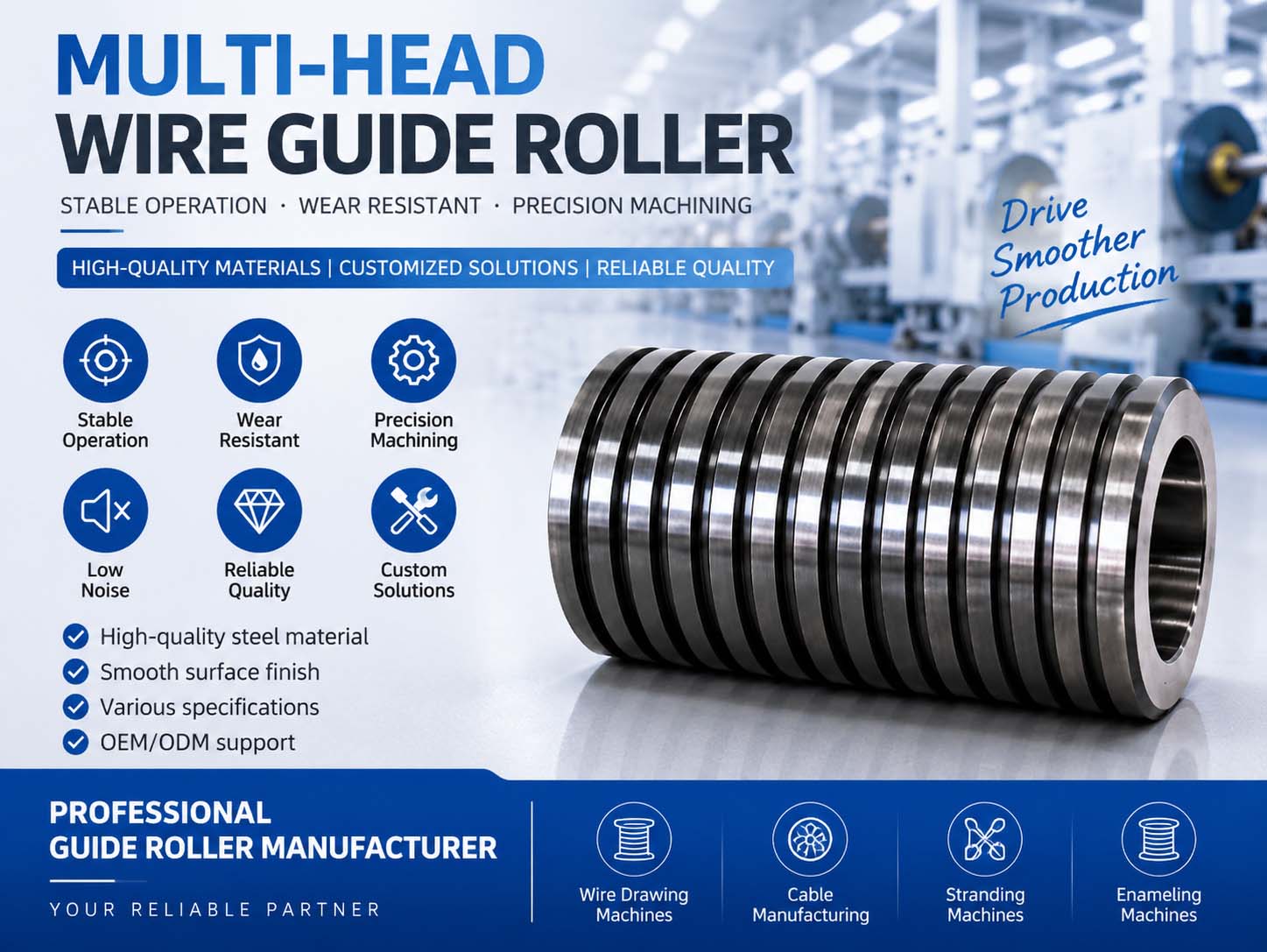
In wire and cable manufacturing, as well as metal wire drawing processes, guide rollers play an important role in controlling wire direction and maintaining stable tension. During high-speed operation, conventional metal rollers are easily worn, causing wire scratches, frequent breakage, and reduced production efficiency.
By applying ceramic coating or tungsten carbide coating through advanced thermal spray technology, multi-head wire guide rollers can achieve a high-hardness, low-friction protective surface. This significantly improves wear resistance, extends service life, and helps maintain stable production quality.
Coating Technology and Performance Features
Ceramic Coating
Ceramic coatings are typically made from materials such as chromium oxide (Cr₂O₃) and aluminum oxide (Al₂O₃), applied through processes including:
- Plasma spray coating
- HVOF (High Velocity Oxygen Fuel) coating
Ceramic coatings provide:
- High hardness
- Low friction coefficient
- Excellent wear resistance
- Electrical insulation performance
- Anti-sticking properties
The smooth coating surface reduces wire abrasion and prevents copper or aluminum powder from adhering to the roller. It is especially suitable for enameling machines and fine wire production where surface quality is critical.
Tungsten Carbide Coating
Tungsten carbide coating (WC-Co) offers extremely high hardness and outstanding wear resistance. It can withstand heavy loads, high wire speeds, and continuous friction.
It is widely used for demanding applications such as wire drawing traction rollers and tower pulleys. The coating has strong bonding strength with the substrate and provides excellent resistance against impact and repeated wear.
Main Applications
Wire Drawing Machine Guide Rollers
Used for copper wire, aluminum wire, and alloy wire drawing processes. Multi-groove designs allow multiple wires to pass simultaneously, while ceramic or tungsten carbide coatings maintain groove accuracy and reduce wear.
Enameling Machine Guide Rollers
Ceramic coated rollers provide insulation and anti-adhesion properties, preventing enamel paint from sticking and improving wire surface quality.
Stranding and Cabling Machines
Multi-head wire guide rollers are used for wire separation and combining. The coating reduces friction and helps maintain stable wire tension.
Other Cable Equipment
Suitable for extrusion lines, take-up and pay-off machines, and other wire processing equipment requiring wear-resistant guide components.
Selection and Customization Guide
When selecting a multi-head wire guide roller, consider the following factors:
Wire Material and Diameter
Different wire materials require different groove designs and coating solutions.
- Soft materials such as copper and aluminum: ceramic coating is recommended.
- Hard wires and high-tension applications: tungsten carbide coating is preferred.
Groove Number and Design
The number of grooves depends on the number of wires processed. Common groove designs include:
- V groove
- U groove
- Flat-bottom groove
The groove size should match the wire diameter to prevent wire slipping or damage.
Substrate Material
- Aluminum substrate: Lightweight and suitable for high-speed applications, but requires proper coating bonding control.
- Steel substrate: Higher strength and suitable for heavy-duty operation.
Working Environment
Temperature, corrosion, lubrication conditions, and operating speed should be considered when selecting coating materials and sealing treatments.
We provide customized manufacturing according to customer drawings or samples, as well as guide roller repair and recoating services. Worn rollers can be restored through thermal spraying and precision grinding.
Maintenance Recommendations
To extend roller service life:
- Regularly inspect groove wear and coating condition.
- Repair rollers when deep grooves or coating damage appear.
- Keep roller surfaces clean and remove metal particles or dust.
- Lubricate bearings regularly to ensure smooth rotation.
- Avoid impact during storage and handling.
Frequently Asked Questions
How to choose between ceramic coating and tungsten carbide coating?
Ceramic coating offers lower friction and electrical insulation, making it suitable for enameling machines and fine wire processing. Tungsten carbide coating provides higher hardness and wear resistance, making it ideal for heavy-load and high-speed drawing applications.
Can the groove number be customized?
Yes. We can manufacture rollers with 2, 3, 4, or multiple grooves according to equipment requirements. Groove shape and dimensions can also be customized.
Will the coating peel off?
With proper surface preparation and thermal spray processes, coatings have strong bonding strength and excellent durability. Coating failure usually occurs due to abnormal impact, overload, or substrate deformation.
Can old guide rollers be repaired?
Yes. Worn rollers can be recoated and precision-machined to restore original dimensions and performance. Repair costs are usually lower than replacing new components.
How long is the service life?
Service life depends on wire material, speed, tension, and operating environment. Compared with uncoated rollers, coated rollers provide significantly longer service life.
How should multi-head guide rollers be installed?
Ensure correct shaft alignment, proper bearing fit, and accurate positioning to prevent vibration and uneven wear. Professional installation according to equipment requirements is recommended.
Professional Multi-Head Wire Guide Roller Ceramic Coating Solutions provide reliable surface protection for wire drawing, cable manufacturing, enameling, and precision wire processing industries, helping customers improve production efficiency and reduce maintenance costs.
