

Coating Service Overview
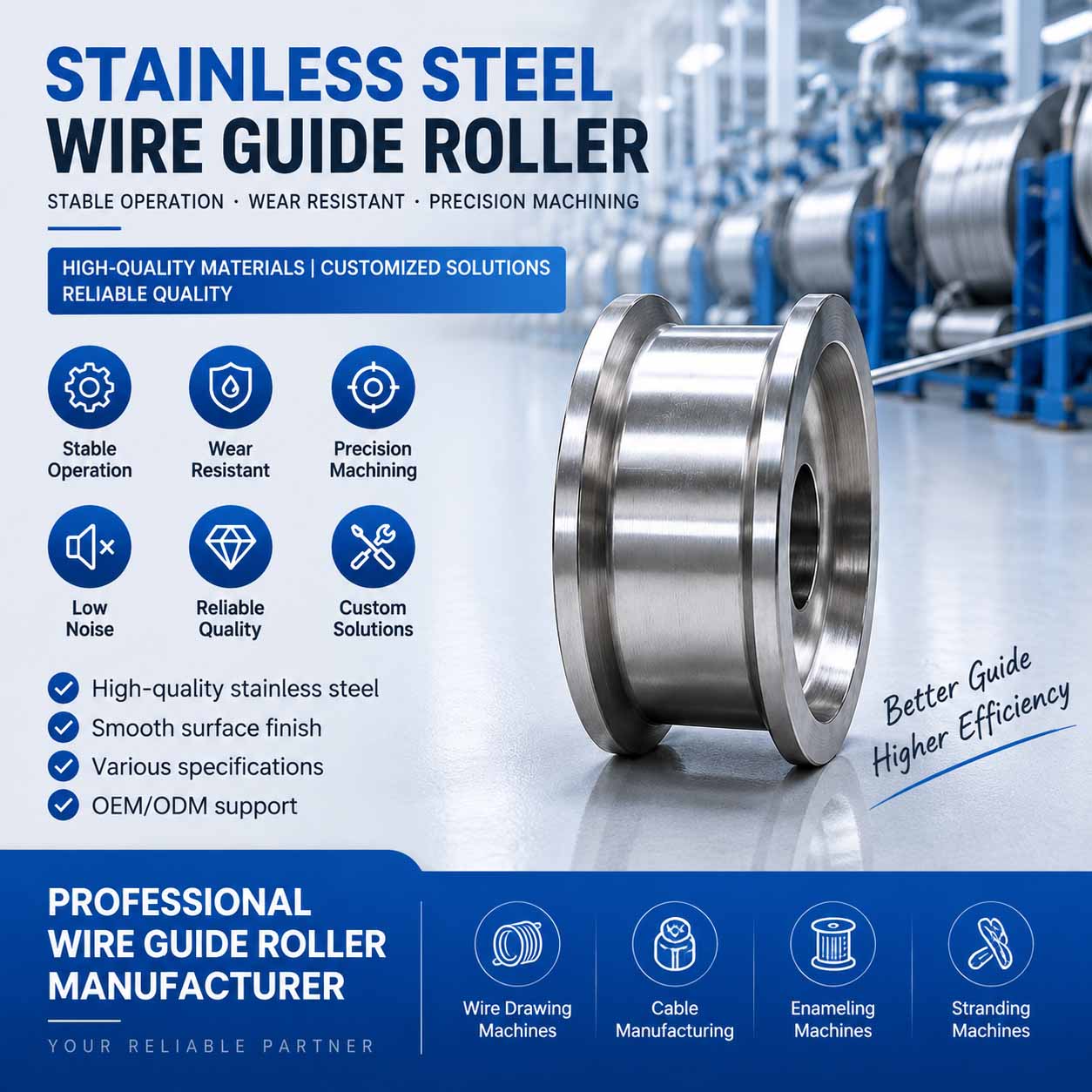
In wire and cable manufacturing, the wear resistance and stability of wire drawing machine components directly affect production efficiency and product quality. Stainless steel wire guide rollers, tungsten carbide tower pulleys, and tungsten carbide rings are widely used as key components in high-speed wire drawing and continuous production lines.
Through advanced surface treatment technologies such as tungsten carbide thermal spray coating, these components can achieve excellent wear resistance, longer service life, and improved performance under demanding operating conditions.
This article introduces their material characteristics, applications, selection guidelines, and maintenance methods.
Material Characteristics and Surface Treatment
Wire drawing machine parts are usually manufactured from stainless steel, alloy steel, or carbon steel substrates. To improve surface performance, wear-resistant coatings such as tungsten carbide coatings are applied using advanced thermal spray processes.
Tungsten carbide coating offers:
- Extremely high hardness (HV 1100–1300)
- Excellent abrasion resistance
- High resistance to friction and micro-wear
- Low porosity and strong bonding strength
These properties make it suitable for high-speed wire drawing, repeated bending, and heavy-load applications.
Stainless steel wire guide rollers provide good corrosion resistance and are suitable for humid or mildly corrosive environments. Tungsten carbide tower pulleys focus more on high-load performance, pressure resistance, and fatigue resistance during multi-stage wire drawing processes.
Tungsten Carbide Coating Technology
Common coating technologies include:
- HVOF (High Velocity Oxygen Fuel) spraying
- Plasma spray coating
HVOF tungsten carbide coating provides a dense surface structure with bonding strength above 70 MPa and porosity below 1%. It is especially suitable for high-speed production lines requiring stable dimensions and long service life.
Tungsten carbide rings can be manufactured by precision sintering or coating technology to maintain accurate inner dimensions, reduce wire vibration, and prevent surface damage.
Main Applications
Stainless Steel Wire Guide Roller
Widely used in wire drawing machines for wire guidance and tension control, including medium drawing machines and fine wire drawing equipment.
Tungsten Carbide Tower Pulley
Used in multi-pass wire drawing machines to perform wire reduction and traction. The high hardness coating effectively reduces groove wear and maintains consistent wire quality.
Tungsten Carbide Ring
Commonly applied in enameling machines, stranding machines, and wire guide components. It helps reduce wire scratches, improve surface quality, and minimize wire breakage.
Selection and Installation Guide
When selecting suitable components, consider:
Wire Material and Diameter
Copper wire, aluminum wire, and alloy wire have different friction requirements. The coating type and surface finish should be selected according to the material.
Line Speed
For high-speed wire drawing above 20 m/s, HVOF tungsten carbide coating is recommended. Plasma coating can be considered for lower-speed applications.
Working Load and Tension
Tower pulleys should be selected according to groove radius, contact stress, and wire tension to prevent wire indentation and breakage.
Installation Accuracy
The radial runout of guide rollers and tower pulleys should generally be controlled within 0.02 mm to ensure stable tension and smooth operation.
During installation, proper alignment and bearing inspection are required to ensure flexible rotation without sticking.
Maintenance and Troubleshooting
Proper maintenance can significantly extend component service life:
- Regular Cleaning: Remove metal particles and oil from grooves to prevent abrasive damage.
- Wear Inspection: Check groove wear and coating condition regularly. Repair or replace components if coating peeling or deep grooves appear.
- Bearing Lubrication: Apply high-temperature grease according to maintenance schedules to prevent bearing failure.
- Vibration Check: Abnormal vibration may indicate poor balance, bearing damage, or improper installation.
Common problems:
- Wire surface scratches are usually caused by coating damage or foreign particles inside the groove.
- Frequent wire breakage may result from excessive tension, incorrect groove size, or worn components.
Frequently Asked Questions
Can tungsten carbide tower pulleys replace stainless steel guide rollers?
No. Their functions are different. Tower pulleys are mainly used for traction and wire reduction, while guide rollers are mainly used for guiding. Selection depends on operating conditions.
Why does tungsten carbide coating peel off?
Possible causes include poor surface preparation, incorrect spraying parameters, overload impact, or corrosion penetration. Minor damage can be repaired by recoating.
When should a wire guide roller be replaced?
Replacement is recommended when groove wear exceeds 0.5 mm, serious coating cracks appear, or bearing clearance exceeds 0.05 mm.
Can tungsten carbide rings be replaced separately?
Yes. Many designs support individual ring replacement, but dimensions and concentricity must be checked carefully.
Are these components compatible with different wire drawing machine brands?
Yes. They can be customized for most domestic and international wire drawing equipment. Non-standard sizes can be manufactured according to customer drawings or samples.
Can worn coatings be repaired?
Yes. Through stripping, recoating, and precision grinding, worn parts can be restored to original dimensions and performance. Repair costs are usually much lower than purchasing new components.
Professional Wire Drawing Machine Components & Tungsten Carbide Coating Solutions help manufacturers improve production stability, reduce maintenance costs, and achieve longer service life in demanding wire and cable production environments.
