

Coating Service Overview
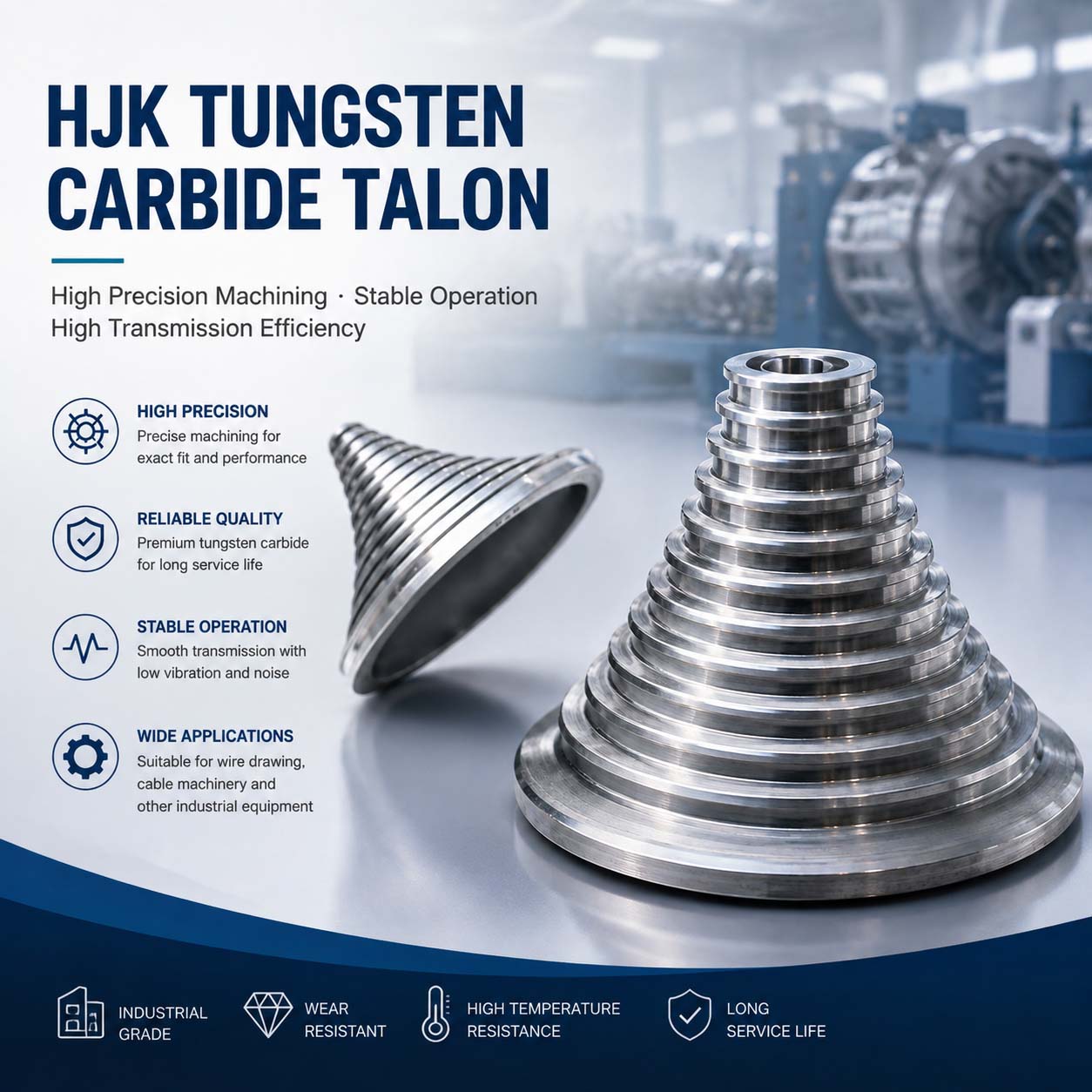
In wire and cable manufacturing, the wire drawing machine tower pulley is a critical wear component that directly affects production efficiency and wire surface quality.
HJK Tungsten Carbide Tower Pulley is manufactured with advanced tungsten carbide materials and precision machining technology. It features high hardness, excellent wear resistance, and strong corrosion resistance, making it suitable for various wire drawing machines and continuous production environments.
Product Features
The main advantage of tungsten carbide tower pulleys comes from their superior material properties.
Tungsten carbide provides extremely high hardness (second only to diamond) and outstanding wear resistance. During high-speed wire drawing, it maintains stable dimensions, reduces replacement frequency, and improves production consistency.
HJK tungsten carbide tower pulleys feature:
- High Wear Resistance
Excellent resistance against friction and abrasion, extending service life. - Smooth Surface Finish
Low friction coefficient reduces wire damage and improves surface quality. - Excellent Chemical Stability
Resistant to most lubricants and cooling fluids, preventing corrosion and coating damage. - High Precision Performance
Precision machining ensures stable operation and accurate wire drawing.
Applications
HJK tungsten carbide tower pulleys are widely used in different wire drawing equipment:
Large Wire Drawing Machines
Used for copper, aluminum, and alloy wire drawing. The pulley must withstand high loads, and tungsten carbide provides excellent wear protection.
Medium Wire Drawing Machines
Suitable for medium-size wire production, requiring a balance between wear resistance and dimensional accuracy.
Fine Wire Drawing Machines
Used for small-diameter wire production where surface finish and precision are critical.
Micro Wire Drawing Machines
Designed for ultra-fine wire applications requiring high roundness, precision, and wear resistance.
Tungsten carbide tower pulleys are also widely applied in other wire and cable equipment components, such as tungsten carbide drawing pots.
Selection Guide
When choosing an HJK tungsten carbide tower pulley, consider the following factors:
Machine Specifications
Different drawing machines require specific pulley diameters, widths, and shaft hole dimensions. Proper matching ensures stable operation.
Wire Material
Copper, aluminum, alloy, and steel wires have different requirements for surface hardness and friction performance.
Wire Diameter Range
Large diameter wires usually require larger pulleys to reduce bending stress, while fine wires require higher precision pulleys.
Operating Speed
High-speed drawing applications require excellent dynamic balance to minimize vibration and maintain wire quality.
Customized solutions can be provided according to machine models, drawings, and operating conditions.
Maintenance Recommendations
Proper maintenance can significantly extend the service life of tungsten carbide tower pulleys:
- Regular Inspection
Check for scratches, surface damage, uneven wear, or groove deformation. Repair or replace when necessary. - Surface Cleaning
Remove metal particles and contaminants to prevent damage to the wire surface. - Lubrication Control
Ensure proper lubrication to reduce friction between wire and pulley. - Proper Storage
Store spare pulleys in a dry, clean environment to prevent corrosion and impact damage.
Frequently Asked Questions
What is the difference between tungsten carbide and ceramic tower pulleys?
Tungsten carbide pulleys provide higher toughness and wear resistance, making them suitable for high-speed and heavy-load drawing. Ceramic pulleys offer smoother surfaces and lower friction, making them suitable for fine wire drawing but with lower impact resistance.
Can worn tungsten carbide tower pulleys be repaired?
Yes. Some worn pulleys can be restored through professional grinding, surface repair, or recoating processes. The repair feasibility depends on wear condition and cost evaluation.
When should a tower pulley be replaced?
Replacement is recommended when severe wear grooves, dimensional deviation, wire scratches, or increased wire breakage occur.
How long is the service life of a tungsten carbide tower pulley?
Service life depends on wire material, drawing speed, lubrication conditions, and operating environment. In general, tungsten carbide pulleys provide much longer service life than conventional steel pulleys.
What should be considered during installation?
Ensure accurate shaft fitting, avoid excessive tightening, use proper installation tools, and check radial runout after installation.
What drawing lubricants are compatible with tungsten carbide pulleys?
Tungsten carbide has excellent chemical stability and is compatible with most oil-based and water-based drawing lubricants. Strong acids or strong alkaline fluids should be avoided.
HJK Tungsten Carbide Tower Pulley provides a reliable solution for modern wire drawing applications, combining precision machining, superior wear resistance, and long service life to improve production efficiency and wire quality.
