

Coating Service Overview
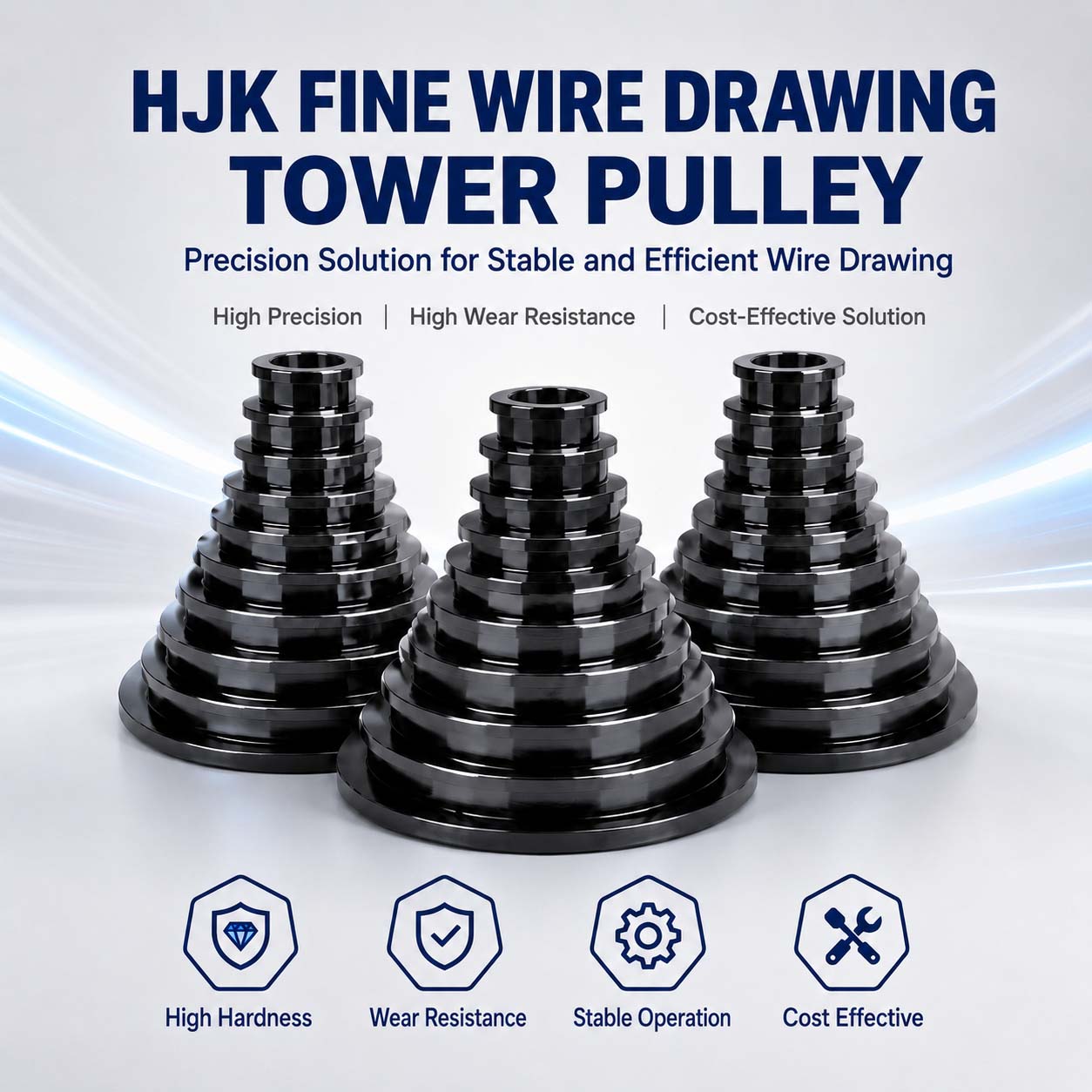
In metal wire drawing processes, the fine wire drawing machine tower pulley is a key component for power transmission and speed control. Its performance directly affects wire accuracy, surface finish, drawing die consumption, and overall production efficiency.
Proper selection and maintenance of the tower pulley can improve production stability and significantly reduce operating costs. This article introduces the structure, materials, selection criteria, installation, and maintenance of fine wire drawing tower pulleys.
Function and Structure of Fine Wire Drawing Tower Pulley
The fine wire drawing tower pulley is usually installed on the drawing machine drum shaft. Through a multi-step diameter design, it provides different wire speeds for each drawing pass.
Its main structure includes:
- Pulley body
- Shaft hole
- Keyway
- Working cone surface
The working surface directly contacts the wire and requires:
- High hardness
- Low friction coefficient
- Excellent wear resistance
The number of pulley steps (normally 3–7 stages) and each diameter are designed according to the drawing process to ensure proper elongation distribution.
Common Materials and Performance Comparison
Different wire materials and operating conditions require different pulley materials.
Tungsten Carbide Tower Pulley
Made from cemented carbide materials, tungsten carbide tower pulleys offer extremely high hardness (above HRA88) and excellent wear resistance.
They are ideal for high-speed drawing of steel wire, stainless steel wire, and other hard materials. The surface can be polished to a mirror finish, reducing friction and improving wire quality.
Ceramic Tower Pulley
Made from zirconia or alumina ceramics, ceramic tower pulleys provide excellent surface smoothness, corrosion resistance, and low friction performance.
They are suitable for fine copper wire, aluminum wire, and other non-ferrous wire applications where surface protection is critical.
Steel Tower Pulley
Made from heat-treated alloy steel, steel pulleys provide moderate hardness and lower cost. They are suitable for low-speed, low-load applications.
When selecting a tower pulley, factors such as wire hardness, drawing speed, lubrication conditions, and production requirements should be considered. Although tungsten carbide pulleys have a higher initial cost, their longer service life makes them suitable for continuous high-volume production.
Selection Guide
Important factors include:
Installation Dimensions
Shaft hole diameter, keyway size, and tolerances must match the drawing machine spindle to ensure secure installation.
Number of Steps and Diameter Design
The number of stages and pulley diameters should follow the original machine design. Incorrect dimensions may cause uneven elongation, wire breakage, or abnormal die wear.
Working Surface Design
The cone angle and working length should match the wire diameter and drawing process, ensuring sufficient wire contact angle and preventing slipping.
Dynamic Balance
For high-speed drawing, pulley imbalance may cause vibration, affecting wire accuracy and bearing life. Dynamic balancing of G2.5 or higher is commonly recommended.
Installation and Adjustment
Proper installation ensures stable operation:
- Clean the shaft hole and spindle before installation.
- Remove burrs from keyways and mounting surfaces.
- Use proper tools for press fitting or heating installation. Avoid direct impact on the working surface.
- Tighten the locking system and check radial runout, normally within 0.02 mm.
- Perform no-load testing to confirm smooth operation and low vibration.
Maintenance and Service Life Extension
Regular maintenance helps maximize pulley life:
- Inspect the working surface regularly. Repair or replace the pulley when grooves, roughness, or surface damage appear.
- Keep the lubrication system clean and maintain a stable oil film.
- Monitor drawing lubricant temperature and cleanliness to prevent abrasive damage.
- Apply rust protection oil and store pulleys properly to avoid deformation.
When wear affects wire quality or cannot be restored by grinding, replacement is recommended. Some tungsten carbide tower pulleys can be refurbished through professional repair processes.
Frequently Asked Questions
How long does a fine wire drawing tower pulley last?
Service life depends on material, wire type, drawing speed, lubrication, and operating conditions. Tungsten carbide tower pulleys can typically provide thousands of hours of continuous operation under proper conditions.
What should be done if grooves appear on the pulley surface?
Minor grooves can be restored through grinding and polishing, provided that dimensions and cone angles remain within tolerance. Severe wear requires replacement.
When is dynamic balancing required?
If machine vibration increases or periodic marks appear on the wire surface, the pulley balance should be checked. High-speed pulleys are recommended to be inspected regularly.
Can tungsten carbide and ceramic tower pulleys replace each other?
They may be interchangeable if dimensions are identical, but ceramic pulleys have lower impact resistance and are not recommended for high-tension or hard wire drawing applications.
Why does the pulley have excessive radial runout after installation?
Possible causes include spindle runout, incorrect shaft fit, improper keyway matching, contamination on mounting surfaces, or insufficient machining accuracy.
Can fine wire drawing tower pulleys be repaired?
Some pulleys can be restored through grinding or recoating. After repair, hardness, dimensions, and surface accuracy must meet production requirements.
Fine wire drawing machine tower pulleys provide precision speed control, stable transmission, and long service life, making them essential components for high-quality wire production.
