

Coating Service Overview
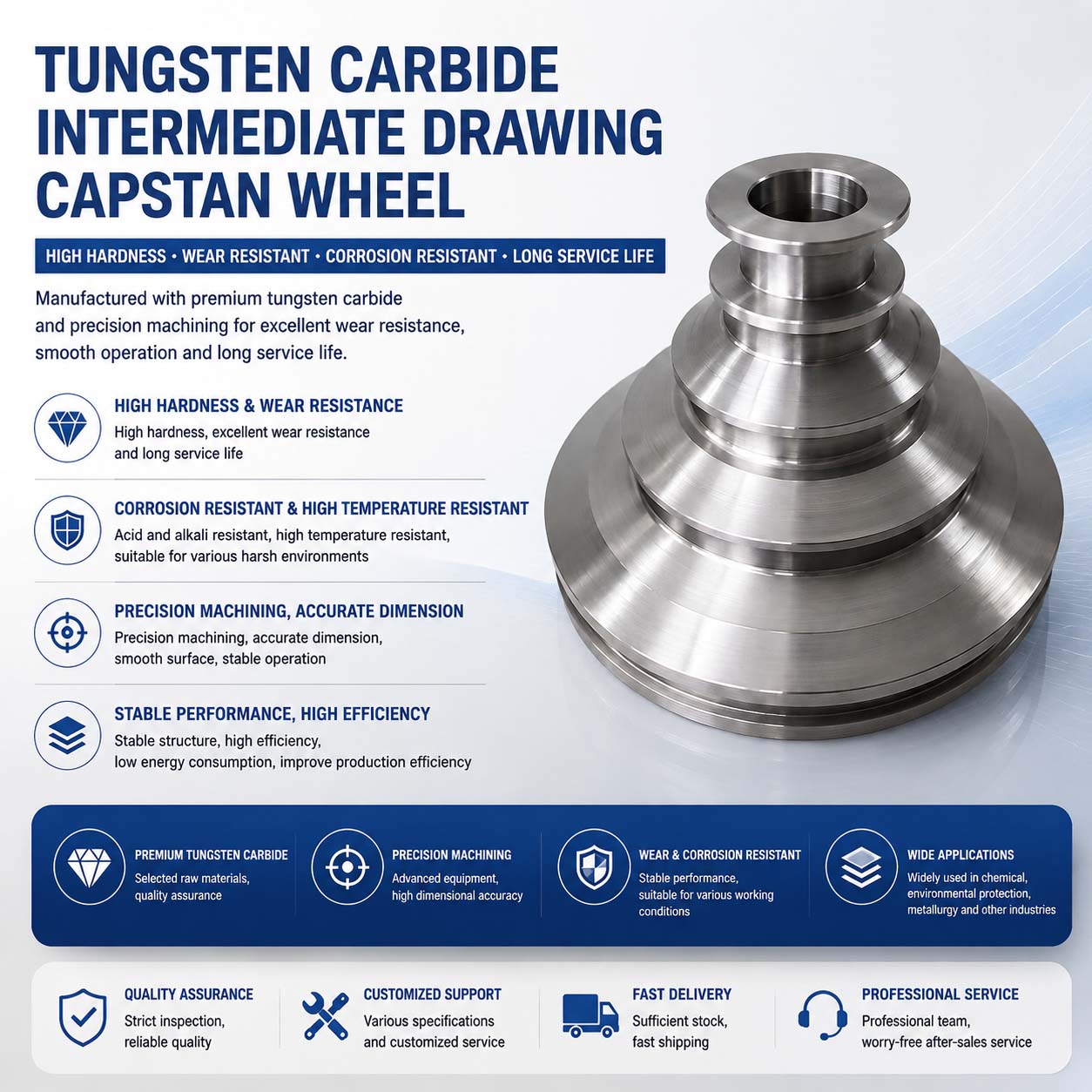
In metal wire drawing processes, the wire drawing capstan wheel is exposed to continuous friction, high pressure, and repeated contact with wire materials. Its surface condition directly affects wire quality, production efficiency, and equipment stability.
The tungsten carbide intermediate drawing capstan wheel is an essential wear-resistant component for medium wire drawing machines due to its excellent wear resistance, hardness, and long service life.
For worn rollers and mechanical components, tungsten carbide coating repair technology can effectively restore dimensions and performance, reducing replacement costs and improving equipment utilization.
Applications and Advantages of Tungsten Carbide Capstan Wheel
Tungsten carbide intermediate drawing capstan wheels are mainly used in medium wire drawing machines for processing:
- Steel wire
- Copper wire
- Alloy wire
- Other metal wires
Through thermal spraying or welding processes, a tungsten carbide wear-resistant layer is formed on the surface, providing:
- High hardness
- Excellent wear resistance
- Low friction coefficient
- Stable groove performance
Compared with traditional hardened steel capstan wheels, tungsten carbide capstan wheels can significantly extend service life, reduce downtime, and improve production stability.
During operation, the groove profile accuracy is critical for maintaining wire quality. The tungsten carbide coating helps preserve the groove shape, preventing wire diameter fluctuations caused by wear.
Its excellent corrosion resistance also makes it suitable for wet wire drawing environments with lubricants.
Tungsten Carbide Coating Repair for Rollers and Mechanical Parts
In wire drawing equipment, components such as:
- Guide rollers
- Tension rollers
- Wire passing rollers
- Bearing seats
- Shafts and other mechanical parts
may experience wear, scratches, and dimensional deviations after long-term operation.
Tungsten carbide coating repair provides an economical and efficient restoration solution.
The typical repair process includes:
1. Surface Preparation
- Degreasing
- Sand blasting
- Surface roughening
These processes improve coating adhesion.
2. Coating Application
Advanced spraying technologies such as:
- HVOF (High Velocity Oxygen Fuel Spraying)
- Plasma spraying
are used to apply tungsten carbide powder onto worn surfaces, creating a dense and durable coating.
3. Precision Finishing
Grinding and polishing restore:
- Original dimensions
- Surface finish
- Required accuracy
Repaired components can achieve performance close to new parts, especially for large, customized, or long-lead-time components.
Selection and Maintenance Guide
Key Selection Factors
When choosing a tungsten carbide intermediate drawing capstan wheel, consider:
Groove Design
The groove size and profile must match:
- Wire diameter
- Reduction ratio
- Drawing process requirements
Coating Thickness
Typical coating thickness:
0.1–0.5 mm
The thickness should balance wear resistance and coating reliability.
Base Material
High-quality alloy steel is commonly used to provide:
- Strong mechanical strength
- Good impact resistance
Installation Accuracy
Confirm:
- Shaft hole dimensions
- Keyway specifications
- Equipment compatibility
Maintenance Recommendations
To extend service life:
- Regularly inspect groove wear and coating condition.
- Keep lubrication systems clean.
- Prevent hard particles from damaging the coating surface.
- Repair coating cracks or peeling at an early stage.
- Store spare parts in dry, corrosion-free conditions.
Proper maintenance helps maintain stable wire quality and reduces unexpected downtime.
Frequently Asked Questions
What wire drawing machines use tungsten carbide capstan wheels?
They are widely used in:
- Intermediate drawing machines
- Large drawing machines
- Small drawing machines
- Micro wire drawing machines
The exact specification depends on machine type and wire size.
Will tungsten carbide coating peel off?
Under normal operating conditions, tungsten carbide coating has strong bonding strength. Peeling is usually caused by improper surface preparation, excessive coating thickness, or severe impact.
Professional spraying processes and quality control can effectively prevent coating failure.
Can repaired rollers achieve original accuracy?
Yes. With precision grinding and finishing, repaired components can meet original dimensional and surface requirements.
Tungsten Carbide vs Ceramic Capstan Wheel
Tungsten carbide capstan wheel:
- Better toughness
- Higher impact resistance
- Excellent overall performance
Ceramic capstan wheel:
- Higher hardness
- Smoother surface
- More suitable for fine wire applications
For intermediate drawing operations, tungsten carbide provides a better balance of durability and reliability.
When does a capstan wheel need repair?
Repair should be considered when:
- Wire surface scratches appear
- Wire diameter variation increases
- Groove wear becomes visible
- Drawing stability decreases
Regular groove measurement helps determine repair timing.
HJK Tungsten Carbide Capstan Wheel
HJK provides precision tungsten carbide capstan wheels and coating repair solutions for wire drawing equipment.
Features include:
- High wear resistance
- Stable operation
- Precision machining
- Long service life
- Customized solutions
Our products help wire and cable manufacturers improve production efficiency, reduce maintenance costs, and maintain consistent wire quality.
