

Coating Service Overview
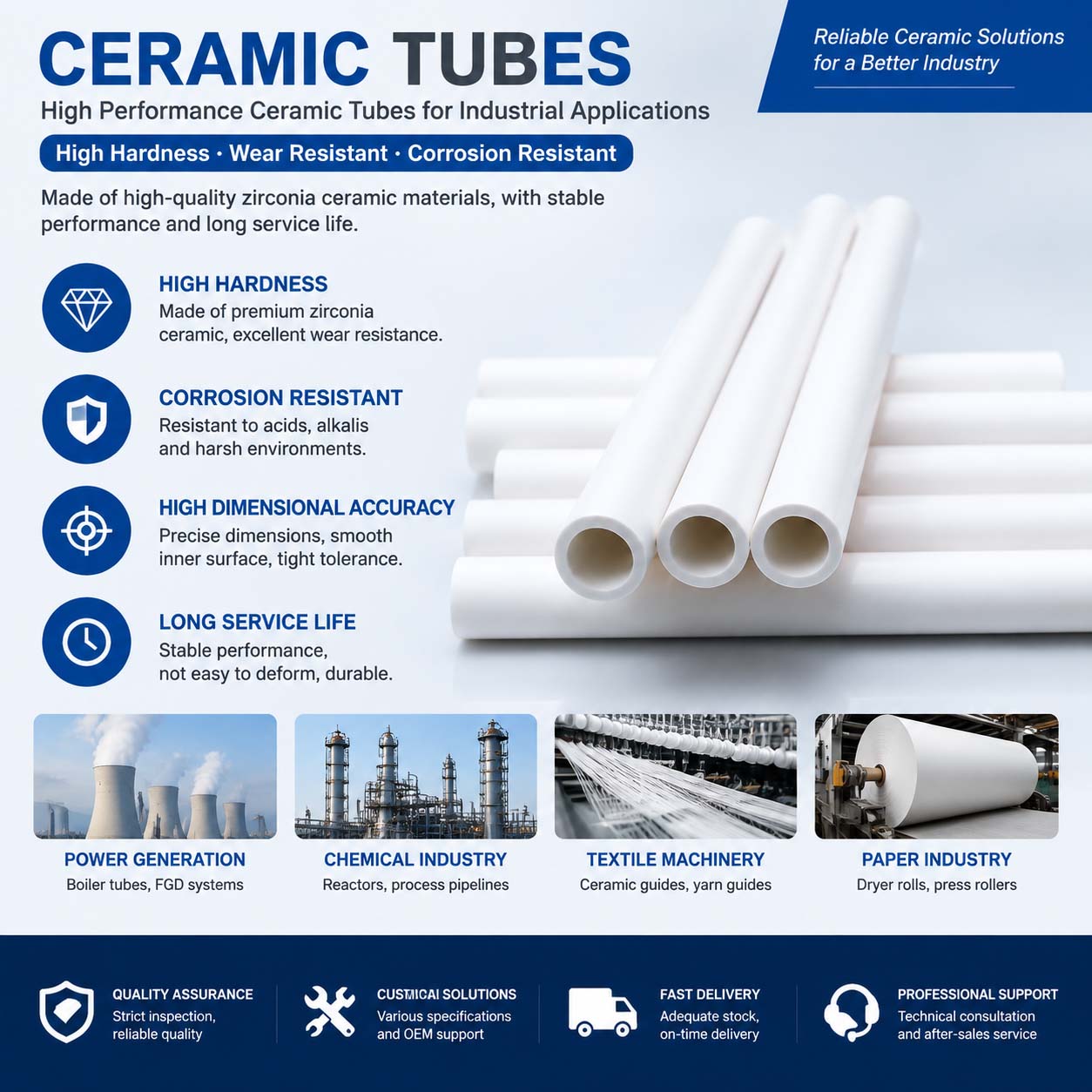
In industrial equipment, ceramic tubes are often exposed to wear, corrosion, and high-temperature oxidation. Through advanced thermal spray technology, functional coatings can be applied to ceramic tube surfaces, significantly improving performance and extending service life.
We specialize in thermal spray coating processing for ceramic tubes and metal components, providing ceramic coatings, metal coatings, and customized surface treatment solutions for different operating conditions.
What Is Ceramic Tube Thermal Spray Coating?
Thermal spraying is an advanced surface engineering process that uses a heat source to melt or semi-melt coating materials and spray them onto a pre-treated surface at high speed, forming a strong protective coating.
For ceramic tubes, thermal spray coatings can provide additional:
- Wear resistance
- Corrosion resistance
- Electrical insulation
- Thermal barrier performance
The process improves surface properties without changing the overall characteristics of the ceramic substrate.
Common coating materials include:
- Aluminum oxide (Al₂O₃)
- Chromium oxide (Cr₂O₃)
- Tungsten carbide (WC)
- Other ceramic and metal-ceramic composite materials
These coatings feature high density, strong adhesion, and excellent protection in harsh environments.
Our Thermal Spray Processing Capabilities
We provide various thermal spray technologies according to ceramic material, component size, and application requirements.
Plasma Spraying
Suitable for high-melting-point ceramic materials. It produces dense coatings with strong adhesion and is widely used for wear-resistant and heat-resistant applications.
HVOF Thermal Spraying
High Velocity Oxygen Fuel (HVOF) spraying provides extremely dense coatings with low porosity. It is ideal for hard coatings such as tungsten carbide, offering excellent wear resistance.
Arc Spraying
A high-efficiency and cost-effective process suitable for large-area metal coatings, including zinc and aluminum corrosion protection coatings.
We can process ceramic tubes with various dimensions, including components several meters long and inner diameters ranging from tens to hundreds of millimeters. Special tools and internal spray equipment are available for complex shapes and inner surfaces.
Typical Applications
Ceramic tube thermal spray coatings are widely used in:
Power Industry
Boiler tubes and desulfurization system components requiring high-temperature corrosion and erosion resistance.
Chemical Industry
Reactor linings and pipelines exposed to chemical media requiring excellent corrosion protection.
Textile Machinery
Ceramic guides, ceramic eyes, and other components requiring smooth, wear-resistant surfaces to reduce fiber damage.
Paper Industry
Dryer rolls and pressure rollers requiring anti-stick and wear-resistant coatings.
For worn or corroded ceramic tubes, thermal spray repair can restore dimensions and improve performance while reducing replacement costs.
How to Select the Right Coating
The coating should be selected according to actual operating conditions:
Wear Conditions
Tungsten carbide and chromium oxide coatings are recommended for high wear environments due to their excellent hardness and abrasion resistance.
Corrosion Environment
Aluminum oxide, chromium oxide, and nickel-based alloy coatings provide effective protection against chemical corrosion.
High Temperature Applications
Zirconia thermal barrier coatings can reduce heat transfer and protect the substrate.
Electrical Insulation Requirements
Aluminum oxide coatings provide excellent electrical insulation properties.
Our engineers can recommend suitable coating systems based on operating temperature, wear conditions, and environmental requirements.
Thermal Spray Processing Steps
- Surface Preparation
Cleaning and sandblasting are performed to remove contaminants and improve coating adhesion. - Coating Application
The selected thermal spray process is used to apply the coating with controlled thickness and uniformity. - Post Processing
Sealing treatment, grinding, or polishing can be performed according to dimensional and surface finish requirements. - Quality Inspection
Coating thickness, bonding strength, porosity, and surface quality are inspected to ensure performance reliability.
Frequently Asked Questions
Will thermal spray coatings peel off from ceramic tubes?
With proper surface preparation and optimized spraying parameters, coatings achieve strong adhesion and remain stable under normal operating conditions.
Does thermal spraying damage the ceramic substrate?
The heat input during thermal spraying is controlled. In most cases, substrate temperature remains below approximately 200°C, causing minimal impact on ceramic structure and dimensional stability.
Can locally damaged ceramic tubes be repaired?
Yes. Local wear and corrosion damage can be repaired through thermal spraying after evaluating the overall structural condition.
What is the typical coating thickness?
Depending on application requirements, coating thickness usually ranges from 0.1 mm to 1 mm. Customized thickness solutions are available.
How long does processing take?
Processing time depends on component quantity, dimensions, and coating requirements. Standard orders are usually completed within 3–7 working days after receiving the components.
Do you provide sample testing?
Yes. Small-batch trials and sample testing are available to verify coating performance before full production.
