

Coating Service Overview
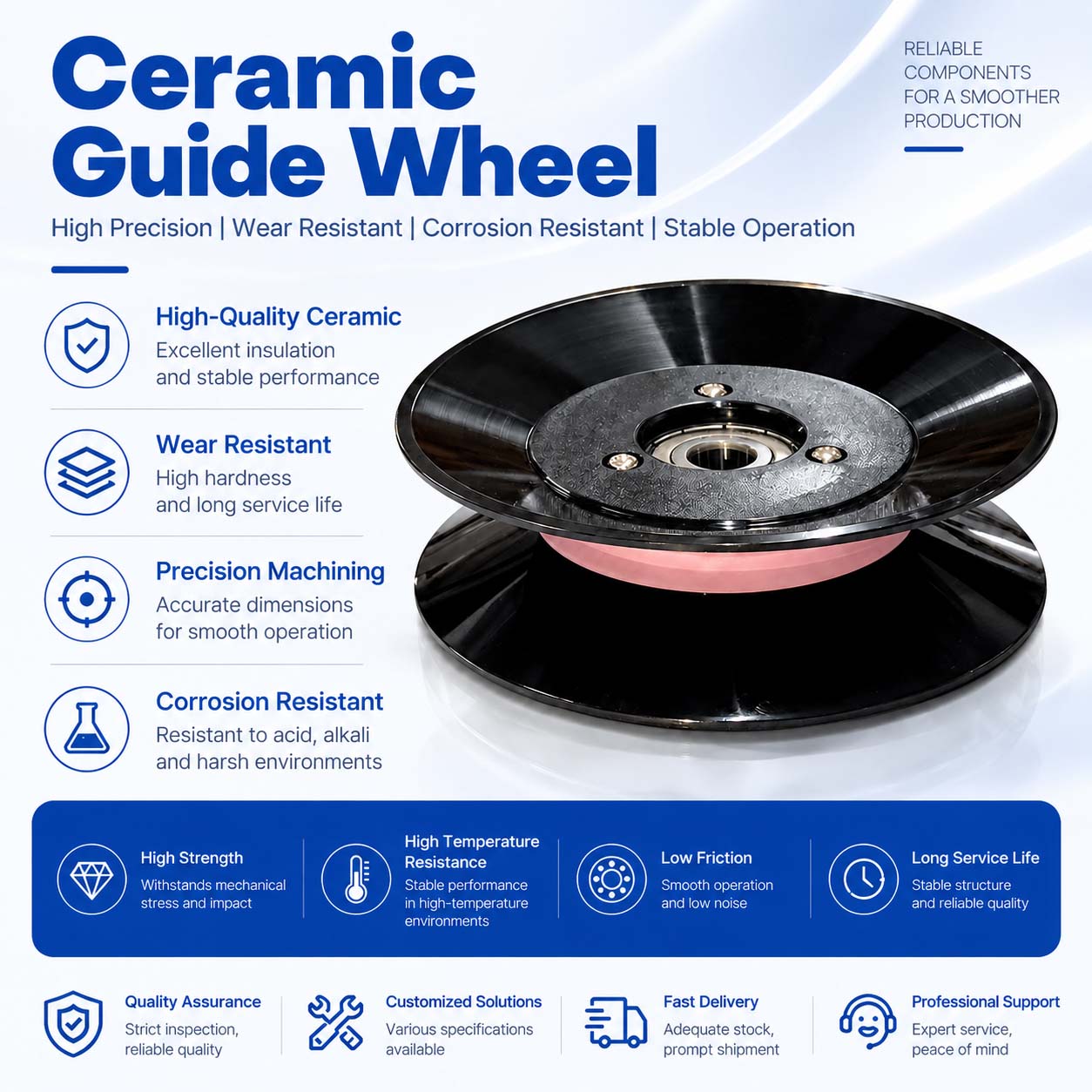
In industrial transmission and conveying systems, components such as capstan wheels, rollers, and hot rollers are continuously exposed to friction, high temperatures, and corrosive environments. These harsh conditions can significantly affect service life and equipment stability.
The CR1003 Ceramic Thermal Spray Coating Service provides an efficient surface enhancement solution for lightweight precision components. Designed for parts weighing approximately 6 g, the ceramic coating process improves wear resistance, heat resistance, and electrical insulation performance, helping reduce downtime and improve equipment reliability.
Applicable Components and Coating Process
CR1003 ceramic coating service is mainly applied to the following components:
Capstan Wheels
Used for wire guidance and tension control in cable and textile industries. The ceramic coating reduces wire wear and prevents groove expansion caused by continuous friction.
Rollers
Commonly used in conveyor systems, printing equipment, and film processing machinery. The coating provides a wear-resistant, anti-slip surface and reduces material adhesion.
Hot Rollers
Used in heating, forming, and calendering processes. The ceramic coating provides high-temperature resistance and anti-stick performance, helping prevent material buildup and sticking.
Ceramic Thermal Spray Technology
CR1003 uses advanced thermal spray technology. Ceramic powder is heated to a molten or semi-molten state and sprayed onto a pre-treated substrate surface at high speed, forming a dense and strongly bonded coating layer.
Common coating materials include:
- Chromium oxide ceramic
- Alumina-titania ceramic composite coating
- Other customized ceramic materials
Typical coating performance:
- Hardness: Above HRC 70
- Porosity: Less than 2%
- Bond strength: Over 40 MPa
- Coating thickness: 0.1–0.3 mm
The coating process can be customized according to the substrate material, operating temperature, friction conditions, and performance requirements.
Technical Specifications and Performance
CR1003 ceramic coating service is suitable for lightweight precision components with:
- Component weight: Approx. 6 g
- Processing diameter range: 10–50 mm
- Maximum length: ≤200 mm
- Coating thickness: 0.1–0.3 mm
- Surface roughness after finishing: Ra 0.4–0.8 μm
- Dimensional accuracy: Within ±0.02 mm
Typical coating properties:
- Microhardness: 800–1200 HV
- Operating temperature: Up to 500°C in oxidizing environments
- Electrical insulation strength: >10 kV/mm
- Corrosion resistance: Suitable for pH 3–11 acid and alkaline environments
Actual performance may vary depending on substrate material, coating type, and working conditions. Testing with actual samples is recommended for critical applications.
Applications
Ceramic-coated capstan wheels, rollers, and hot rollers are widely used in:
Textile Machinery
Guide rollers, tension rollers, and heat-setting rollers requiring wear resistance and stable surface performance.
Wire and Cable Production
Drawing capstan wheels and guide rollers exposed to continuous wire friction.
Printing and Packaging Equipment
Ink rollers, printing rollers, and material transport rollers requiring wear resistance and anti-stick properties.
Plastic Film Processing
Stretching rollers and cooling rollers requiring smooth surfaces and temperature resistance.
Paper Manufacturing
Paper guide rollers and calendering rollers requiring stable operation and long service life.
Ceramic coatings effectively solve common problems such as wear, corrosion, and material adhesion, extending component replacement cycles.
Coating Selection and Maintenance
How to Select the Right Ceramic Coating
Different coatings are suitable for different working conditions:
- Chromium Oxide Coating: Best for applications requiring high wear resistance.
- Alumina-Titania Composite Coating: Suitable for high-temperature and anti-stick applications.
- Alumina Ceramic Coating: Suitable for electrical insulation and corrosion-resistant applications.
Our engineers can recommend the appropriate coating solution according to operating requirements.
Maintenance Recommendations
To maximize coating service life:
- Avoid direct impact on coated surfaces during installation.
- Inspect coating conditions regularly for cracks, peeling, or wear.
- Clean with soft cloths or neutral cleaning agents.
- Avoid hard scrapers and strong acids or alkalis.
- Store components in a dry environment without corrosive gases.
Frequently Asked Questions
How much service life improvement can ceramic coating provide?
The service life improvement depends on operating conditions. In many applications, ceramic-coated components can last 2–5 times longer than uncoated parts, but actual results should be verified through testing.
Will the ceramic coating peel off?
Under normal operating conditions, the coating has strong bonding strength. Peeling may occur due to poor substrate preparation, excessive impact, or overload operation.
Can other sizes of components be processed?
Yes. CR1003 mainly targets lightweight components around 6 g, but customized coating services are available for other sizes after technical evaluation.
What is the typical processing time?
Standard processing usually takes approximately 5–7 working days. Large-volume orders may require additional time depending on quantity and requirements.
Are sample tests available?
Yes. Sample coating services can be provided for customers to verify coating performance before mass production.
Does coating thickness affect assembly accuracy?
The coating process includes dimensional control and finishing allowances. Final dimensions can be adjusted according to drawings to ensure proper assembly.
Customized Ceramic Coating Solutions
We provide customized ceramic thermal spray coating services for capstan wheels, rollers, hot rollers, and precision industrial components.
Through advanced coating technology and precision finishing, CR1003 improves wear resistance, heat resistance, insulation performance, and component service life in demanding industrial applications.
