

Coating Service Overview
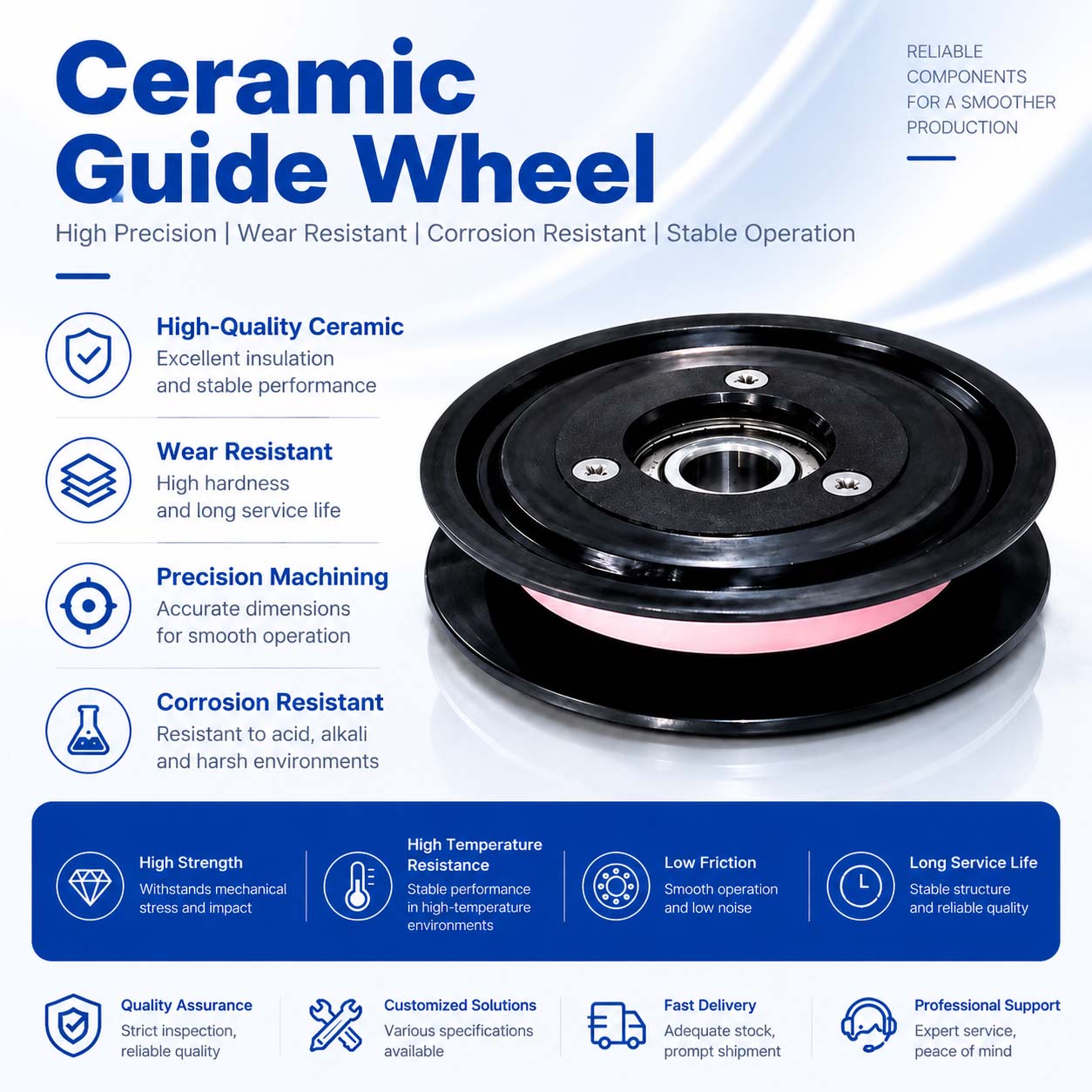
In the field of metal surface treatment, ceramic coating technology provides excellent wear resistance and surface protection for critical components such as pressure wheels and wire guide wheels.
The CR1004 Ceramic Coated Pressure Wheel & Wire Guide Wheel is a lightweight modular guide wheel with a total weight of only 12 g. Through advanced ceramic thermal spray coating, it significantly improves wear resistance, extends service life, and reduces replacement frequency.
This article introduces the coating process, applications, selection considerations, and maintenance recommendations.
Ceramic Coating Features
CR1004 uses a ceramic thermal spray coating process to create a dense protective ceramic layer on the metal substrate.
Main advantages include:
High Hardness
The ceramic coating provides much higher hardness than conventional metal surfaces, offering excellent resistance against abrasive wear caused by continuous wire contact.
Low Friction Surface
The smooth ceramic surface reduces friction during wire movement, helping minimize material damage and improve transmission stability.
Corrosion Resistance
The coating provides good resistance against acids, alkalis, salts, and other corrosive media, making it suitable for demanding industrial environments.
Lightweight Design
With a weight of only 12 g, CR1004 reduces rotational inertia and is suitable for high-speed rotating equipment.
The coating thickness and uniformity are carefully controlled during processing to maintain stable dynamic balance and precision operation.
Applications
CR1004 ceramic coated pressure wheels and wire guide wheels are widely used in industries requiring low friction and high wear resistance.
Wire and Cable Industry
Used for guiding and pulling copper wire, aluminum wire, alloy wire, and other conductors while reducing surface scratches and improving product quality.
Textile Machinery
Provides a durable guiding surface for yarn and fiber transportation, helping reduce wear and improve production stability.
Printing and Packaging Equipment
Used as tension control wheels for high-speed film, paper, and material handling systems.
Other Precision Applications
Suitable for film stretching, paper processing, and other applications requiring stable guidance, low friction, and wear resistance.
Compared with traditional metal guide wheels, ceramic-coated wheels can significantly extend service life. Actual performance depends on operating speed, load, material type, and working environment.
Selection Recommendations
When selecting CR1004 or similar ceramic-coated guide wheels, consider the following factors:
Wire Material and Diameter
Different materials require different surface finishes and groove designs to prevent damage and ensure stable guiding.
Operating Speed
High-speed applications require accurate machining and good dynamic balance to maintain smooth operation.
Working Environment
For applications involving corrosive liquids, gases, or high humidity, the chemical resistance of the coating should be considered.
Installation Dimensions
Confirm key dimensions including shaft diameter, wheel diameter, thickness, groove profile, and mounting method before installation.
Customized solutions are available according to equipment requirements and application conditions.
Maintenance Recommendations
Proper maintenance helps maximize the service life of ceramic-coated guide wheels.
Regular Cleaning
Use a soft cloth or brush to remove dust, oil, and material residue. Avoid sharp or hard tools that may scratch the coating.
Coating Inspection
Regularly check the coating surface for cracks, peeling, or abnormal wear. Replace the wheel if serious damage affects performance.
Bearing Lubrication
Lubricate bearings according to equipment requirements. Avoid allowing grease or oil to contaminate the ceramic contact surface.
Storage
Store components in a dry environment away from corrosive substances and avoid impact during handling.
Proper maintenance reduces unexpected downtime and lowers overall operating costs.
Frequently Asked Questions
Why is the weight of CR1004 only 12 g?
The 12 g weight is the actual finished product weight. The lightweight design reduces rotational inertia and improves performance in high-speed applications.
Can the ceramic coating peel off?
Under normal operating conditions, the ceramic coating has strong bonding strength with the metal substrate. However, severe impact, overload, or improper operation may cause local coating damage.
What metal materials can be ceramic coated?
Ceramic thermal spray coating is commonly applied to metal substrates such as steel and aluminum alloys. The surface preparation process depends on the substrate material.
How can I determine when the guide wheel needs replacement?
Replacement is recommended when the coating shows severe wear, large-area peeling, abnormal vibration, or unusual operating noise.
Can custom sizes be manufactured?
Yes. Customized ceramic-coated guide wheels can be produced according to customer drawings, samples, dimensions, and application requirements.
Customized Ceramic Coated Guide Wheel Solutions
We provide customized CR1004 ceramic coated pressure wheels and wire guide wheels for wire, cable, textile, printing, and precision material handling applications.
Through advanced ceramic thermal spray technology, CR1004 delivers high wear resistance, corrosion protection, low friction, and stable operation for demanding industrial environments.
