

Coating Service Overview
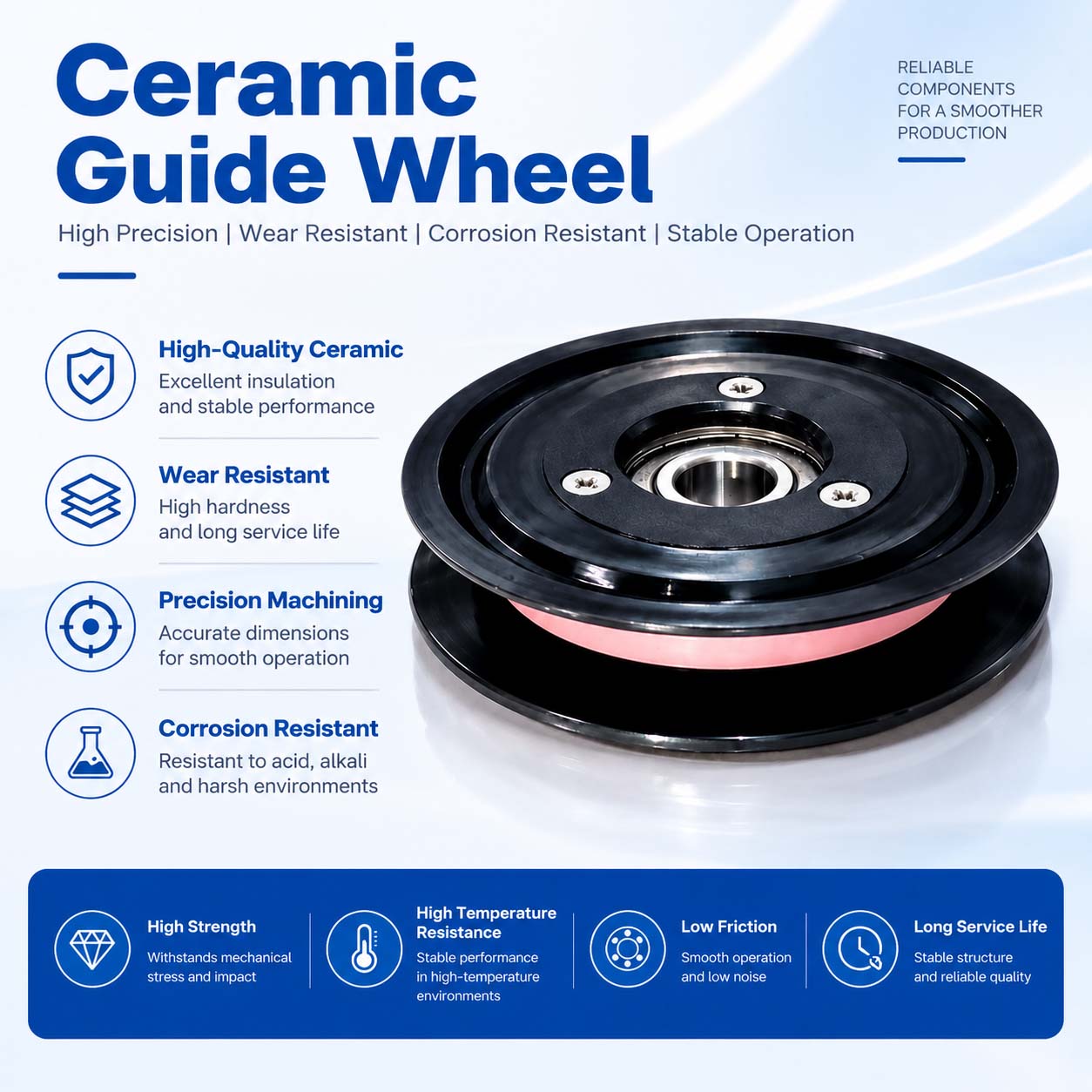
In industrial guide wheel applications, surface wear and corrosion are two major factors affecting service life and operating stability.
The CR1006 Thermal Spray Coated Guide Wheel Assembly uses advanced thermal spray technology to apply high-performance coatings onto the substrate surface, significantly improving wear resistance and corrosion protection.
With a lightweight design of only 40 g, CR1006 features a compact structure and is suitable for various precision transmission and guiding applications.
Thermal Spray Coating Technology Features
Thermal spraying is a surface treatment process in which coating materials are heated into a molten or semi-molten state and sprayed onto the workpiece surface at high speed to form a protective coating.
For CR1006 guide wheels, different coating materials can be selected, including ceramic, alloy, and tungsten carbide coatings, providing the following advantages:
Excellent Wear Resistance
The high-hardness coating effectively resists sliding wear and abrasive wear caused by continuous contact with wires, fibers, and other materials.
Corrosion Protection
The dense coating layer acts as a protective barrier against moisture, acids, alkalis, and other corrosive media.
High Temperature Resistance
Certain ceramic coatings maintain stable performance under elevated temperatures, making them suitable for demanding thermal environments.
Dimension Restoration
Thermal spray technology can also be used to repair worn guide wheels by rebuilding the surface layer and restoring original dimensions.
Applications
CR1006 thermal spray coated guide wheels are widely used in industries requiring reliable guidance and surface protection.
Wire and Cable Manufacturing
Guide wheels in high-speed wire production experience continuous friction. Wear-resistant coatings help reduce wire scratches and extend wheel service life.
Textile Machinery
Used for fiber and yarn guiding. Corrosion-resistant coatings protect components from chemical additives and improve durability.
Printing and Packaging Equipment
The coated surface reduces material adhesion and helps maintain smooth transportation of paper, film, and other materials.
General Industrial Transmission Systems
Suitable for humid, dusty, or harsh environments where additional surface protection is required.
Coating Selection and Customization
The appropriate coating should be selected according to actual working conditions.
Wear Conditions
- Tungsten carbide coating: Recommended for severe sliding wear and high abrasion applications.
- Alloy coating: Suitable for impact wear and applications requiring better toughness.
Corrosion Environment
- Chromium oxide ceramic coating: Suitable for acidic environments and applications requiring chemical resistance.
- Alloy coatings: Suitable for humid, salt spray, and general corrosive environments.
Temperature Requirements
For high-temperature applications, heat-resistant ceramic coatings such as zirconia may provide better performance.
Substrate Compatibility
The coating and substrate material must be properly matched. Similar thermal expansion characteristics help prevent coating cracking or peeling during operation.
We provide customized coating services based on customer drawings, samples, and operating requirements. Existing worn guide wheels can also be refurbished through recoating processes.
Maintenance and Service Life
Proper maintenance helps maximize the service life of coated guide wheels.
Recommended practices:
- Regularly inspect the coating surface for cracks, peeling, or abnormal wear.
- Avoid using hard tools that may scratch or damage the coating.
- Store components in dry environments away from corrosive substances.
- Ensure proper alignment during installation to prevent uneven loading and localized wear.
Actual service life depends on operating conditions, including load, speed, temperature, and working environment. Under suitable conditions, thermal spray coatings can extend service life several times compared with uncoated guide wheels.
Frequently Asked Questions
What coating materials can be used for CR1006 guide wheels?
Common options include tungsten carbide, chromium oxide ceramic, alumina ceramic, and alloy coatings. The best choice depends on wear resistance, corrosion protection, and temperature requirements.
Will thermal spray coatings peel off?
With proper surface preparation and coating processes, the coating forms a strong mechanical bond with the substrate. Peeling may occur if the substrate preparation is insufficient or the component is operated beyond design limits.
What is the typical coating thickness?
The standard coating thickness is usually 0.1–0.5 mm, which can be adjusted according to wear allowance and dimensional requirements.
Can old guide wheels be repaired?
Yes. Worn guide wheels can be restored by removing the damaged surface layer, preparing the substrate, and applying a new thermal spray coating.
What is the typical delivery time?
Delivery time depends on order quantity, coating material, and process complexity. Standard orders usually require approximately 5–15 working days.
How do I select the right coating?
Provide information about operating temperature, contact material, corrosion environment, load, and wear type. Our engineers can recommend the most suitable coating solution.
Customized Thermal Spray Coating Solutions
We provide customized CR1006 thermal spray coated guide wheel assemblies with ceramic, alloy, and tungsten carbide coating options.
Through advanced thermal spray technology, we help customers improve wear resistance, corrosion protection, dimensional stability, and service life for wire, cable, textile, and precision industrial applications.
