

- Service: CR1012 Ceramic Coating
- Category: Modular Guide Wheels
Coating Service Overview
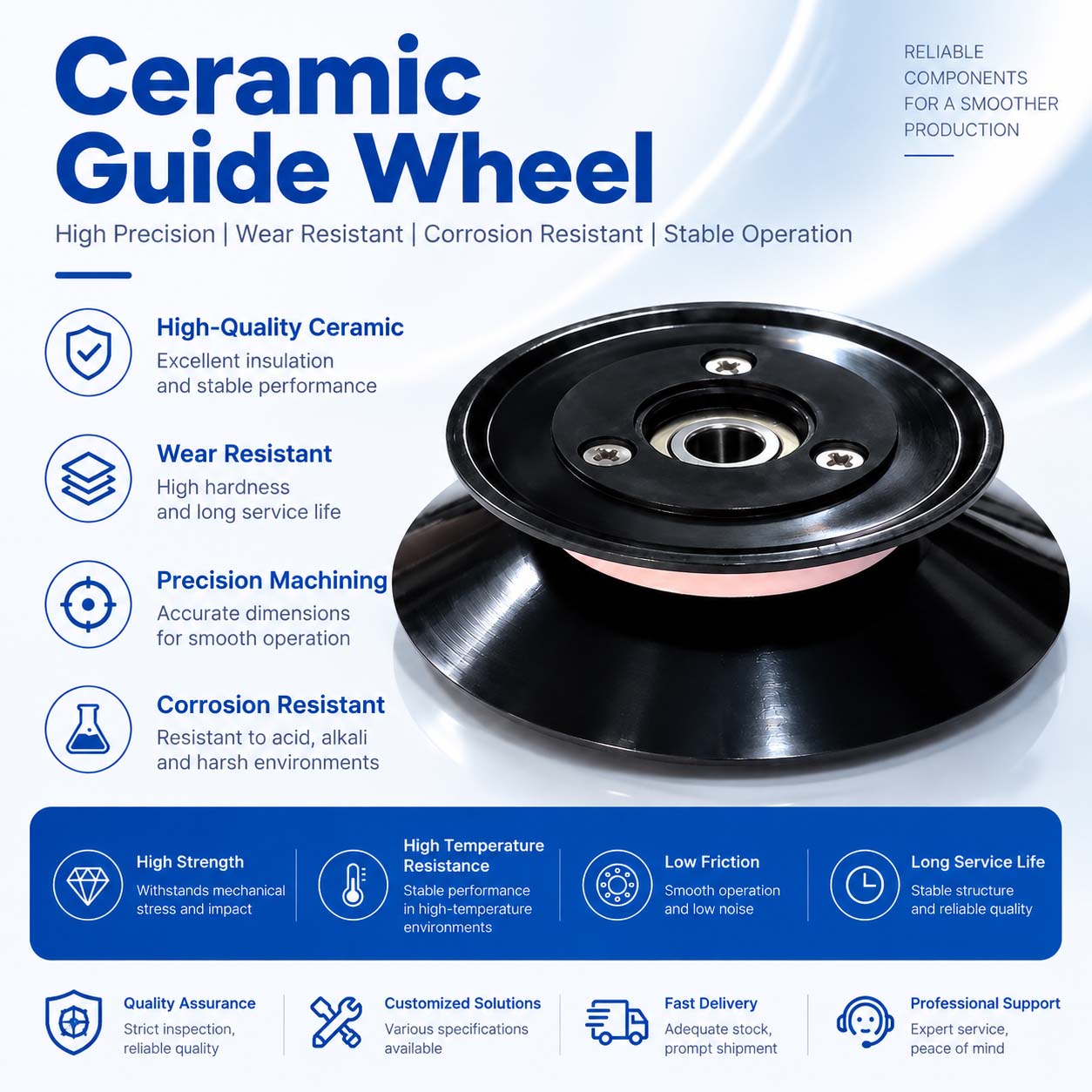
In industrial manufacturing, guide wheels, wire guide rollers, and other precision components are often exposed to corrosive environments, high friction, and material adhesion problems. Conventional metal surfaces may not provide sufficient service life and stability under these demanding conditions.
The CR1012 Ceramic Coating is specially designed to improve the performance of critical components such as guide wheel assemblies. It combines electrical insulation, anti-stick performance, and corrosion resistance to provide reliable surface protection.
With a typical weight of approximately 49 g, CR1012 is lightweight and easy to integrate without significantly affecting the original dynamic balance of the component.
Coating Features and Advantages
CR1012 uses advanced ceramic coating technology to provide excellent surface protection and improved component performance.
Electrical Insulation
The ceramic coating has high electrical resistance, helping isolate current and reduce the risk of electrochemical corrosion or short circuits. It is suitable for guide components used in electrical or sensitive environments.
Anti-Stick Performance
The low surface energy of the ceramic coating reduces the adhesion of fibers, resins, powders, and other sticky materials. This helps reduce cleaning frequency, minimize downtime, and improve continuous production efficiency.
Corrosion Resistance
CR1012 provides excellent resistance against acids, alkalis, salt spray, and various organic solvents. It maintains stable performance in humid or chemically aggressive environments, extending component service life.
Mechanical Durability
The coating has strong bonding with the metal substrate and can withstand friction and moderate impact. It provides reliable protection while maintaining surface integrity.
Typical Applications
CR1012 ceramic coating is widely used for guide wheels, wire rollers, and other industrial components requiring insulation, anti-stick properties, and corrosion resistance.
Guide Wheel Assemblies
For guide wheel systems used in textile, wire, cable, and printing industries, CR1012 helps reduce friction, prevent material adhesion, and protect components from moisture and chemical contamination.
Haul-Off Wheel Assemblies
For high-speed rotating components, the anti-stick surface helps prevent material buildup and winding problems, while the insulation performance improves operational safety.
Ceramic Spray Coated Components
CR1012 can also be applied as a surface enhancement or refurbishment solution for worn metal parts, improving service performance without replacing the entire component.
Other Wire Guide Components
It can be used as a surface modification solution for zirconia ceramic guide wheels and other precision guide components to improve wear resistance, anti-stick performance, and durability.
Selection and Customization Recommendations
When selecting CR1012 ceramic coating, the following factors should be considered:
Substrate Compatibility
The coating can be applied to various metal substrates, including stainless steel, alloy steel, and hard alloy materials. Bond strength testing is recommended for critical applications.
Coating Thickness
The recommended coating thickness is generally 0.1–0.3 mm, depending on wear allowance, dimensional requirements, and operating conditions.
Excessive coating thickness may affect component dimensions and precision.
Combination with Other Coatings
CR1012 can be combined with different surface treatment solutions according to application requirements.
For example:
- CR1012 can provide insulation and anti-stick protection on guide wheel surfaces.
- Tungsten carbide coatings can be applied to high-load areas requiring extreme wear resistance.
- Wear-resistant ceramic coatings can be used where higher hardness is required.
This combination allows optimized protection for different working conditions.
Installation and Maintenance
Installation Recommendations
- Inspect the coating surface before installation and ensure there are no cracks or scratches.
- Avoid directly striking ceramic-coated surfaces with metal tools.
- Ensure proper dimensional tolerance to prevent coating damage caused by excessive pressing force.
- When adhesive fixing is required, use compatible neutral or mild adhesives to avoid chemical damage.
Daily Maintenance
- Clean the surface regularly with a soft cloth or neutral cleaning agent.
- Do not use wire brushes or sharp tools that may damage the coating.
- In corrosive environments, regularly inspect coating integrity and repair damaged areas promptly.
- Store coated components separately to avoid impact or surface damage.
Troubleshooting
Coating blistering or peeling:
Usually caused by poor surface preparation, excessive temperature, or improper operating conditions. Recoating may be required.
Reduced insulation resistance:
Check whether the surface is contaminated or exposed to moisture. Clean and dry the surface before testing again.
Reduced anti-stick performance:
Surface wear may increase roughness and reduce anti-stick properties. Local repair or recoating may be necessary.
Frequently Asked Questions
What is the maximum operating temperature of CR1012?
CR1012 is generally recommended for continuous operation below 200°C. The actual temperature limit depends on the substrate and working environment.
Can CR1012 be applied to aluminum substrates?
Yes. However, differences in thermal expansion between materials should be considered. Trial testing is recommended before mass production.
Can damaged coating be repaired?
Small damaged areas may be repaired using suitable coating repair methods. Large-scale damage usually requires professional recoating.
What is the difference between CR1012 and CR1011?
CR1011 focuses mainly on high hardness and wear resistance, while CR1012 emphasizes electrical insulation, anti-stick performance, and corrosion resistance. The two coatings can be selected according to different application requirements.
How is insulation performance tested?
Electrical resistance can be measured using a 500V megohmmeter. In typical applications, surface resistance requirements are often above 100 MΩ.
Will CR1012 affect guide wheel dynamic balance?
No. Due to its lightweight design and uniform coating process, the effect on dynamic balance is minimal. Minor correction can be performed if required.
Customized Ceramic Coating Solutions
We provide customized CR1012 ceramic coating services for guide wheels, rollers, wire processing components, and precision industrial parts.
Coating materials, thickness, surface finish, and processing methods can be customized according to customer requirements to achieve improved insulation, anti-stick performance, corrosion resistance, and extended service life.
