

Coating Service Overview
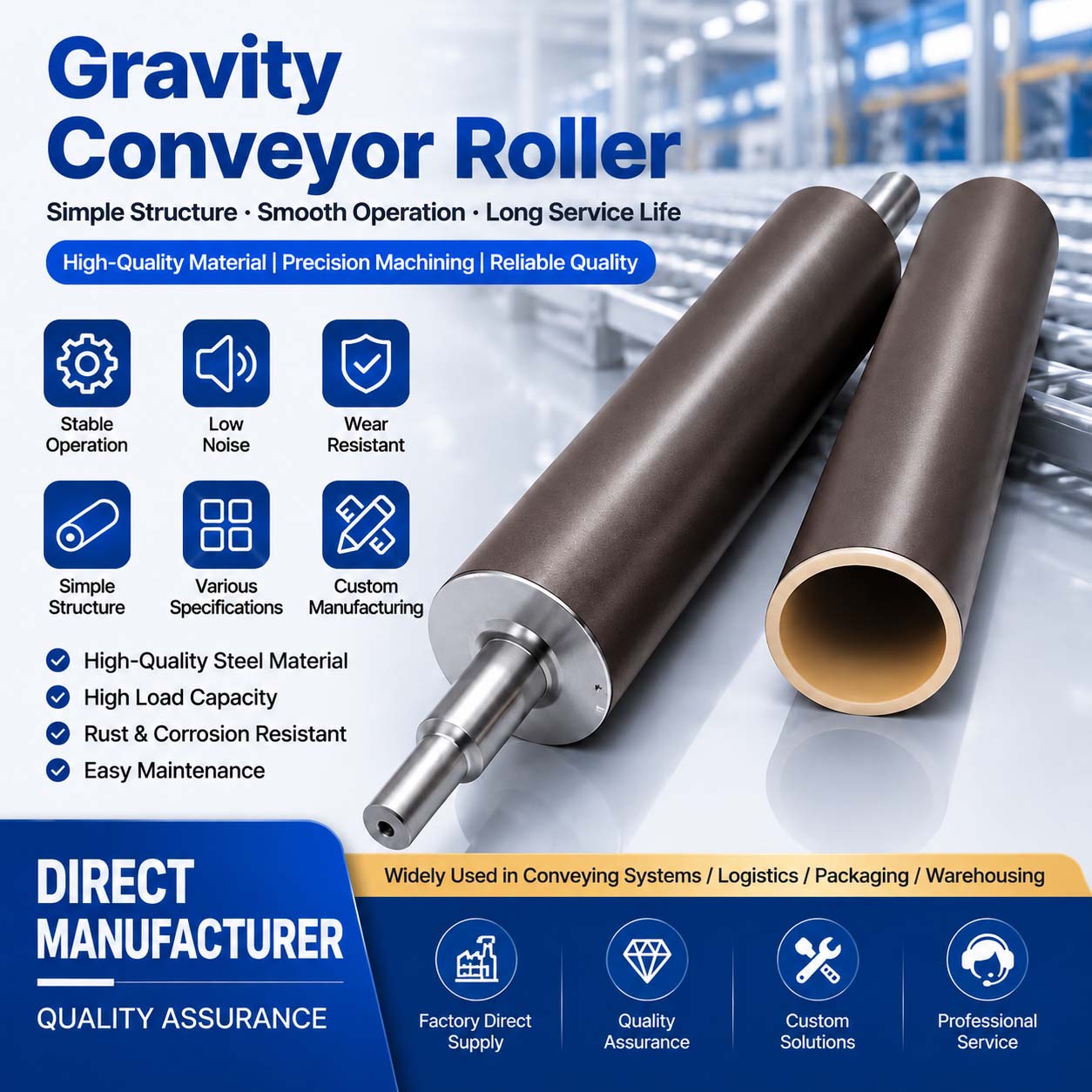
In the wire, cable, and metal processing industries, gravity rollers and wire drawing tower wheels are essential transmission and guiding components. Although they are often small parts of the production line, their performance directly affects equipment stability, production efficiency, and final product quality.
Through proper material selection and surface treatment technologies, such as ceramic coating, tungsten carbide coating, and wear-resistant spraying, these components can achieve longer service life and improved operating performance.
This article introduces the functions, selection factors, and maintenance methods of gravity rollers, wire drawing tower wheels, and related cable processing components.
Structure and Function of Gravity Rollers
A gravity roller (non-powered conveyor roller) usually consists of a roller tube, shaft, bearings, and end covers. It has no built-in drive system and rotates through external pulling force or the weight of transported materials.
Its main functions include:
- Supporting wires, cables, and strip materials
- Reducing friction during transportation
- Protecting material surfaces from scratches
- Maintaining stable tension during production
In cable manufacturing equipment, gravity rollers are commonly used in:
- Pay-off stands
- Wire storage systems
- Cable pulling machines
- Cable forming and processing lines
Multiple gravity rollers are often arranged together to ensure smooth cable movement and prevent vibration.
The surface finish and material selection of rollers are critical for protecting wire quality. Common surface treatments include:
- Hard chrome plating
- Rubber coating
- Ceramic coating
- Wear-resistant thermal spray coating
Features and Applications of Wire Drawing Tower Wheels
A wire drawing tower wheel is a key component in wire drawing machines. It usually adopts a stepped multi-groove structure, allowing metal wires to gradually reduce in diameter through different groove sizes.
Tower wheels require:
- High wear resistance
- Good mechanical strength
- Stable operation under high-speed friction
Common materials include:
- Hardened steel
- Carbide materials
- Tungsten carbide coated steel
In the wire and cable industry, tower wheels are widely used for drawing:
- Copper wire
- Aluminum wire
- Alloy wire
- Steel wire
The groove accuracy and surface roughness directly affect wire surface quality and dimensional accuracy.
Advanced tower wheels with ceramic coating or tungsten carbide coating provide:
- Higher wear resistance
- Reduced downtime
- Longer replacement cycles
- Better wire surface protection
Selection Guide for Cable Equipment Components
When selecting gravity rollers and wire drawing tower wheels, consider the following factors:
1. Wire Material and Size
Different materials such as copper, aluminum, steel, and optical fiber require different surface hardness and friction characteristics.
Examples:
- Soft materials: rubber-coated or ceramic rollers are recommended.
- Hard materials: steel rollers or tungsten carbide coated rollers are preferred.
2. Working Speed and Tension
High-speed production lines require:
- Excellent dynamic balance
- High-precision bearings
- Strong shaft and roller structures
For high-tension applications, roller strength and rigidity must be carefully evaluated.
3. Working Environment
For humid or corrosive environments:
- Stainless steel rollers are recommended.
- Anti-corrosion coatings should be considered.
4. Equipment Compatibility
Before ordering, confirm:
- Roller diameter
- Roller length
- Shaft diameter
- Installation method
- Load requirements
For tower wheels, additional factors include:
- Number of grooves
- Groove shape (V-type, U-type, etc.)
- Pitch diameter
- Coating material
Providing detailed working conditions helps manufacturers recommend the most suitable solution.
Maintenance Tips and Common Questions
Maintenance Recommendations
To extend service life:
- Regularly check roller rotation and bearing condition.
- Clean dust and wire debris from bearings.
- Inspect surfaces for scratches, dents, or coating damage.
- Measure tower wheel groove wear regularly.
- Repair or replace components when wear exceeds limits.
- Use proper lubricants to avoid contaminating wire materials.
Frequently Asked Questions
1. Why does a gravity roller rotate poorly?
Common causes include insufficient lubrication, dust contamination, or damaged bearings. Cleaning and lubrication may solve minor problems; damaged bearings should be replaced.
2. Why does a tower wheel groove wear unevenly?
Possible reasons include:
- Uneven wire tension
- Incorrect installation alignment
- Insufficient material hardness
Check the tension system and wheel alignment, or upgrade to a more wear-resistant coating.
3. When should roller coatings be refurbished?
Recoating is recommended when:
- Large-area coating peeling occurs
- Cracks appear
- Wire surface scratches increase
4. Can worn tower wheels be repaired?
Minor wear can often be restored by re-machining grooves. However, severely damaged wheels should be replaced to maintain drawing quality.
5. Can gravity rollers be used in food or clean environments?
Yes, but stainless steel materials and food-grade lubricants should be selected, and surface treatment must meet hygiene requirements.
6. How can tower wheel service life be extended?
Proper installation, accurate alignment, sufficient lubrication, cooling, and regular inspection can significantly improve service life.
