

Coating Service Overview
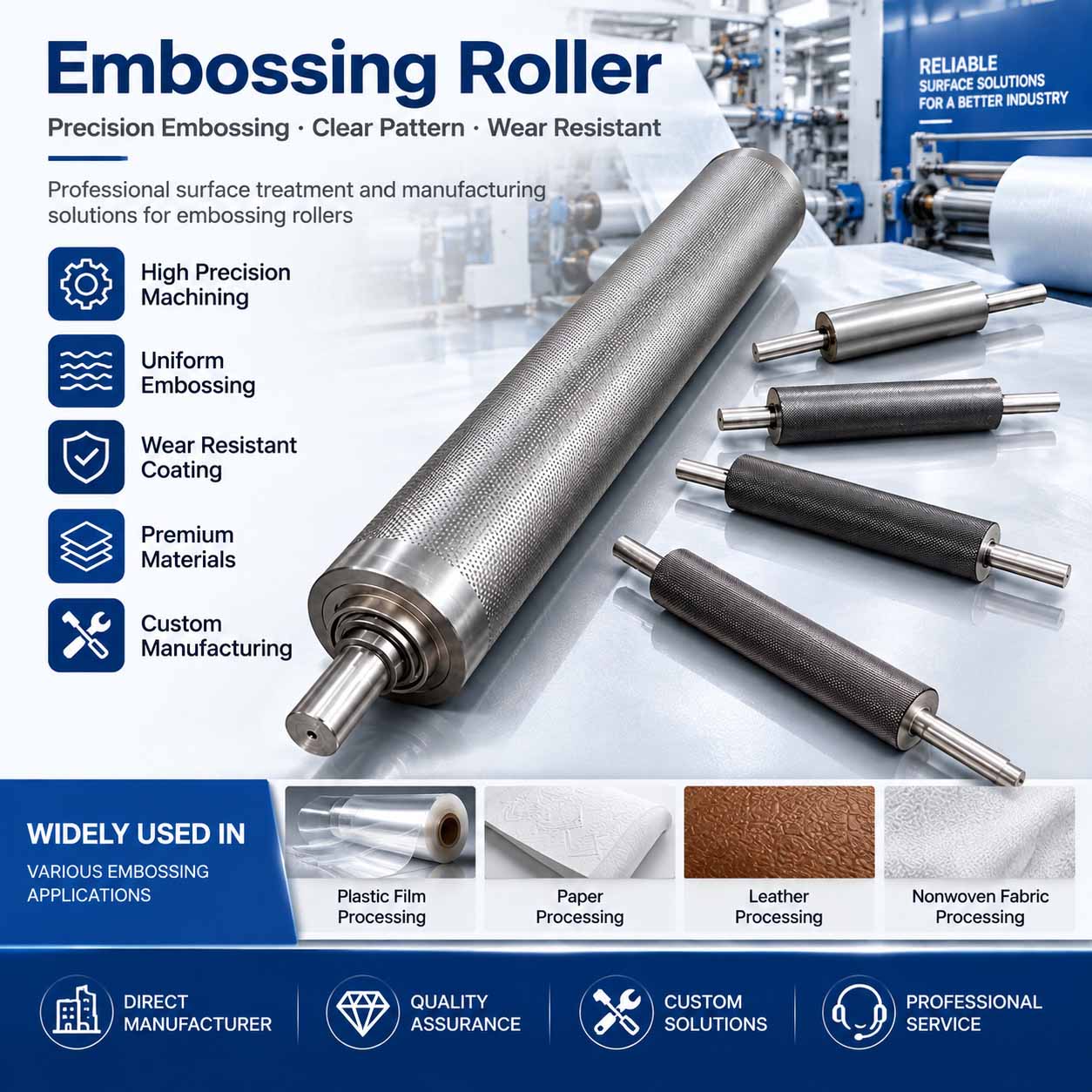
In embossing processes for metal sheets, plastic films, leather, and other materials, embossing rollers are critical components that determine surface pattern quality and production efficiency.
During long-term operation, embossing rollers are exposed to high pressure, continuous friction, and possible corrosive environments. These conditions may cause pattern wear, reduced embossing accuracy, and lower product quality.
By applying advanced wear-resistant coating technologies, such as tungsten carbide coating and metal ceramic spraying, embossing rollers can achieve significantly improved wear resistance, longer service life, and more stable embossing performance.
Wear Resistant Coating Technologies for Embossing Rollers
Wear-resistant coatings are usually applied through thermal spray processes, where coating materials are heated to a molten or semi-molten state and sprayed onto the roller surface at high speed to form a dense protective layer.
Common coating materials include:
- Tungsten carbide (WC)
- Ceramic coatings
- Metal ceramic composite coatings
Tungsten Carbide Coating
Tungsten carbide (WC) coating provides extremely high hardness and excellent wear resistance, making it suitable for heavy-duty embossing applications.
It is commonly applied through:
- HVOF (High Velocity Oxygen Fuel) spraying
- Plasma spraying
Main advantages:
- Hardness above HV1100
- Strong coating adhesion
- Excellent resistance to abrasive wear and impact
- Long service life under high-pressure operation
Tungsten carbide coatings are ideal for cold embossing of metal sheets and other applications requiring high surface durability.
Metal Ceramic Coating
Metal ceramic coatings combine the hardness of ceramics with the toughness of metal materials.
For example, Cr3C2-NiCr coating provides:
- Excellent high-temperature wear resistance
- Good oxidation resistance
- Stable performance under thermal cycling
It is especially suitable for:
- Hot embossing processes
- High-temperature production environments
- Applications requiring controlled surface roughness
The coating thickness and surface finish can be customized according to different embossing patterns and production requirements.
Coating Selection and Applications
The correct coating should be selected according to the embossing material, pressure, temperature, and working environment.
Metal Sheet Cold Embossing
Recommended:
- Tungsten carbide coating
Advantages:
- High hardness
- Strong impact resistance
- Typical coating thickness: 0.1–0.3 mm
Plastic Film Hot Embossing
Recommended:
- Metal ceramic coating
Advantages:
- High-temperature resistance
- Excellent thermal stability
- Reduced thermal fatigue damage
Corrosive Working Environments
Recommended:
- Ceramic coatings such as:
- Aluminum oxide (Al₂O₃)
- Chromium oxide (Cr₂O₃)
Benefits:
- Wear resistance
- Corrosion resistance
- Stable surface performance
Wear-resistant coated rollers are widely used in:
- Building materials
- Packaging industry
- Textile production
- Plastic processing
- Metal forming industries
They help reduce roller replacement frequency, minimize downtime, and improve product consistency.
Maintenance and Repair
Regular inspection and proper maintenance can extend the service life of coated embossing rollers.
Recommended practices:
- Check coating wear and cracks regularly.
- Use soft cleaning tools to avoid surface damage.
- Repair minor surface damage through polishing.
- Remove old coating and reapply a new coating for severe wear.
Before recoating, the roller substrate should be inspected to ensure there are no fatigue cracks or structural damage.
Frequently Asked Questions
1. Will tungsten carbide coating peel off?
Under normal operating conditions, tungsten carbide coating has strong bonding strength and is not easy to peel off.
Coating failure may occur due to:
- Poor surface preparation
- Excessive impact
- Improper operating conditions
Professional coating processes and correct usage can prevent these issues.
2. What coating thickness is recommended?
A typical thickness is:
0.1–0.3 mm
Too thick may affect embossing pattern accuracy, while too thin may reduce wear resistance. The final thickness depends on embossing depth and material hardness.
3. Which is more wear resistant: tungsten carbide or metal ceramic coating?
- Tungsten carbide coating: Better wear resistance at normal temperatures.
- Metal ceramic coating: Better performance under high-temperature conditions.
The best choice depends on actual working conditions.
4. Can worn embossing rollers be repaired?
Yes. Worn rollers can be restored through:
- Removal of old coating
- Surface preparation
- Reapplication of wear-resistant coating
- Precision finishing
This process is usually more economical than replacing a new roller.
5. Will coating affect embossing quality?
No. Properly processed coatings can achieve the required surface roughness and precision without affecting pattern clarity.
Correct coating selection ensures stable embossing quality.
6. How can coating roller life be extended?
To maximize service life:
- Clean rollers regularly
- Avoid overload operation
- Maintain proper embossing pressure
- Prevent corrosive substances from contacting the surface
- Inspect coating condition periodically
