

Coating Service Overview
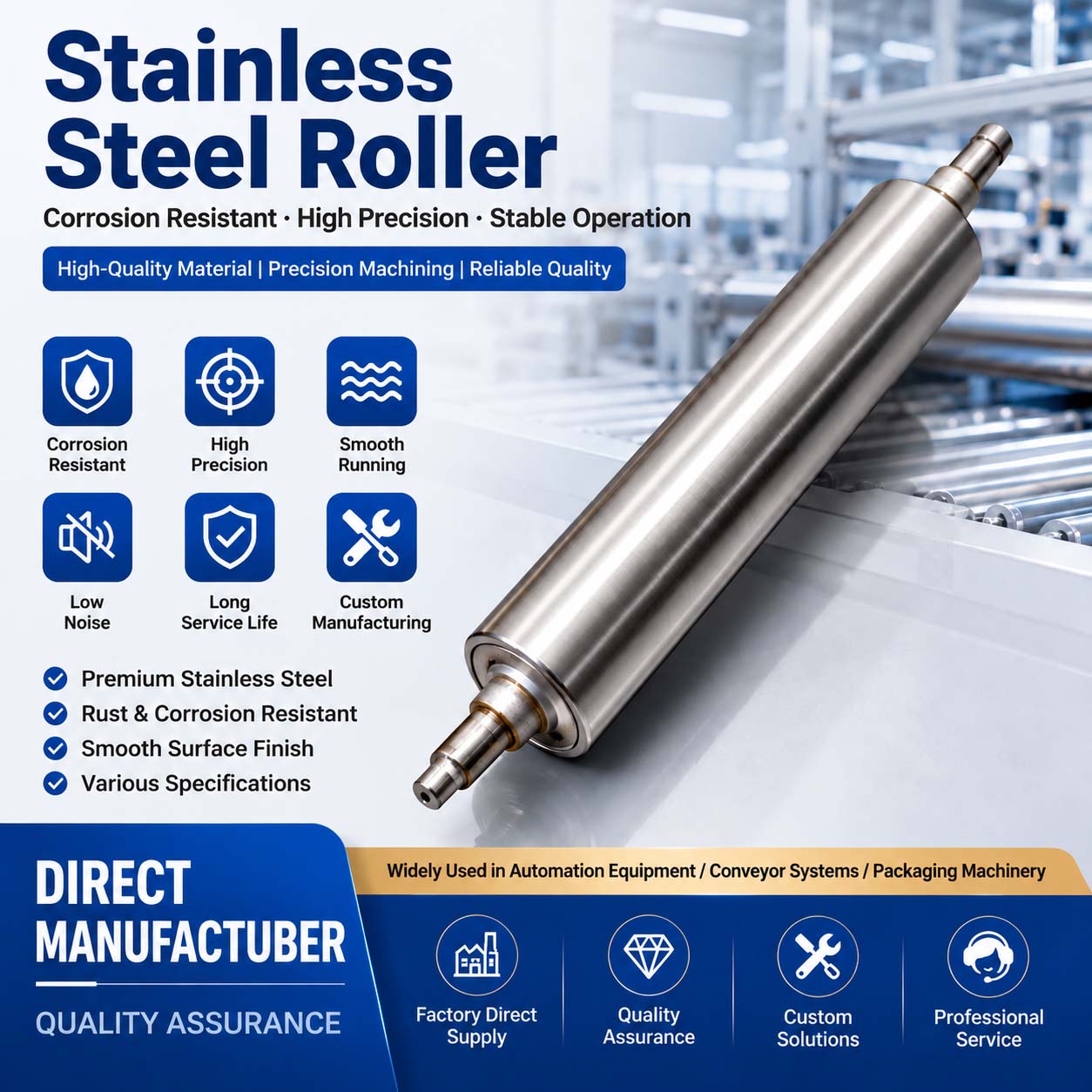
In industrial manufacturing, rollers are essential components for power transmission and material handling. Stainless steel rollers are widely used as base components due to their excellent corrosion resistance, mechanical strength, and durability. However, under high-wear conditions, ordinary stainless steel surfaces may not provide sufficient service life.
Through advanced metal surface treatment technologies, such as tungsten carbide thermal spraying and ceramic coatings, stainless steel rollers can be upgraded into high-performance wear-resistant components, significantly improving equipment reliability and production efficiency.
Common Types and Structures of Stainless Steel Rollers
Stainless steel rollers can be classified by driving method into:
- Powered rollers – driven by motors for automatic material transportation.
- Non-powered rollers – relying on gravity or manual pushing for simple conveying applications.
According to function, stainless steel rollers include:
- Conveyor rollers
- Embossing rollers
- Wire drawing machine guide rollers
- Industrial guide wheels
A typical roller consists of a roller body, shaft, bearings, and sealing components. The roller tube is usually manufactured from 304 or 316 stainless steel, with customized wall thickness according to load requirements. Surface finishes can include smooth surfaces, patterned surfaces, or specially textured designs.
Surface Treatment Technologies for Enhanced Wear Resistance
To improve performance in harsh working environments, stainless steel rollers are often treated with advanced surface coatings:
Tungsten Carbide Coating
Through HVOF (High Velocity Oxygen Fuel) spraying or plasma spraying technology, a high-hardness tungsten carbide layer is applied to the roller surface. The coating can achieve hardness above HV1200, providing excellent resistance against abrasive wear and sliding friction.
It is widely used for:
- Wire drawing machine rollers
- Guide wheels
- High-speed wear-resistant components
Ceramic Coating
Ceramic coatings such as chromium oxide (Cr₂O₃) and aluminum oxide (Al₂O₃) offer excellent resistance to high temperature, corrosion, and electrical insulation. They are suitable for rollers operating in high-temperature or chemically aggressive environments.
Aluminum Ceramic Spraying
This coating provides a balance of corrosion resistance and wear resistance. It is commonly applied to wire processing equipment components, guide rollers, and industrial wheels.
Hard Chrome Plating
Hard chrome plating is a traditional surface treatment method with relatively low cost. However, compared with thermal spray coatings, its wear resistance is lower and environmental concerns have limited its application in some industries.
Applications of Stainless Steel Rollers
Wire Drawing and Cable Manufacturing Equipment
In wire drawing machines, tower wheels, guide rollers, and rings are exposed to continuous high-speed friction. Tungsten carbide or ceramic coatings reduce surface damage, prevent wire scratches, and extend component service life.
Conveyor Systems
Stainless steel conveyor rollers are widely used in logistics, packaging, food processing, and manufacturing industries. Depending on requirements, roller surfaces can be treated with rubber coating, galvanizing, or wear-resistant coatings.
Embossing and Special Processing
Embossing rollers are used to create surface patterns on leather, paper, plastic, and other materials. These rollers require high hardness, excellent surface finish, and dimensional accuracy. Chrome plating, ceramic coating, and other surface treatments are commonly applied.
How to Select the Right Stainless Steel Roller
When selecting a stainless steel roller, consider the following factors:
- Working conditions: Analyze load, speed, temperature, humidity, and corrosive environment.
- Base material: Choose suitable stainless steel grades such as 304, 316, or duplex stainless steel according to strength and corrosion requirements.
- Surface coating:
- Tungsten carbide coating for severe wear conditions
- Ceramic coating for high-temperature and corrosive environments
- Aluminum ceramic spraying for balanced performance and cost efficiency
- Manufacturing accuracy: Roller roundness, concentricity, and dynamic balance directly affect operation stability and service life.
Maintenance Tips
Proper maintenance can significantly extend the service life of stainless steel rollers:
- Regularly check bearing lubrication and use suitable high-temperature grease.
- Avoid hard scraping tools when cleaning coated surfaces.
- Repair damaged coatings promptly to prevent further expansion.
- Keep rollers dry and avoid contact with corrosive substances during storage.
Frequently Asked Questions
Will stainless steel rollers rust?
Stainless steel is corrosion-resistant but not completely rust-proof. Chloride environments or damaged passive films may cause corrosion. Proper material selection and surface treatment can improve corrosion resistance.
Can tungsten carbide coatings peel off?
High-quality thermal spray coatings have strong bonding strength and normally do not peel off under normal conditions. Poor surface preparation or severe impact may cause coating damage.
Which coating is best for stainless steel rollers?
The choice depends on the working environment:
- Tungsten carbide for heavy wear
- Ceramic coatings for high temperature and corrosion
- Aluminum ceramic spraying or chrome plating for general protection
Can worn rollers be recoated?
Yes. Used rollers can be restored by removing the damaged layer, surface preparation, and reapplying a new wear-resistant coating, reducing replacement costs.
Is dynamic balancing important for rollers?
Yes. High-speed rotating rollers require accurate dynamic balancing to reduce vibration, noise, and premature bearing failure.
