

Coating Service Overview
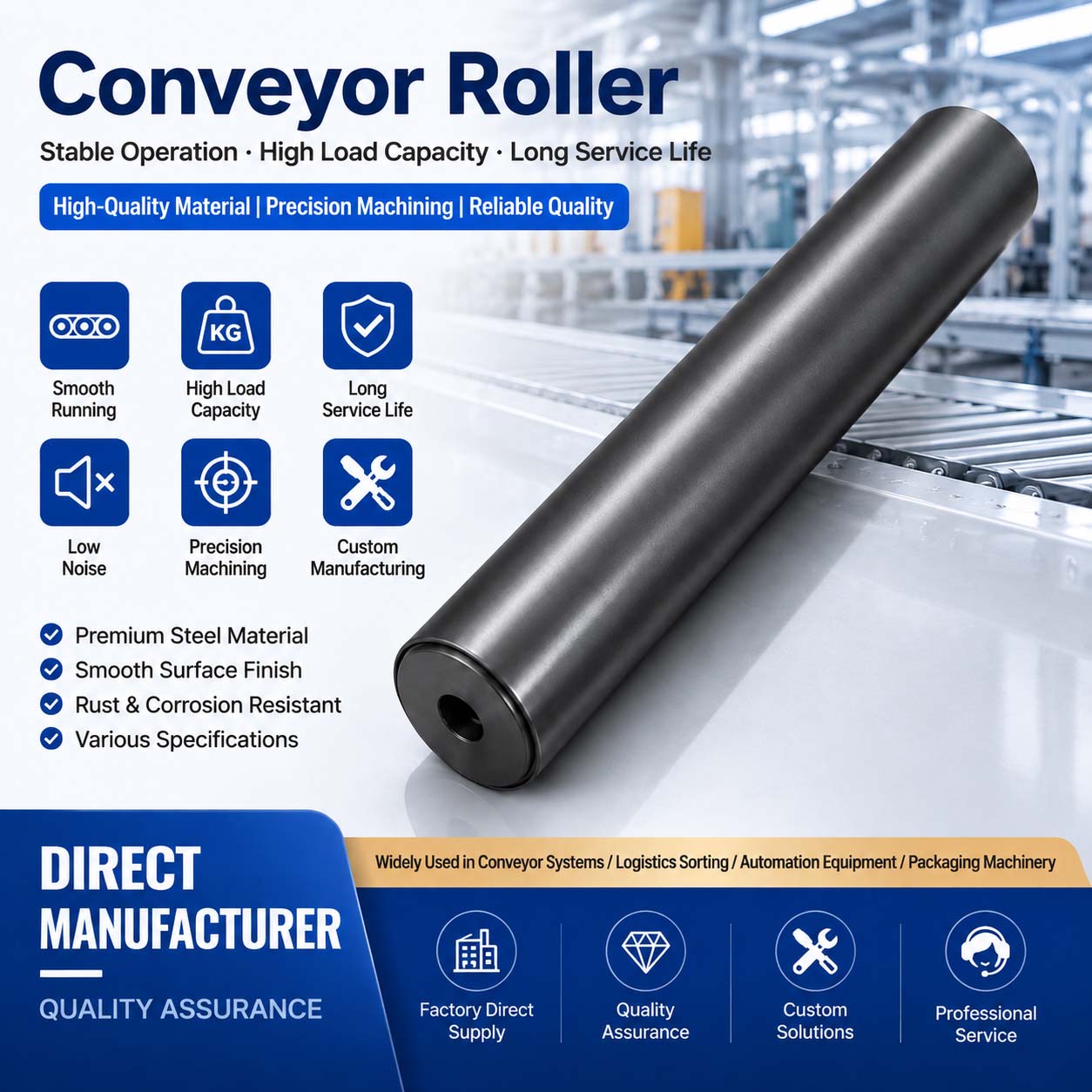
In industries such as wire and cable manufacturing, metal processing, and textile production, guide rollers and conveyor rollers operate under high-speed rotation and continuous friction. Their wear resistance directly affects production efficiency, equipment stability, and product quality.
Through advanced surface treatment technologies, including ceramic spraying, thermal spraying, and wear-resistant coatings, these components can achieve longer service life, improved corrosion resistance, and better operating performance.
This article introduces common industrial components, including wire drawing machine guide rollers, conveyor rollers, ceramic guide wheels, spray coated guide rollers, and wire passing rollers, covering their features, applications, selection methods, and maintenance tips.
Product Types and Features
Wire Drawing Machine Guide Roller
Wire drawing guide rollers are key components in wire drawing equipment. They guide metal wires and withstand high tension and continuous friction during operation.
Common designs use steel substrates with surface coatings such as:
- Ceramic coating
- Tungsten carbide coating
- Thermal spray coating
These treatments improve wear resistance, reduce wire surface damage, and extend service intervals.
Conveyor Roller
Conveyor rollers are widely used in production lines for material transportation. According to different working conditions, roller surfaces can be treated with:
- Ceramic coating for wear and corrosion resistance
- Rubber coating for anti-slip performance
- Metal spraying for heavy-duty applications
Common types include:
- Gravity conveyor rollers – driven by external force or material weight
- Powered conveyor rollers – equipped with drive systems for automatic conveying
Ceramic Guide Roller and Spray Coated Guide Roller
Ceramic guide rollers feature high-hardness ceramic surfaces with low friction characteristics, making them suitable for high-speed wire guidance.
Spray coated guide rollers are manufactured by applying ceramic materials onto metal substrates through thermal spraying technology.
Advantages:
- High bonding strength
- Excellent wear resistance
- Good heat resistance
- Longer service life
Compared with traditional metal rollers, ceramic coated rollers reduce friction and protect wire surfaces from scratches.
Wire Passing Roller
Wire passing rollers are commonly used in textile and cable industries to guide yarns or wires.
Ceramic wire passing rollers are widely preferred because of:
- Smooth surface finish
- Low friction
- Reduced material damage
They are especially suitable for high-speed precision production processes.
Application Areas
These wear-resistant rollers and guide wheels are widely used in:
Wire and Cable Manufacturing
Guide rollers, tower wheels, and wire drawing components are used in copper and aluminum wire drawing processes to improve production stability.
Textile Industry
Ceramic wire passing rollers are applied in spinning and fiber production equipment to reduce yarn breakage and improve product quality.
Logistics and Material Handling
Conveyor rollers are used in packaging lines, warehouse systems, and sorting equipment. Gravity rollers are commonly used in storage racks and manual conveying systems.
Metal Processing
Wear-resistant rollers and embossing rollers are used for sheet forming, surface treatment, and industrial processing.
Selection and Maintenance Guide
Selection Factors
When choosing industrial rollers, consider:
1. Operating Conditions
Evaluate:
- Rotation speed
- Load capacity
- Working temperature
- Corrosive environment
Select the appropriate coating according to actual conditions.
2. Base Material Compatibility
Steel, aluminum, and other substrates should match the selected coating process to ensure strong bonding and durability.
3. Dimensional Accuracy
Roller diameter, shaft size, groove design, and overall length must meet equipment requirements to ensure stable operation.
Maintenance Tips
Proper maintenance helps extend roller service life:
- Regularly inspect coating wear and prevent coating peeling.
- Maintain proper bearing lubrication to avoid abnormal wear.
- Clean roller surfaces regularly to remove oil, dust, and contaminants.
- Replace rollers when severe grooves, vibration, wire scratches, or coating damage appear.
Frequently Asked Questions
1. What is the difference between spray coated rollers and ceramic rollers?
Spray coated rollers are produced by applying ceramic materials onto metal substrates through thermal spraying. Ceramic rollers may refer to solid ceramic rollers or ceramic-coated rollers. Spray coated rollers combine the toughness of metal with the wear resistance of ceramics.
2. How should conveyor roller surface treatment be selected?
The choice depends on application requirements:
- Rubber coating: better grip and anti-slip performance
- Ceramic coating: high wear and corrosion resistance
- Tungsten carbide coating: extreme wear conditions
3. Can worn wire passing rollers be repaired?
Yes. If the substrate remains in good condition, the damaged coating can be removed and a new ceramic coating can be applied, reducing replacement costs.
4. What affects the service life of wire drawing guide rollers?
Service life depends on:
- Wire material hardness
- Drawing speed
- Tension force
- Lubrication conditions
- Coating quality
5. When should a guide roller be replaced?
Replacement is recommended when:
- Wire surface scratches appear
- Roller vibration increases
- Coating peeling occurs
- Groove wear becomes excessive
6. Are customized rollers available?
Yes. Rollers and guide wheels can be customized according to customer drawings or samples, including dimensions, substrate materials, and coating types.
