

Coating Service Overview
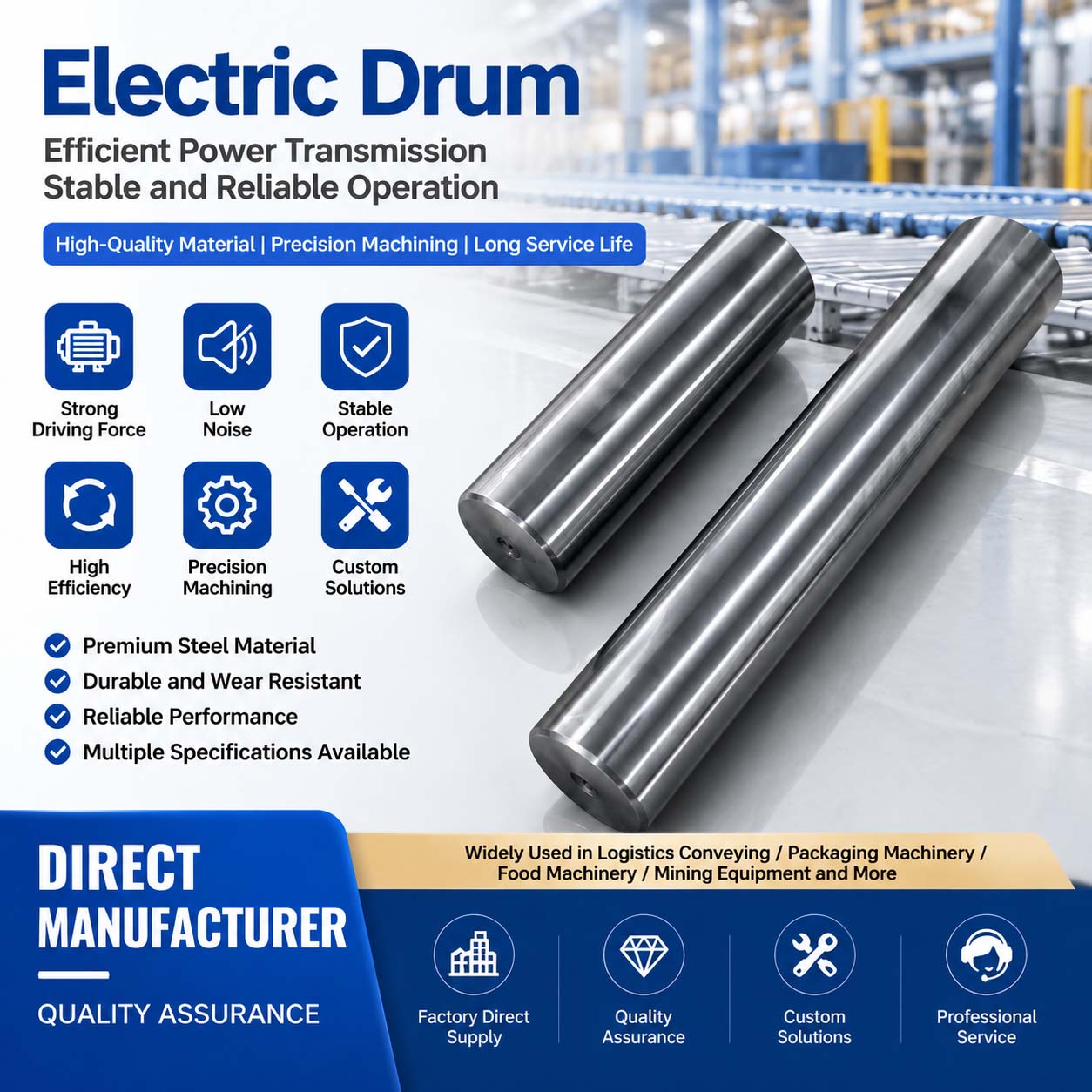
In the wire, cable, and metal processing industries, stable power transmission directly affects production efficiency and product quality. As a key driving component for wire drawing machines, pay-off systems, and cable handling equipment, the performance and maintenance of motorized conveyor rollers (electric rollers) are critical.
This article introduces the working principle, selection guide, installation, maintenance, and troubleshooting methods of motorized rollers to help operators improve equipment performance and reduce downtime.
Working Principle and Structure of Motorized Rollers
A motorized conveyor roller integrates an electric motor, gearbox, and roller body into one compact drive unit. Through internal gears or planetary reduction mechanisms, it converts motor power into stable rotational torque to drive:
- Conveyor belts
- Wire drawing drums
- Cable pay-off and take-up systems
Compared with external drive systems, motorized rollers feature:
- Compact structure
- Space-saving installation
- Stable speed and torque output
- Easy maintenance
Common configurations include:
- Three-phase induction motors
- Variable frequency motors for speed control
- Planetary gear reducers or parallel shaft gear reducers
The roller surface can be customized with different treatments, such as:
- Rubber coating
- Hard chrome plating
- Tungsten carbide coating
to meet different friction, wear, and corrosion requirements.
Selection Guide for Wire Drawing Equipment
Wire drawing machines require motorized rollers with reliable torque output, adjustable speed range, and suitable protection levels.
1. Torque Requirements
Torque selection depends on:
- Wire material strength
- Wire diameter
- Reduction ratio
- Drawing force requirements
Copper wire, aluminum wire, and steel wire require different pulling forces, so torque calculation should be based on actual working conditions.
2. Speed Range
Drawing speed determines roller speed requirements.
For flexible production, motorized rollers are often combined with frequency converters to achieve:
- Wide speed adjustment range
- Smooth acceleration and deceleration
- Stable production operation
3. Protection Level
Wire drawing environments often contain:
- Metal dust
- Cooling liquids
- Lubricants
Therefore, motorized rollers should normally have protection ratings of IP54 or higher. For harsh environments, IP55 or IP65 protection is recommended.
4. Heat Dissipation
Long-term operation may increase internal temperature. Depending on workload, choose models with:
- Forced air cooling
- Oil cooling systems
- Improved thermal design
5. Installation Method
Common installation types include:
- Shaft mounted
- Flange mounted
- Base mounted
The installation structure must match the equipment frame to reduce vibration and improve service life.
Applications in Cable Production Lines
Motorized rollers are widely used in:
Wire Drawing Machines
They provide stable pulling force for:
- Copper wire drawing
- Aluminum wire drawing
- Steel wire processing
Cable Pay-Off and Take-Up Systems
In cable production lines, motorized rollers control:
- Constant line speed
- Tension stability
- Accurate winding
Cable Storage Systems
For applications requiring frequent start/stop and forward/reverse operation, motorized rollers require high durability and precise speed response.
Extrusion and Stranding Lines
After extrusion, motorized rollers maintain constant pulling speed to ensure:
- Uniform insulation thickness
- Stable cable quality
- Smooth production operation
Installation and Commissioning Guide
Before Installation
Check:
- Motor voltage
- Power rating
- Speed
- Gear ratio
- External condition
For oil-lubricated models, confirm oil level. For grease-lubricated models, ensure proper lubrication.
Installation Requirements
- The mounting base should be flat and rigid.
- Ensure proper shaft alignment.
- Check coupling or chain installation accuracy.
- Connect wiring according to electrical diagrams.
- Confirm reliable grounding.
Testing Procedure
- No-load test
- Check rotation direction.
- Run at low speed for about 30 minutes.
- Monitor current, temperature, and noise.
- Load test
- Gradually increase load.
- Record operating temperature and current.
- Speed adjustment test
- Check frequency converter settings.
- Avoid resonance areas during speed changes.
Maintenance and Troubleshooting
Daily Maintenance
- Check roller surface wear regularly.
- Repair damaged rubber coating or protective layers.
- Monitor abnormal noise from gears or bearings.
- Replace lubricating oil according to operating hours.
- Inspect seals to prevent oil leakage or water entry.
- Keep cooling passages clean.
Common Problems and Solutions
Motor Overheating
Possible causes:
- Overload
- Voltage imbalance
- Poor ventilation
- Frequent starting
Solutions:
- Check load conditions.
- Improve cooling.
- Measure power supply voltage.
Roller Does Not Rotate or Runs Slowly
Check:
- Power supply
- Frequency converter parameters
- Gear system condition
- Motor phase connection
Excessive Vibration or Noise
Possible causes:
- Bearing wear
- Gear damage
- Misalignment
- Loose mounting
Stop operation and inspect immediately.
Oil Leakage
Usually caused by:
- Aging seals
- Improper installation
- Shaft wear
Replace seals and check shaft condition.
Frequently Asked Questions
What types of wire drawing machines can use motorized rollers?
Motorized rollers are suitable for:
- Water tank wire drawing machines
- Inverted wire drawing machines
- Pulley-type drawing machines
They can be used for copper, aluminum, steel, and alloy wire processing.
How to select motor power?
Power should be calculated according to:
- Required pulling force
- Line speed
- Transmission efficiency
- Safety factor
Professional equipment suppliers can provide suitable recommendations based on actual conditions.
What protection level is required?
Typical workshops use IP54. Environments with heavy dust or coolant require IP55/IP65 protection.
How often should gearbox oil be changed?
Normally:
- First replacement after approximately 500 operating hours
- Then every 2000–3000 hours or once per year
Always follow manufacturer recommendations.
Can worn rollers be repaired?
Yes. Minor wear can be restored through recoating or rubber replacement. Severe wear may require machining and surface hardening treatments such as tungsten carbide spraying.
Can motorized rollers be used in explosive environments?
Standard motorized rollers are not explosion-proof. Hazardous areas require specially designed explosion-proof models that meet relevant safety standards.
