

Coating Service Overview
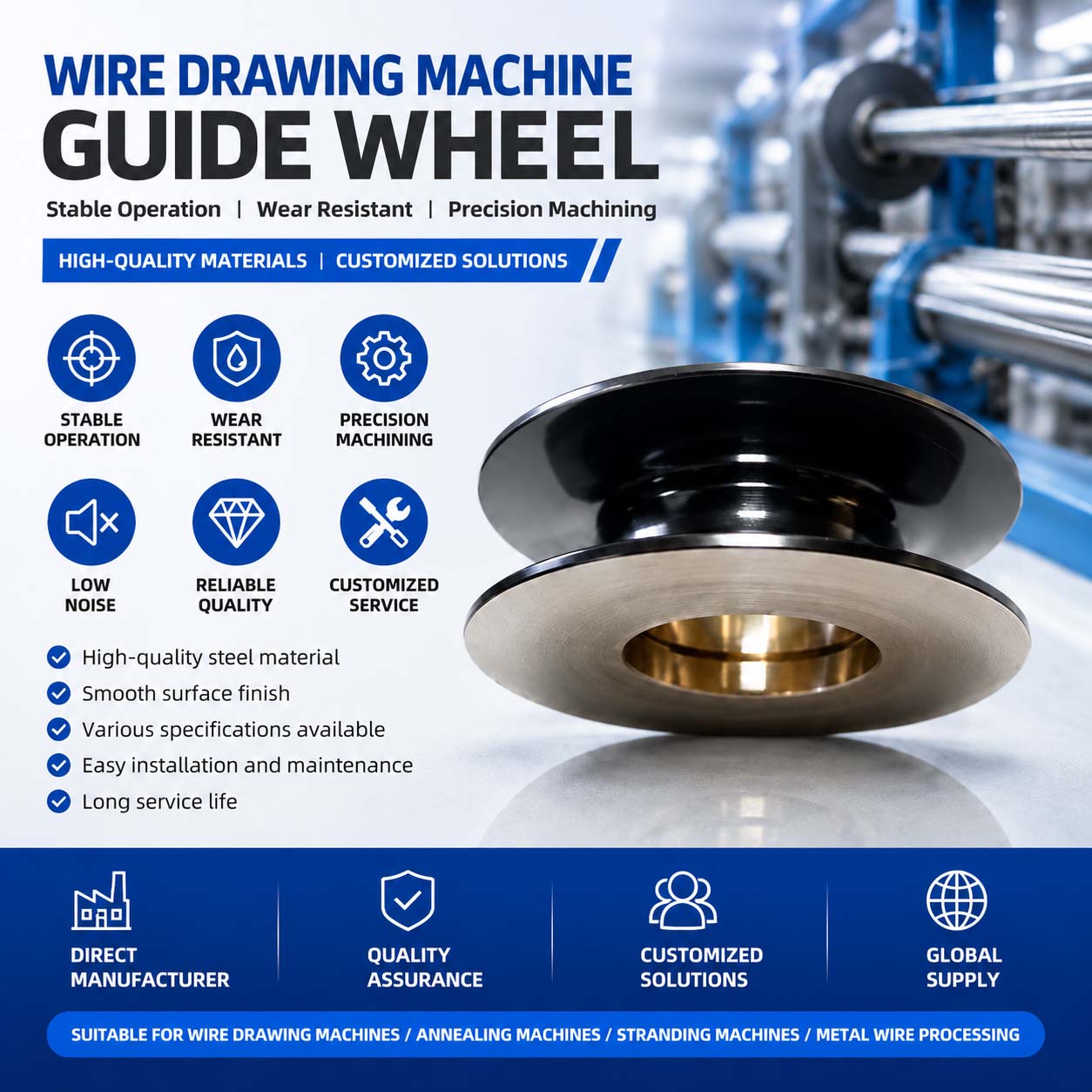
In the wire and cable manufacturing industry, wire drawing machine guide wheels, rollers, traction wheels, and various roll components operate under high-speed friction and heavy loads for long periods. Continuous contact with wire materials can cause surface wear, scratches, groove damage, and bearing seat wear, resulting in reduced accuracy, wire defects, and premature component failure.
Traditional replacement methods often involve high costs and long delivery times. Thermal spray repair technology provides an efficient and economical alternative by restoring worn components and enhancing their surface performance.
Using advanced processes such as HVOF (High Velocity Oxygen Fuel) spraying, wear-resistant coatings including tungsten carbide and ceramic coatings can be applied to metal surfaces. These coatings restore original dimensions while significantly improving hardness, wear resistance, and service life.
Repair Applications and Coating Solutions
Our thermal spray repair services cover various critical components used in wire drawing and cable processing equipment.
Wire Drawing Guide Wheels, Wire Rollers & Tower Pulleys
Common failures include groove wear and surface damage caused by continuous wire friction.
Recommended coatings:
- Tungsten carbide coating (WC-Co):
Provides extremely high hardness (HV1100+), excellent wear resistance, and low friction performance, suitable for guide wheels, wire rollers, and tower pulleys. - Ceramic coating (Cr₂O₃, Al₂O₃-TiO₂):
Offers high hardness, corrosion resistance, heat resistance, and excellent surface stability for high-speed wire processing.
Rollers and Traction Wheels
Traction wheels require stable friction performance and wear resistance. Tungsten carbide coatings can provide a durable working surface, while precision grinding after spraying ensures the required roughness and contact performance.
Bearing Seat Repair
Bearing positions often suffer from shaft wear and bearing looseness. Through HVOF tungsten carbide spraying or nickel-based alloy coating, worn areas can be rebuilt to original dimensions with strong bonding strength and excellent machinability.
Other Industrial Roll Components
Components such as pressure rollers and guide rollers can be restored with customized wear-resistant, anti-stick, or corrosion-resistant coatings according to operating conditions.
Thermal Spray Repair Process
1. Inspection and Measurement
Each component is inspected before repair. Wear depth, original dimensions, surface defects, and cracks are recorded to determine repair feasibility.
2. Surface Preparation
The damaged area is cleaned, degreased, and grit blasted to create a suitable surface profile and improve coating adhesion.
3. Thermal Spray Coating
Advanced spraying technologies including:
- HVOF spraying
- Plasma spraying
- Arc spraying
are used to deposit the selected coating material while controlling thickness and process parameters.
4. Precision Machining
After spraying, the surface is precision ground using diamond grinding tools to achieve the required dimensions, tolerances, and surface finish.
5. Final Inspection
Quality checks include:
- Coating thickness measurement;
- Hardness testing;
- Bond strength inspection;
- Surface defect inspection.
Coating Material Selection Guide
Tungsten Carbide (WC-12Co / WC-17Co)
- Extremely high hardness;
- Excellent resistance to sliding and abrasive wear;
- Suitable for guide wheels, traction rollers, and bearing repairs.
Ceramic Coatings (Cr₂O₃ / Al₂O₃-TiO₂)
- High hardness;
- Excellent thermal and chemical stability;
- Suitable for high-speed wire guides and applications requiring insulation or corrosion resistance.
Nickel-Based Alloy (NiCrBSi)
- Good wear and corrosion resistance;
- Easy machining;
- Commonly used for dimensional restoration and bonding layers.
Application Benefits
Thermal spray repair can provide:
- Extended component service life;
- Reduced equipment downtime;
- Lower maintenance costs;
- Improved wire surface quality;
- Restored dimensional accuracy.
For example, a wire drawing machine guide wheel originally requiring replacement every two months due to groove wear achieved more than eight months of service life after tungsten carbide coating repair. Another customer restored a worn traction roller bearing seat with nickel alloy spraying, avoiding the cost of replacing the complete roller.
Frequently Asked Questions
Which components can be repaired?
Most steel and metal components without severe cracks or deformation can be repaired, including guide wheels, rollers, pulleys, shafts, and bearing seats.
Will thermal spray coatings peel off?
With proper surface preparation and optimized spraying parameters, coatings achieve strong mechanical bonding and excellent durability under normal operating conditions.
How long does the repair take?
The standard repair cycle is usually 3–7 working days, depending on component size, quantity, and coating requirements.
Is repair more economical than replacement?
In many cases, repair costs are only 30%–60% of the price of a new component, while the restored service life can exceed the original part.
Can large rollers be repaired?
Yes. Large roll components can be evaluated for suitable repair methods, including factory repair or customized on-site solutions.
Precision Thermal Spray Solutions for Wire Processing Equipment
With HVOF, ceramic coating, and tungsten carbide coating technologies, worn wire drawing machine components can be effectively restored and upgraded, helping manufacturers improve production efficiency, reduce replacement costs, and achieve longer equipment service life.
