

Coating Service Overview
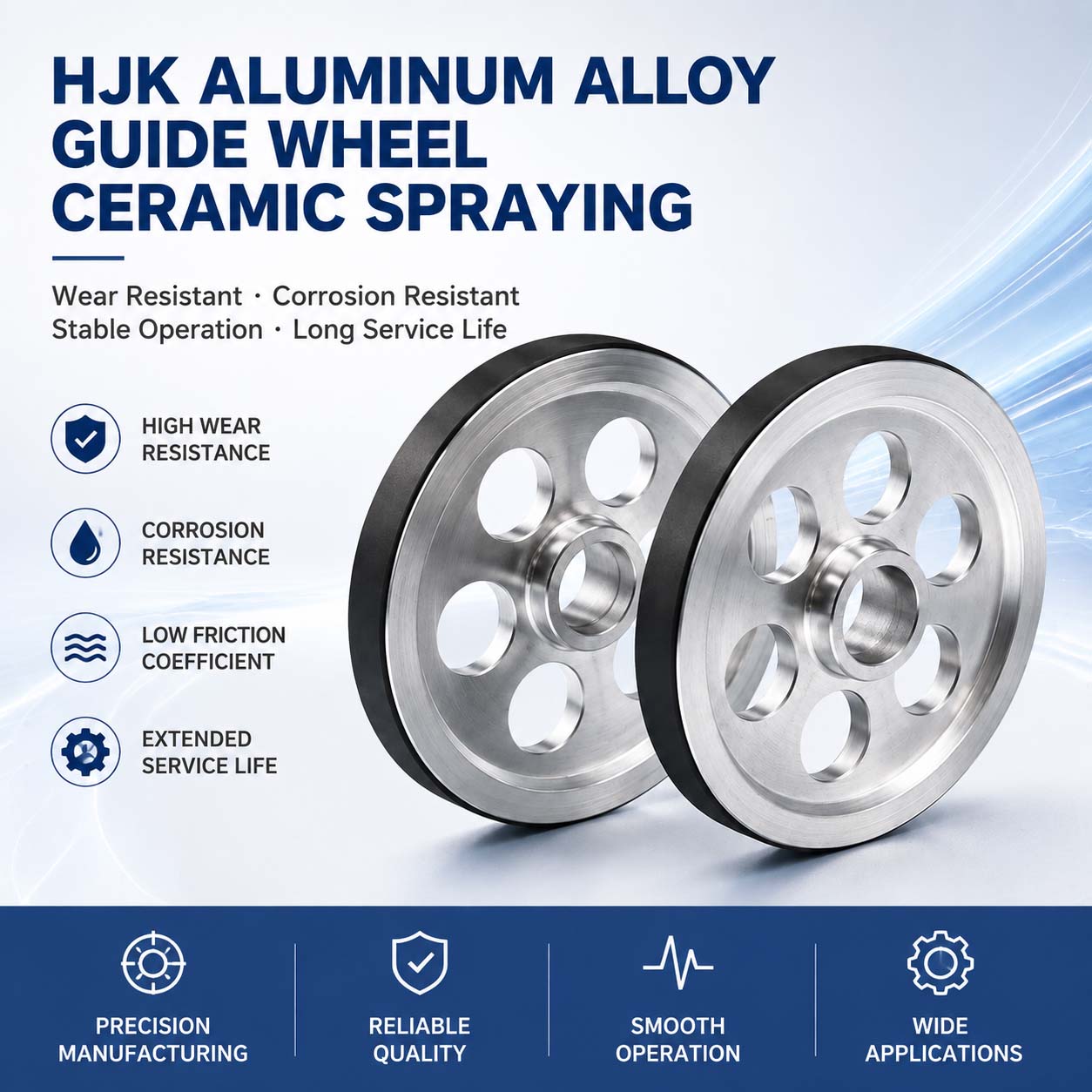
In metal wire drawing processes, the guide roller is a critical component that continuously withstands wire friction, tension, and environmental exposure. Although aluminum alloy guide rollers are lightweight and have low rotational inertia, their low surface hardness makes them vulnerable to wear, groove damage, wire scratches, and breakage.
To improve service life and maintain wire quality, many manufacturers apply ceramic coating technology to aluminum alloy guide rollers, creating a high-hardness, low-friction protective surface. This article introduces the process, applications, selection, and maintenance of ceramic coated aluminum guide rollers.
Ceramic Coating Process Features
Ceramic coated aluminum guide rollers are manufactured using advanced thermal spraying technologies, such as plasma spraying or HVOF (High Velocity Oxygen Fuel) spraying.
Ceramic powders, including chromium oxide (Cr₂O₃) and aluminum oxide-titanium oxide (Al₂O₃-TiO₂) composite materials, are heated to a molten or semi-molten state and sprayed at high speed onto a pre-treated aluminum surface, forming a dense protective coating.
Key advantages include:
High Hardness and Wear Resistance
Ceramic coatings can achieve microhardness of approximately HV800–1200, significantly higher than aluminum alloy substrates. They effectively resist continuous friction from wires and fibers.
Low Friction Surface
The smooth ceramic surface reduces friction between the wire and roller, minimizing scratches and lowering drawing resistance.
Excellent Corrosion Resistance
Ceramic materials provide excellent chemical stability and can withstand lubricants, cooling fluids, and humid working environments.
Anti-Adhesion Performance
The coating reduces metal adhesion and prevents material buildup, helping maintain groove accuracy and stable wire quality.
Strong Coating Bonding
With proper surface preparation, sand blasting, and bonding treatment, the ceramic coating provides strong adhesion and reliable long-term performance.
Applications and Advantages
Ceramic coated aluminum guide rollers are widely used in:
- Wire Drawing Machines
- Stranding Machines
- Wrapping Machines
- High-Speed Wire Processing Equipment
Typical applications include:
High-Speed Wire Drawing
In multi-head wire drawing machines and micro wire drawing machines, ceramic coatings withstand high-speed friction and ensure stable wire guidance.
Fine Wire Production
For copper wire, alloy wire, and stainless steel micro wire, surface quality is critical. Ceramic coatings help prevent scratches and improve wire finish.
Wet Lubrication Conditions
The corrosion-resistant coating performs well in emulsion and oil lubrication environments, extending maintenance intervals.
Replacement for Hard Chrome Plating
Compared with traditional chrome plating, ceramic coatings provide higher hardness, better wear resistance, and a more environmentally friendly solution.
Ceramic coated guide rollers reduce replacement frequency, minimize downtime, and improve production efficiency. The coating can also be refurbished multiple times, reducing overall operating costs.
Selection and Customization Guide
When selecting ceramic coating for aluminum guide rollers, consider:
Base Material
Confirm aluminum alloy grade, heat treatment condition, roller dimensions, and groove design to ensure coating compatibility.
Ceramic Material Selection
- Chromium Oxide Ceramic: Suitable for general wear-resistant applications.
- Aluminum Oxide-Titanium Oxide Ceramic: Provides improved toughness and wear performance.
Coating Thickness
Typical coating thickness is 0.15–0.35 mm. Excessive thickness may reduce bonding strength, while insufficient thickness may shorten service life.
Precision Machining
After coating, precision grinding is required to achieve final dimensions, groove accuracy, and surface finish.
Quality Inspection
Professional suppliers should provide coating inspection data, including:
- Hardness
- Bond strength
- Porosity
- Surface quality
Sample testing is recommended for specific operating conditions.
Maintenance and Repair
Proper maintenance can extend roller service life:
- Regularly inspect the coating surface for wear, cracks, or peeling.
- Avoid impact from hard objects to prevent ceramic cracking.
- Clean with neutral detergents and avoid strong acids or alkalis.
- Store rollers in dry conditions to prevent substrate corrosion.
When the coating wears down to expose the aluminum substrate, the old coating can be removed and the roller can be recoated and refinished for reuse.
Frequently Asked Questions
Will ceramic coating peel off after application?
With proper surface preparation and spraying processes, ceramic coatings provide strong bonding and normally do not peel during normal operation. Failure is usually caused by poor preparation, incorrect parameters, or impact damage.
Is ceramic coated guide roller suitable for all wires?
Ceramic coated rollers are suitable for most metal wires, including copper, aluminum, steel, and alloys. For very soft materials, coating roughness should be optimized to prevent surface damage.
What is the difference between ceramic coating and tungsten carbide coating?
Ceramic coatings offer excellent hardness, corrosion resistance, and low friction. Tungsten carbide coatings provide better toughness and impact resistance, making them suitable for heavier loads and more severe wear conditions.
Can worn ceramic coated rollers be repaired?
Yes. After removing the old coating, the roller can be re-sprayed, ground, and restored to working condition.
How to evaluate ceramic coating quality?
Quality can be evaluated through appearance inspection, dimensional accuracy, hardness testing, bonding strength testing, and actual production performance.
Ceramic coated aluminum alloy guide rollers provide a lightweight, durable, and high-performance solution for modern wire processing industries, improving production stability and reducing maintenance costs.
