

Coating Service Overview
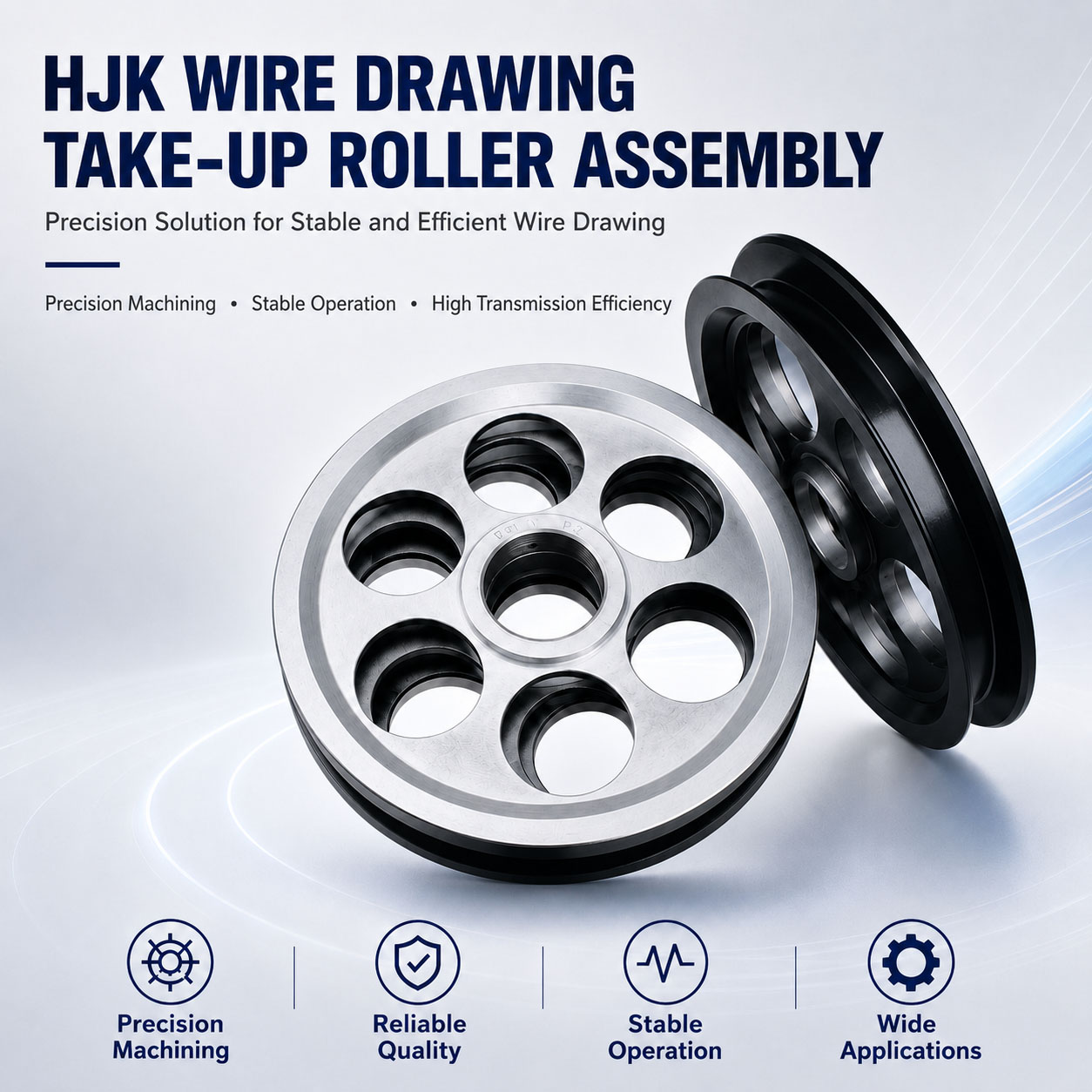
In metal wire drawing processes, stable wire pulling is essential for maintaining accurate wire diameter and excellent surface quality. The wire drawing take-up roller assembly is a key component of drawing machines, responsible for smoothly pulling wire through the drawing dies.
Its structural design, material selection, and surface condition directly affect production efficiency, wire quality, and equipment reliability. This article introduces the structure, applications, selection guide, and maintenance methods of take-up roller assemblies.
Structure and Function of Take-Up Roller Assembly
A take-up roller assembly usually consists of a roller body, shaft sleeve, and surface coating. The roller body is commonly made of high-strength alloy steel or aluminum alloy to withstand high-speed rotation and continuous wire tension.
According to different working conditions, the roller surface can be treated with tungsten carbide coating or ceramic coating to improve wear resistance and corrosion protection.
Main functions include:
- Stable Wire Speed Control
Ensures continuous and uniform wire drawing operation. - Multi-Pass Wire Pulling
Multi-groove designs allow several drawing stages in one compact structure. - Tension Management
Works with the tension control system to reduce wire vibration and prevent wire breakage.
Common Types and Applications
Different wire drawing processes require different roller designs and surface treatments.
Tungsten Carbide Tower Pulley
Tungsten carbide coating provides excellent hardness and wear resistance, making it suitable for high-speed drawing of steel wire, stainless steel wire, and other hard materials. Its low friction surface helps reduce wire scratches and improves product quality.
Aluminum Alloy Guide Roller with Tungsten Carbide Coating
The lightweight aluminum alloy body combined with a wear-resistant tungsten carbide coating provides both reduced inertia and high durability. It is widely used in fine wire and micro wire drawing machines.
Aluminum Alloy Guide Roller with Ceramic Coating
Ceramic coatings provide excellent insulation, smooth surface performance, and corrosion resistance. They are suitable for copper, aluminum, and other non-ferrous wire drawing applications.
Multi-Head Wire Drawing Machine Tower Pulley
Multi-head drawing machines require high-precision multi-groove assemblies. Accurate groove spacing and concentricity are essential for stable multi-wire production.
Selection Guide
When selecting a take-up roller assembly, consider:
- Wire Material and Diameter
Hard wires generally require tungsten carbide coatings, while softer materials may benefit from ceramic coatings. - Drawing Speed
High-speed production requires excellent dynamic balance to minimize vibration. - Groove Design and Number
Groove quantity and profile should match the drawing process and wire diameter to prevent wire jumping or unstable operation. - Installation Dimensions
Shaft diameter, keyway, mounting structure, and tolerances should match the machine specifications. Custom manufacturing is available according to drawings or samples. - Surface Treatment
Select coating types according to wear resistance, corrosion resistance, and operating environment requirements.
Maintenance Recommendations
Proper maintenance can significantly extend the service life of take-up roller assemblies:
- Regularly inspect groove wear and repair or replace rollers when deep grooves or surface damage appear.
- Keep the roller surface clean to prevent metal particles and oil contamination from affecting wire quality.
- Check bearing lubrication regularly to prevent overheating and seizure.
- Verify alignment and concentricity during installation to avoid tension fluctuations caused by runout.
- Protect coated surfaces from impact and corrosion during storage.
Frequently Asked Questions
How long does a take-up roller assembly last?
Service life depends on wire material, operating speed, coating type, and maintenance conditions. Regular inspection is recommended to determine the optimal replacement cycle.
When does the roller need repair?
Repair or recoating is recommended when groove wear becomes visible, wire surface scratches appear, or drawing tension becomes unstable.
Can only the coating be replaced?
Yes. If the roller body remains accurate and undamaged, the old coating can be removed and a new tungsten carbide or ceramic coating can be applied to restore performance.
Are different coatings suitable for different temperatures?
Yes. Tungsten carbide coatings generally provide excellent high-temperature wear resistance, while ceramic coatings should be selected according to specific operating temperatures and conditions.
Can non-standard sizes be customized?
Yes. Take-up roller assemblies can be customized based on customer drawings, samples, groove design, dimensions, and machine requirements.
What should be checked during installation?
Ensure proper shaft-to-hole fitting, apply uniform tightening force, and manually rotate the assembly after installation to confirm smooth operation without jamming.
Wire drawing take-up roller assemblies provide reliable tension control, high wear resistance, and stable performance for modern wire production lines, helping manufacturers improve efficiency and maintain consistent product quality.
